Andy Burnham Prime Minister Bid: What Britain’s Leadership Change Could Mean for Nigeria and Africa
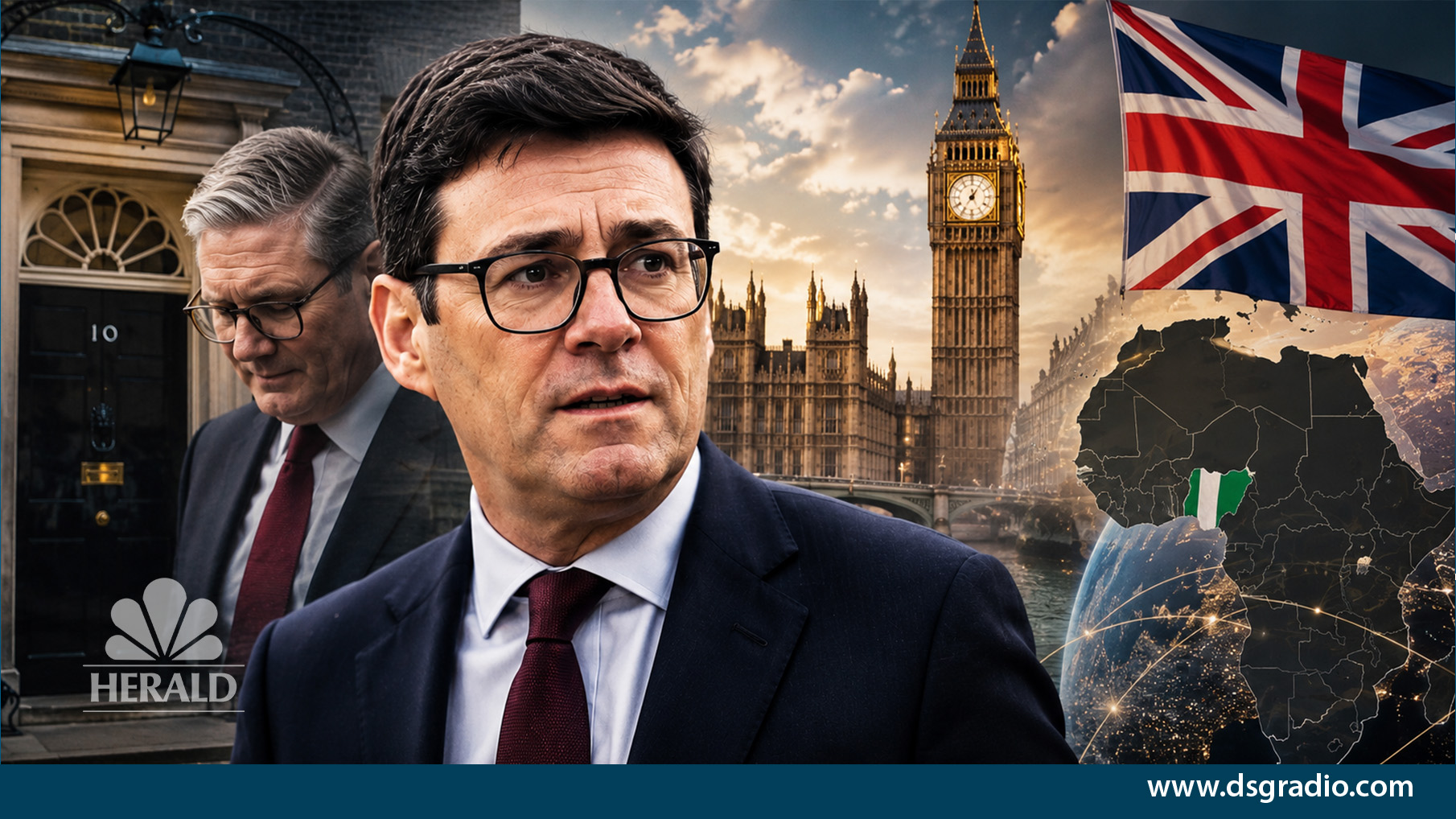
The emergence of Andy Burnham Prime Minister speculation following Sir Keir Starmer’s resignation has triggered intense political debate across the United Kingdom. Sir Keir Starmer’s succession as British Prime Minister following the incumbent’s resignation has triggered intense political debate across the United Kingdom. Yet the significance of the transition extends well beyond Westminster. For Nigeria, Africa and the wider Commonwealth, the possibility of an Andy Burnham Prime Minister administration raises important questions about future trade relations, migration policies, investment flows, education partnerships and diplomatic engagement between Britain and the developing world.
According to reports, Starmer announced his resignation following mounting pressure within the Labour Party after Burnham secured a decisive by-election victory in Makerfield. Burnham subsequently travelled to London, was sworn in as a Member of Parliament and quickly consolidated support among Labour lawmakers.
While British political observers are focused on the leadership contest itself, many stakeholders across Africa are watching a different story unfold: what a new leadership era in Britain could mean for countries whose economies, educational systems, migration patterns and diplomatic ties remain closely connected to the UK.
Why the Andy Burnham Prime Minister Campaign Matters Beyond Westminster
British domestic politics rarely remains a purely domestic matter.
The United Kingdom remains one of the world’s largest economies, a permanent member of the United Nations Security Council and a significant source of investment, development funding and educational opportunities for many African countries.
Successive British governments have shaped:
• Foreign investment strategies
• Development assistance programmes
• Visa and immigration systems
• Trade partnerships
• Educational exchanges
• Security cooperation initiatives
As a result, leadership transitions in London often attract attention in Abuja, Nairobi, Accra, Johannesburg and other African capitals.
The potential rise of Andy Burnham comes at a particularly important moment. Global economic uncertainty, geopolitical tensions and shifting international alliances have increased the importance of strong bilateral relationships between developed and emerging economies.
For Nigeria, Britain’s political stability and policy direction remain important because of the long-standing economic, educational and cultural links between both countries.
The Political Significance of the Andy Burnham Prime Minister Campaign
The Andy Burnham Prime Minister campaign is attracting attention because it represents more than a routine leadership change.
Burnham has built much of his political reputation through his tenure as Mayor of Greater Manchester, where he championed regional economic development, public transport reforms and greater local control over public services.
Supporters argue that his experience in local governance could help address regional inequality within Britain. Critics, however, question whether local government success automatically translates into effective national leadership.
Reports indicate that Burnham’s transition team is preparing a policy programme focused on economic reform and greater national devolution.
Should those priorities define a future government, they could influence Britain’s domestic spending patterns, infrastructure investments and broader economic outlook.
For foreign partners, including African nations, the most important question is whether a Burnham-led government would alter Britain’s international engagement strategy.
That question remains unanswered, but investors, diplomats and business leaders are already examining possible scenarios.
What the Transition Could Mean for Nigeria-UK Relations
Nigeria and Britain share one of the most significant bilateral relationships in the Commonwealth.
Trade between the two countries spans energy, agriculture, financial services, technology, education and manufacturing.
Thousands of Nigerian businesses maintain commercial relationships with British institutions, while British companies continue to operate across multiple sectors of Nigeria’s economy.
A new British Prime Minister would inherit this relationship at a time when both countries are seeking economic growth and expanded international partnerships.
Potential areas of focus include:
Trade Expansion
Britain has increasingly promoted trade relationships outside the European Union since Brexit.
A new administration could reassess existing trade priorities, potentially creating opportunities for deeper engagement with African markets.
For Nigerian exporters, any effort to strengthen UK-Africa trade frameworks could open additional opportunities in sectors such as:
• Agriculture
• Technology services
• Creative industries
• Manufacturing
• Renewable energy
Investment Flows
British investors remain active participants in Nigeria’s banking, telecommunications and energy sectors.
Political stability in the UK often encourages stronger outward investment activity.
Conversely, prolonged political uncertainty can influence investment decisions and risk assessments.
The outcome of the Labour leadership process may therefore attract attention among investors monitoring future opportunities across Africa.
Nigerians in Britain Are Watching Closely
Many Nigerians living in Britain are closely monitoring the Andy Burnham Prime Minister campaign because future immigration and labour policies could directly affect their lives.
One of the most immediate implications of Britain’s political transition concerns the large Nigerian community living in the UK.
Nigerians represent one of the most influential African diaspora populations in Britain.
Many are:
• Students
• Healthcare professionals
• Entrepreneurs
• Academics
• Skilled workers
• Business executives
Government policy changes can directly affect their lives.
Although no specific immigration reforms have been announced in connection with the leadership contest, any future government will face ongoing debates surrounding:
• Skilled worker visas
• International student policies
• Healthcare recruitment
• Family migration rules
• Labour market shortages
Because Britain continues to rely heavily on international talent in key sectors, future immigration decisions will remain highly significant for Nigerian professionals considering opportunities abroad.
Andy Burnham Prime Minister Scenario and Education Partnerships
Education represents another area where leadership changes in Britain can have global consequences.
Universities are also watching the Andy Burnham Prime Minister race for clues about future international student policies.
British universities remain among the most popular destinations for Nigerian students seeking international education.
Over the years, thousands of Nigerian graduates have studied in:
• London
• Manchester
• Birmingham
• Edinburgh
• Leeds
• Liverpool
Changes to international student policies can influence:
• Tuition accessibility
• Graduate work opportunities
• Student visa rules
• Research collaborations
• Academic exchanges
Educational institutions will likely monitor any policy signals emerging from Labour’s leadership transition.
For many African families, access to British education remains an important pathway for professional development and international exposure.
What an Andy Burnham Prime Minister Administration Could Mean for Africa
The broader African perspective extends beyond Nigeria.
Across the continent, governments and business leaders are assessing how political developments in major economies could affect future partnerships.
Key areas include:
Development Funding
Britain has historically played a significant role in international development programmes.
Changes in government priorities can influence funding allocations for:
• Health initiatives
• Education programmes
• Climate adaptation projects
• Infrastructure development
Climate Cooperation
Climate financing has become increasingly important for African economies facing environmental challenges.
Future UK leadership decisions could affect international climate commitments and funding mechanisms.
Security Partnerships
Britain remains engaged in multiple international security initiatives.
African governments involved in counterterrorism cooperation, maritime security and regional peacebuilding efforts will continue monitoring British foreign policy developments.
The Economic Vision Behind Burnham’s Rise
Investors believe an Andy Burnham Prime Minister government could place greater emphasis on regional development and public investment.
One reason investors are paying attention to Burnham’s political ascent is his reputation for advocating regional economic development.
As Mayor of Greater Manchester, Burnham promoted:
• Infrastructure investment
• Public transport expansion
• Local economic planning
• Public service reform
Supporters view these initiatives as evidence of practical governance experience.
If similar principles were applied nationally, Britain could pursue a stronger focus on domestic economic revitalisation.
For African observers, the key issue is whether such a strategy would encourage or limit Britain’s international economic engagement.
Historically, governments that prioritise economic growth often seek expanded trade opportunities abroad.
That dynamic could create opportunities for deeper commercial partnerships with emerging markets.
Could Britain Face Political Uncertainty?
Despite Burnham’s apparent momentum, the leadership transition is not necessarily guaranteed.
Reports indicate that potential challengers, including Al Carns and Darren Jones, may still consider entering the race.
To force a contested leadership election, any challenger would reportedly need support from at least 81 Labour MPs.
If Burnham runs unopposed, he could assume office quickly.
If a challenge emerges, the process could extend for several weeks.
Meanwhile, Reform UK leader Nigel Farage has called for a general election, arguing that a leadership transition alone would not provide a fresh nationwide mandate.
Such criticism highlights broader questions surrounding democratic legitimacy and political stability.
For markets, investors and international partners, certainty often matters as much as policy itself.
Historical Lessons from Previous UK Leadership Changes
History demonstrates that leadership transitions frequently reshape Britain’s relationship with the world.
Changes in government have influenced:
• Brexit negotiations
• Trade agreements
• Immigration policy
• Foreign aid budgets
• Defence partnerships
The next Prime Minister will inherit a complex international environment characterised by geopolitical competition, economic pressures and growing demands for strategic partnerships.
Africa is likely to remain an important part of that equation.
The continent’s young population, expanding consumer markets and growing economic influence make it increasingly significant to global policymakers.
According to the BBC‘s coverage of the Labour leadership transition, nominations are expected to open on July 9.
Why Africa Is Paying Attention
The growing interest in the Andy Burnham Prime Minister story across Africa reflects broader realities about international politics.
Leadership decisions in major economies can influence investment, migration, education and diplomacy far beyond national borders.
For Nigeria, the issue is not simply who occupies Number 10 Downing Street.
The larger question is how Britain’s next leader will approach relationships with emerging economies, diaspora communities and strategic partners across the Commonwealth.
Those decisions could shape opportunities for businesses, students, investors and policymakers for years to come.
Conclusion
The political transition triggered by Keir Starmer’s resignation has rapidly become one of Britain’s most consequential political developments. Yet its significance extends far beyond Labour Party politics.
The Andy Burnham Prime Minister campaign is attracting attention across Nigeria and Africa because of what it could mean for trade, migration, education, investment and international cooperation.
While the leadership contest continues to unfold, stakeholders across the continent will be watching closely for signals about Britain’s future direction. Whether Burnham ultimately assumes office unopposed or faces a competitive leadership battle, the outcome could influence not only the United Kingdom’s domestic trajectory but also its relationship with Africa in an increasingly interconnected world.
For African governments, businesses and citizens alike, Britain’s next political chapter may carry implications far beyond Westminster.
Whether the Andy Burnham Prime Minister bid succeeds or faces a competitive contest, the outcome will influence Britain’s relationship with Africa.
Recommended Coverage
•https://dsgradio.com/diezani-alison-madueke-acquittal-ends-11-year-uk-case/
Why it matters: The case highlights major developments in UK-Nigeria legal cooperation and anti-corruption efforts.
•https://dsgradio.com/dr-eberechukwu-uneze-the-rise-influence-impact/
Why it matters: An examination of leadership, public service and institutional influence in contemporary Nigeria.
• https://dsgradio.com/kemi-badenoch-named-leader-of-uk-conservatives-after-historic-election-loss/
Why it matters: The development continues the wider story of political realignment and leadership change in Britain.
About the Author