2026 FIFA World Cup: Messi and Mbappe Make History as Tournament Drama Intensifies
The 2026 FIFA World Cup has entered a new phase of excitement after football superstars Lionel Messi and Kylian Mbappé delivered landmark performances for Argentina and France, while controversies involving visas, coaching changes, and FIFA regulations have added fresh intrigue to the tournament unfolding across North America. As teams continue their group-stage campaigns in the United States, Canada and Mexico, the competition is already producing a mixture of elite performances, unexpected developments and major storylines that extend beyond the football pitch.
With defending champions Argentina and former world champions France making powerful statements, attention is increasingly turning to whether football’s established powers can maintain their dominance in a tournament that has already generated significant headlines.
2026 FIFA World Cup Witnesses Historic Night for Lionel Messi
Argentina began their title defence in emphatic fashion with a 3-0 victory over Algeria.
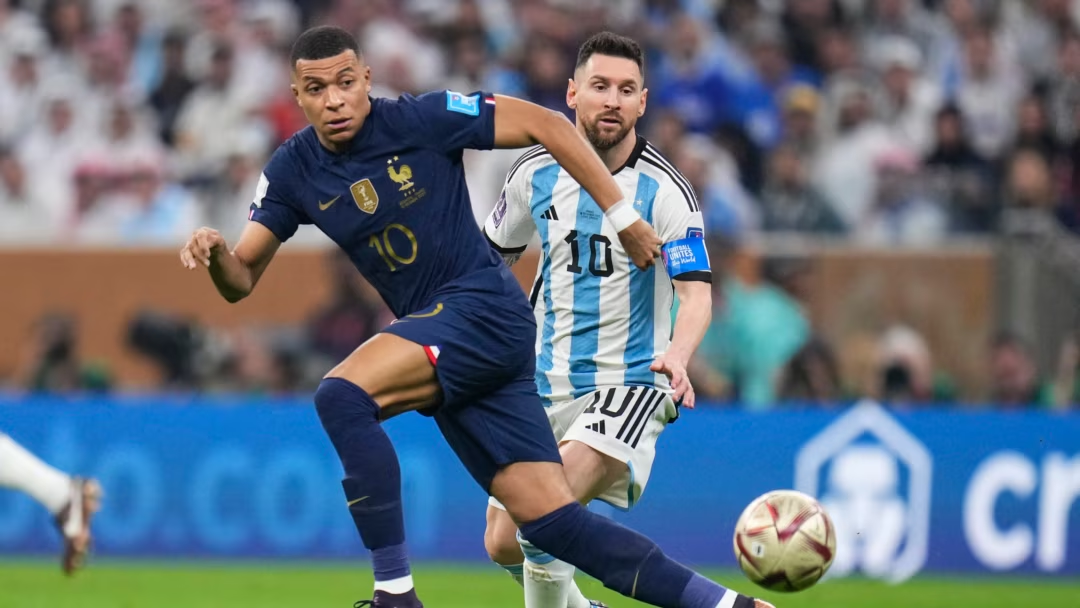
The match belonged to Lionel Messi, who scored all three goals to secure a memorable hat-trick and further strengthen his place among football’s greatest players.
The achievement saw Messi draw level with the all-time FIFA World Cup goals record, adding another chapter to an international career already filled with remarkable accomplishments.
For Argentina, the victory provided the ideal start to their campaign as they seek to become the first nation in decades to successfully defend a World Cup title.
Messi’s performance also served as a reminder of his enduring influence despite entering the later stages of his career. His movement, vision and finishing ability proved decisive against an Algerian side that struggled to contain Argentina’s attacking quality.
The result immediately boosted Argentina’s standing among the tournament favourites and sent a clear message to rival nations.
Kylian Mbappe Breaks French Goalscoring Record
France responded with an equally impressive performance, defeating Senegal 3-1 in one of the most anticipated fixtures of the early stages of the tournament.
Kylian Mbappe scored twice and surpassed Olivier Giroud as France’s all-time leading goalscorer, cementing his status as one of the defining players of his generation.
The French captain has consistently delivered on the biggest stages, and his latest milestone further strengthens his legacy in international football.
France’s victory was particularly significant given the quality of their opposition. Senegal entered the tournament as one of Africa’s strongest representatives and posed several challenges throughout the contest.
However, France’s superior finishing and attacking depth ultimately proved decisive.
For Senegal and African football supporters, the defeat was disappointing, but the performance highlighted the continent’s growing competitiveness against Europe’s elite nations.
Tunisia Turns to Hervé Renard After Heavy Defeat
One of the most dramatic developments of the tournament occurred away from the field.
Following Tunisia’s 5-1 defeat to Sweden, football authorities moved swiftly to dismiss head coach Sabri Lamouchi.
The decision came after only one match, making it one of the earliest managerial changes in modern World Cup history.
Tunisia subsequently appointed experienced French coach Hervé Renard to oversee training operations immediately.
Renard is widely respected for his achievements in African football, having previously managed Morocco and guided several national teams in major international competitions.
His arrival reflects Tunisia’s determination to revive its campaign before it becomes mathematically impossible to advance from the group stage.
While coaching changes can sometimes provide a short-term boost, analysts note that the challenge facing Tunisia remains considerable, given the strength of opposition at the tournament.
Ghana Visa Controversy Creates Off-Pitch Challenge
Another significant storyline involves Ghana and midfielder Thomas Partey.
According to tournament updates, Ghana’s government did not successfully appeal a decision denying Partey a Canadian visa, preventing the player from participating in matches scheduled in Canada.
The situation has sparked discussion among football stakeholders due to the logistical challenges posed by a World Cup hosted across three countries.
Details surrounding the visa decision remain limited, and some aspects of the case could not be independently verified.
Nevertheless, the development has raised broader questions about player mobility, immigration requirements and tournament logistics in multinational sporting events.
For Ghana, the absence of an experienced midfielder could have sporting consequences as the team seeks to progress in a competitive group stage.
The issue also highlights the unique administrative complexities associated with the expanded World Cup format.
FIFA Introduces Mandatory Hydration Breaks
Tournament organisers have also introduced a notable player welfare measure.
FIFA has mandated compulsory three-minute hydration breaks during both halves of every match, regardless of stadium temperature conditions.
The policy reflects growing concern about player health, physical demands and climate-related challenges facing modern football.
The 2026 FIFA World Cup is being staged across a vast geographical area that includes varying weather conditions, from humid environments to regions experiencing high temperatures.
Sports medicine experts have increasingly emphasised the importance of hydration and recovery, particularly as football schedules become more intense.
While some observers view the policy as a precautionary measure, others believe it may influence match tempo and tactical approaches.
Regardless of opinion, the decision underscores FIFA’s efforts to prioritise player safety during the tournament.
What These Developments Mean for African Football
The early days of the 2026 FIFA World Cup have delivered mixed fortunes for African nations.
Senegal suffered defeat against France, Tunisia endured a difficult start against Sweden, and Ghana continues to navigate off-field challenges.
However, African football remains a major focus of the tournament.
The continent’s growing influence in global football is reflected in the increasing number of players competing at elite club level across Europe and beyond.
Many African teams now enter major tournaments with greater tactical sophistication, improved infrastructure and stronger developmental systems than previous generations.
For Nigerian football fans, the performances of fellow African nations continue to attract considerable interest.
The experiences of Senegal, Ghana, Tunisia and Algeria also provide insight into the broader challenges and opportunities facing African football on the global stage.
Readers interested in international football developments can find additional analysis through [INSERT DSG HERALD INTERNAL LINK] and broader tournament coverage via [INSERT DSG HERALD INTERNAL LINK].
Upcoming Fixtures Set to Shape Group Standings
Attention now turns to another important round of matches.
Several fixtures scheduled for today could significantly influence group standings and qualification scenarios.
The upcoming matches include:
- Austria vs Jordan
- Portugal vs DR Congo
- England vs Croatia
- Ghana vs Panama
- Uzbekistan vs Colombia
Among these encounters, England versus Croatia is expected to attract substantial global interest given the history between both nations in major international tournaments.
Portugal will also be under pressure to secure a strong result against DR Congo as teams seek early momentum in the group phase.
For Ghana, the match against Panama carries additional significance following the visa-related developments involving Thomas Partey.
Global Economic Impact of the Tournament
Beyond football, the 2026 FIFA World Cup continues to generate significant economic activity across host cities.
The tournament is expected to attract millions of visitors, stimulate tourism revenues and create opportunities for businesses operating in hospitality, transportation and entertainment sectors.
The expanded format has increased the number of participating nations and matches, contributing to broader commercial opportunities for sponsors and broadcasters.
For African football federations, strong performances can also deliver long-term financial benefits through increased sponsorship visibility, commercial partnerships and investment opportunities.
The global reach of the World Cup ensures that achievements on the pitch often translate into economic value beyond the tournament itself.
Outlook: Records, Rivalries and Rising Pressure
The opening stages of the 2026 FIFA World Cup have already demonstrated why the tournament remains the most watched sporting event on the planet.
Historic milestones from Lionel Messi and Kylian Mbappe have dominated headlines, while coaching changes, visa disputes and regulatory adjustments have added further layers of complexity.
As more teams begin their campaigns, pressure will continue to rise.
For Argentina and France, the challenge will be maintaining momentum after impressive opening victories. For African nations such as Ghana, Tunisia and Senegal, the focus shifts to recovery, adaptation and securing crucial points.
With weeks of football still ahead, the tournament appears set to deliver more records, more controversy and more defining moments in the history of the World Cup.
Recommended Coverage
African Minifootball Cup 2025 Set for Libya
Libya is preparing to host one of Africa’s notable football events as regional teams compete for continental honours.
Halle Berry Highlights Women’s Health Challenges
The Hollywood actress has drawn attention to women’s health awareness through a candid discussion about perimenopause.
UK Launches Campaign for 2035 FIFA Women’s World Cup
British football authorities have formally begun efforts to host the 2035 FIFA Women’s World Cup.
About the Author