Bundibugyo Ebola Outbreak Spurs DRC Airport Checks
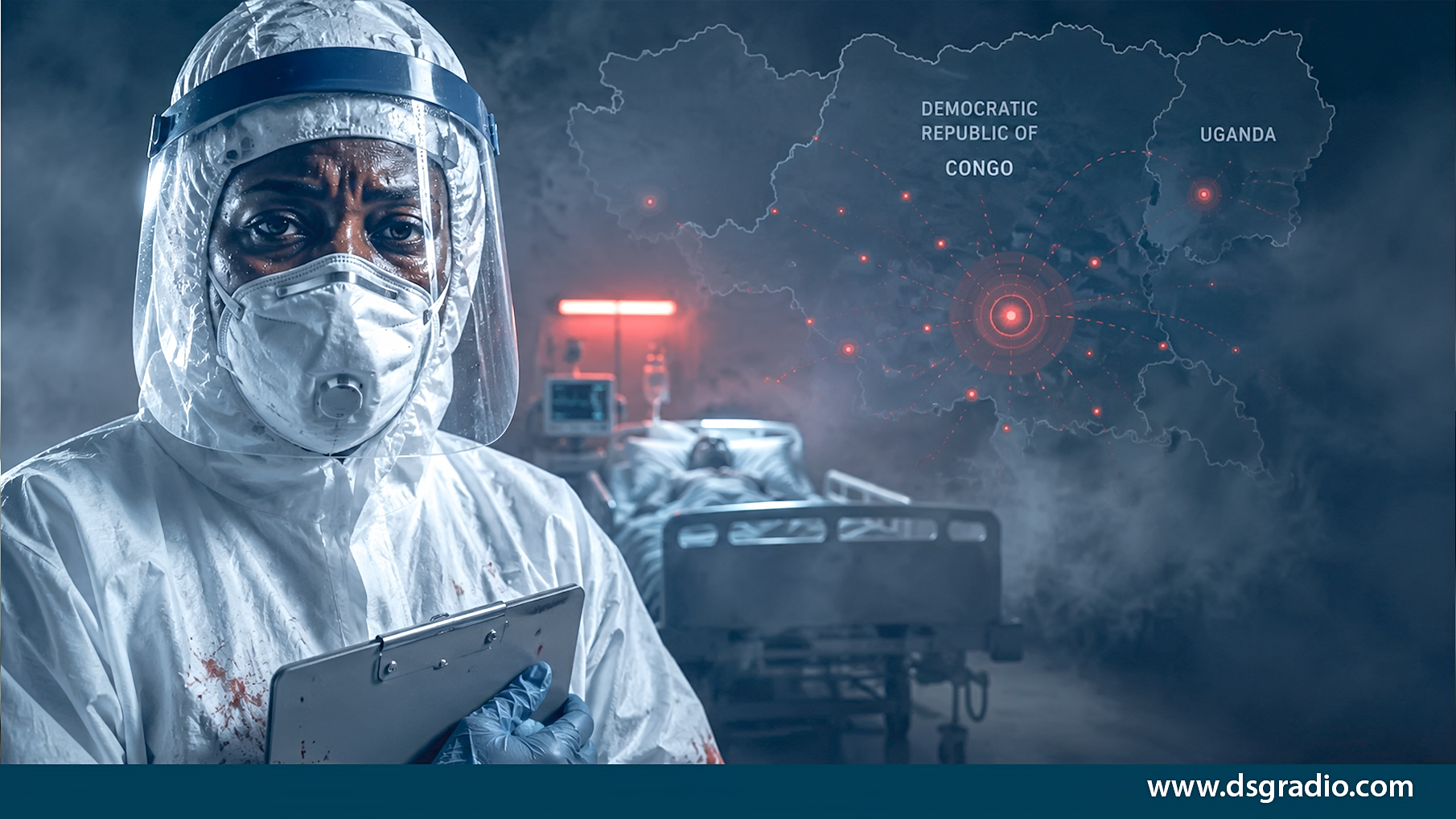
The Bundibugyo Ebola Outbreak in the Democratic Republic of the Congo (DRC) has entered a new and more concerning phase, with health authorities confirming 344 cases and 60 deaths while introducing stricter airport health screening measures aimed at preventing further regional spread. The latest figures come as officials report 23 new infections within a single reporting cycle, highlighting the continuing challenge of containing one of the world’s most dangerous viral diseases.
The outbreak, centred primarily in eastern DRC, has triggered heightened vigilance across Central and East Africa. Authorities are increasingly concerned not only about the growing number of infections but also about the virus’s movement across multiple health zones and the potential impact on regional travel, trade, and public confidence.
The latest developments have pushed governments, international health organisations, and medical experts to intensify surveillance and preparedness measures. Airport screening, travel advisories, emergency response coordination, and public awareness campaigns are now playing central roles in efforts to prevent the outbreak from escalating into a wider regional crisis.
Beyond the immediate health emergency, the outbreak is also drawing attention to longstanding questions about Africa’s disease preparedness systems, vaccine research gaps, healthcare infrastructure, and the broader challenge of responding to emerging infectious diseases in a highly interconnected world.
Bundibugyo Ebola Outbreak Reaches Critical Stage
Health authorities confirmed that the outbreak has now surpassed 340 cases, making it one of the most closely monitored public health emergencies currently facing the region.
According to figures released by the DRC Ministry of Health, the majority of infections remain concentrated in Ituri Province, which has emerged as the epicentre of the outbreak. However, cases have also been identified in neighbouring provinces, raising concerns that the virus could become more difficult to contain if transmission chains continue expanding.
The situation reflects a familiar challenge seen during previous Ebola emergencies: once infections begin appearing across multiple administrative zones, contact tracing and surveillance operations become increasingly complex.
Public health officials often emphasise that rapid detection remains one of the most effective tools for controlling Ebola transmission. Every new infection requires intensive contact tracing, monitoring, testing, and isolation efforts. As case numbers grow, those demands place increasing pressure on already stretched health systems.
While the number of confirmed cases continues to rise, authorities noted one encouraging development. The number of suspected infections under investigation reportedly declined after laboratory testing ruled out several patients, allowing them to be removed from monitoring and isolation programs.
Even with that improvement, health experts caution that the outbreak remains active and unpredictable.
Where the Virus Is Spreading
The geographical distribution of cases provides important insight into the current trajectory of the outbreak.
Ituri Province Remains the Epicentre
Ituri Province continues to account for the overwhelming majority of confirmed infections.
More than 300 cases have been recorded across numerous health zones, making the province the centre of containment efforts. Medical teams, laboratory personnel, surveillance officers, and emergency response units have concentrated much of their work in this region.
The concentration of infections in Ituri highlights both the progress and limitations of containment operations. While officials have identified the primary hotspot, the sheer number of cases underscores the difficulty of completely interrupting transmission.
North Kivu Records Additional Cases
North Kivu has also reported confirmed infections across multiple health zones.
The province has previously faced several Ebola outbreaks and remains one of the most scrutinised regions in public health surveillance efforts. Its history with Ebola means local authorities possess experience in outbreak response, but recurring emergencies continue to strain resources.
South Kivu Reports Confirmed Infections
South Kivu has reported fewer confirmed cases.
Although the figures remain comparatively low, health officials view every confirmed infection as significant because even isolated cases can establish new transmission chains if not detected quickly.
Uganda Remains on Alert
Neighbouring Uganda continues to maintain a high level of preparedness.
Officials reported confirmed cases but noted that no new local transmission events were identified during the most recent reporting period.
Uganda’s response reflects lessons learned from previous cross-border disease threats. Over the years, the country has invested heavily in surveillance systems, border health monitoring, laboratory capacity, and emergency preparedness programs designed to rapidly detect imported infections.
Why Airport Health Screening Has Become Essential
One of the most significant developments in the current outbreak response is the expansion of airport health screening measures.
Authorities in the DRC have implemented mandatory screening procedures at newly reopened airports, including Bunia Airport in Ituri Province.
The decision reflects concerns that air travel could accelerate the geographical spread of infections if infected individuals travel before symptoms are identified.
Passengers are now required to undergo temperature checks before boarding flights. Individuals displaying fever or other warning signs may be prevented from travelling and referred for medical evaluation.
Airport screening became a globally recognised public health strategy during previous Ebola outbreaks as well as during the COVID-19 pandemic. While screening cannot detect every infection, particularly during incubation periods, it can help identify symptomatic travellers and reduce the likelihood of disease exportation.
For authorities, the goal is not merely to protect passengers but also to preserve public confidence in transportation systems while reducing transmission risks.
Why the Bundibugyo Strain Presents Unique Challenges
A major concern surrounding the current outbreak is the specific strain involved.
The outbreak has been linked to the Bundibugyo strain of Ebola virus, a less common variant than the Zaire strain responsible for several previous outbreaks.
This distinction carries major implications for public health planning.
Unlike the Zaire strain, which has benefited from years of vaccine development and deployment, the Bundibugyo strain does not currently have a licensed vaccine for widespread use.
That reality significantly changes the response strategy.
Instead of relying on vaccination campaigns as a frontline containment tool, health authorities must depend heavily on:
- Early detection
- Isolation procedures
- Contact tracing
- Infection prevention measures
- Supportive medical care
- Community engagement
The absence of a targeted vaccine increases pressure on healthcare workers and response teams to stop transmission through traditional public health interventions.
It also underscores a broader issue facing global health systems: not all dangerous pathogens receive the same level of research funding or pharmaceutical investment.
Understanding Ebola and Its Impact
Ebola remains one of the deadliest viral diseases known to humanity.
The virus is transmitted through direct contact with infected bodily fluids, contaminated materials, or infected animals. Symptoms often begin suddenly and may include:
- Fever
- Fatigue
- Headache
- Muscle pain
- Vomiting
- Diarrhea
- Internal or external bleeding in severe cases
Without prompt medical intervention, Ebola can lead to severe complications and death.
Although outbreaks are relatively rare compared to many other infectious diseases, Ebola attracts significant global attention because of its high fatality rate and potential to overwhelm healthcare systems.
The disease has repeatedly demonstrated how quickly local health emergencies can become international concerns if surveillance and containment efforts fail.
Africa’s Long Battle Against Ebola
The current outbreak is part of a much larger history.
Since Ebola was first identified in 1976, African countries have faced multiple outbreaks involving different strains of the virus.
The DRC, in particular, has experienced several Ebola emergencies and has become one of the world’s leading centers of practical outbreak response experience.
Each outbreak has contributed valuable lessons regarding:
- Disease surveillance
- Community engagement
- Laboratory testing
- Emergency coordination
- Border monitoring
- International cooperation
Yet every outbreak also reveals persistent challenges.
Healthcare infrastructure remains uneven across many regions, particularly in remote or conflict-affected areas. Limited resources, logistical difficulties, and public mistrust can complicate containment efforts even when scientific knowledge is available.
The Economic Impact of Health Emergencies
Although the immediate focus remains on saving lives and containing transmission, outbreaks such as the current Bundibugyo Ebola Outbreak often produce economic consequences that extend far beyond the healthcare sector.
When governments implement heightened screening measures, travel advisories, and emergency restrictions, business activity can be affected across multiple industries.
Tourism is frequently among the first sectors to experience disruption. International travellers may postpone trips, airlines may adjust routes, and tourism operators can face cancellations even in areas far from outbreak zones.
Cross-border trade may also slow as governments introduce additional health inspections and monitoring procedures. In regions where local economies depend heavily on cross-border movement, even temporary disruptions can affect household incomes and supply chains.
For the DRC, the challenge is particularly significant because eastern provinces already face developmental and infrastructure pressures. Resources that might otherwise be directed toward education, economic development, or public infrastructure often must be diverted to emergency disease control efforts.
International organisations have repeatedly warned that disease outbreaks can create a cycle in which public health crises trigger economic strain, which in turn limits future healthcare investment.
The current outbreak, therefore, represents not only a medical challenge but also a development challenge with implications for long-term regional growth.
Healthcare Workers on the Frontline
Healthcare workers remain among the most vulnerable groups during Ebola outbreaks.
Doctors, nurses, laboratory personnel, ambulance teams, and community health workers frequently operate in environments where exposure risks remain high despite extensive protective measures.
During the current outbreak, health authorities confirmed infections among healthcare workers involved in response activities.
However, recent reports of successful recoveries among frontline personnel have provided a measure of encouragement.
Several healthcare workers, including nurses and laboratory staff, have reportedly recovered and been discharged from treatment and isolation facilities.
Their recovery highlights an important lesson learned from previous Ebola emergencies: while no licensed vaccine currently exists for the Bundibugyo strain, prompt supportive treatment can significantly improve outcomes.
Medical experts have consistently emphasised that early diagnosis and aggressive supportive care—including hydration, symptom management, and close monitoring—can increase survival chances.
The recoveries also serve as a morale boost for medical teams working under difficult and often dangerous conditions.
The Role of Community Trust
One of the most important factors in controlling Ebola outbreaks is public cooperation.
Experience from previous outbreaks in West and Central Africa has shown that even the most advanced medical response can struggle if communities do not trust public health authorities.
Health officials, therefore, place significant emphasis on:
- Public education campaigns
- Community engagement
- Transparent communication
- Rumor management
- Local leadership involvement
When people understand how Ebola spreads and why specific containment measures are necessary, they are generally more likely to report symptoms, cooperate with contact tracers, and seek medical attention early.
Conversely, misinformation can delay treatment and complicate response efforts.
In many outbreaks, public health teams have found that building trust can be just as important as providing medical care.
The success of airport screening, isolation programs, and surveillance systems ultimately depends on public participation.
Regional Travel Advisories Reflect Growing Vigilance
The introduction of travel advisories by neighbouring countries demonstrates the level of concern surrounding the outbreak.
Authorities in several countries have advised travellers who recently visited affected regions to monitor their health closely and seek medical evaluation if symptoms emerge.
Such advisories are common during infectious disease emergencies and serve multiple purposes:
- Raising public awareness
- Encouraging early detection
- Supporting surveillance systems
- Reducing transmission risks
Importantly, health experts often stress that travel advisories are not intended to create panic but rather to ensure preparedness.
International public health agencies generally advocate evidence-based measures that balance disease control with the need to maintain essential travel and trade links.
The current advisories indicate that governments are taking a precautionary approach while closely monitoring developments.
Lessons From Previous Ebola Outbreaks
The current outbreak is occurring against the backdrop of decades of Ebola response experience.
Major outbreaks in West Africa between 2014 and 2016 fundamentally changed global approaches to epidemic preparedness.
That crisis demonstrated how quickly localised health emergencies could evolve into international threats.
In response, governments and international organisations invested heavily in:
- Emergency response systems
- Laboratory networks
- Vaccine research
- Disease surveillance
- Border health programs
- International coordination mechanisms
Those investments have improved preparedness in many countries.
However, the current Bundibugyo Ebola Outbreak also reveals ongoing vulnerabilities.
The absence of a licensed vaccine for this strain illustrates that scientific preparedness remains uneven across different disease variants.
While the world has made substantial progress against some Ebola strains, significant research gaps remain.
Public health experts argue that outbreaks like the current one underscore the importance of sustained investment in neglected diseases, even when immediate global attention shifts elsewhere.
Why the World Health Organization Is Closely Monitoring Events
The World Health Organization (WHO) continues to play a central role in monitoring and coordinating international response efforts.
According to the WHO information on Ebola disease outbreaks, rapid detection, isolation, contact tracing, and supportive care remain critical components of outbreak management.
The organisation has repeatedly highlighted the importance of strengthening surveillance systems, supporting laboratory testing, and ensuring healthcare workers have adequate resources.
WHO involvement is particularly important during cross-border health events because infectious diseases do not respect national boundaries.
International coordination helps ensure that neighbouring countries receive timely information and can activate preparedness measures before local transmission occurs.
The organisation’s monitoring activities also provide reassurance that developments are being assessed within a broader global health framework.
What the Outbreak Means for Africa’s Health Systems
The current outbreak has once again focused attention on the resilience of African health systems.
Across the continent, governments have made significant progress in strengthening disease surveillance and emergency response capabilities.
Many countries now possess:
- Better laboratory infrastructure
- Faster reporting systems
- Improved emergency coordination
- Enhanced border monitoring
- Greater public health awareness
Yet challenges remain.
Funding limitations, workforce shortages, infrastructure gaps, and competing healthcare priorities continue to affect response capacity in many regions.
The outbreak highlights the importance of maintaining long-term investment in public health even when immediate crises subside.
Health experts frequently argue that preparedness should be viewed as an ongoing process rather than a temporary response to emergencies.
The ability to detect and contain outbreaks quickly often depends on investments made years before a crisis emerges.
Nigerian Relevance and Regional Preparedness
Although the outbreak remains centred in the DRC and nearby regions, developments are being monitored closely across Africa, including Nigeria.
Nigeria’s successful response to Ebola in 2014 remains widely regarded as one of the continent’s most effective outbreak containment efforts.
That experience demonstrated the value of:
- Rapid contact tracing
- Emergency coordination
- Public communication
- Strong surveillance systems
The lessons learned continue to inform preparedness strategies throughout the region.
For Nigerian health authorities, outbreaks elsewhere on the continent serve as reminders to maintain vigilance and strengthen disease-monitoring capabilities.
The current situation also reinforces broader discussions about African self-sufficiency in vaccine research, pharmaceutical manufacturing, and public health infrastructure.
Future Outlook: Can the Outbreak Be Contained?
The coming weeks are likely to prove critical.
Public health officials will closely monitor several indicators:
- Daily case numbers
- New transmission chains
- Geographical spread
- Healthcare worker infections
- Contact tracing effectiveness
- Community compliance with health measures
If containment efforts successfully interrupt transmission networks, the outbreak could gradually stabilize.
However, continued spread into new areas would increase operational challenges and require additional resources.
The expansion of airport screening measures suggests authorities are acting proactively to reduce those risks.
Experts generally agree that rapid intervention remains the most effective strategy for preventing larger outbreaks.
Success will depend on a combination of medical response, public cooperation, international support, and sustained surveillance.
Conclusion
The Bundibugyo Ebola Outbreak has evolved into a significant public health emergency, with 344 confirmed cases and 60 deaths prompting authorities in the Democratic Republic of the Congo to intensify containment measures, including mandatory airport health screening and enhanced surveillance.
While encouraging signs have emerged, including the recovery of several healthcare workers and the reduction in some suspected cases, the outbreak continues to pose serious challenges. The absence of a licensed vaccine for the Bundibugyo strain means health officials must rely heavily on traditional public health interventions such as early detection, isolation, contact tracing, and supportive treatment.
Beyond the immediate health crisis, the outbreak is drawing renewed attention to Africa’s disease preparedness systems, regional cooperation mechanisms, and the need for continued investment in medical research and healthcare infrastructure.
As governments, health agencies, and international partners work to contain the virus, the outcome of the coming weeks may offer important lessons not only for the DRC but also for the broader global effort to prepare for future infectious disease threats.
Recommended Coverage
Nigeria Plans Local HIV Drug Production
This report examines efforts to strengthen pharmaceutical manufacturing capacity and reduce dependence on imported treatments.
WHO Warns of Tuberculosis Progress Reversal
An analysis of how funding pressures could affect disease-control programs across Africa.
Zero Discrimination Day and Global Health Equity
A look at how inclusion and equal healthcare access influence public health outcomes worldwide.
About the Author