Ebola Virus Explained: Symptoms, Causes, Transmission, Treatment, Prevention and Global Outbreak History
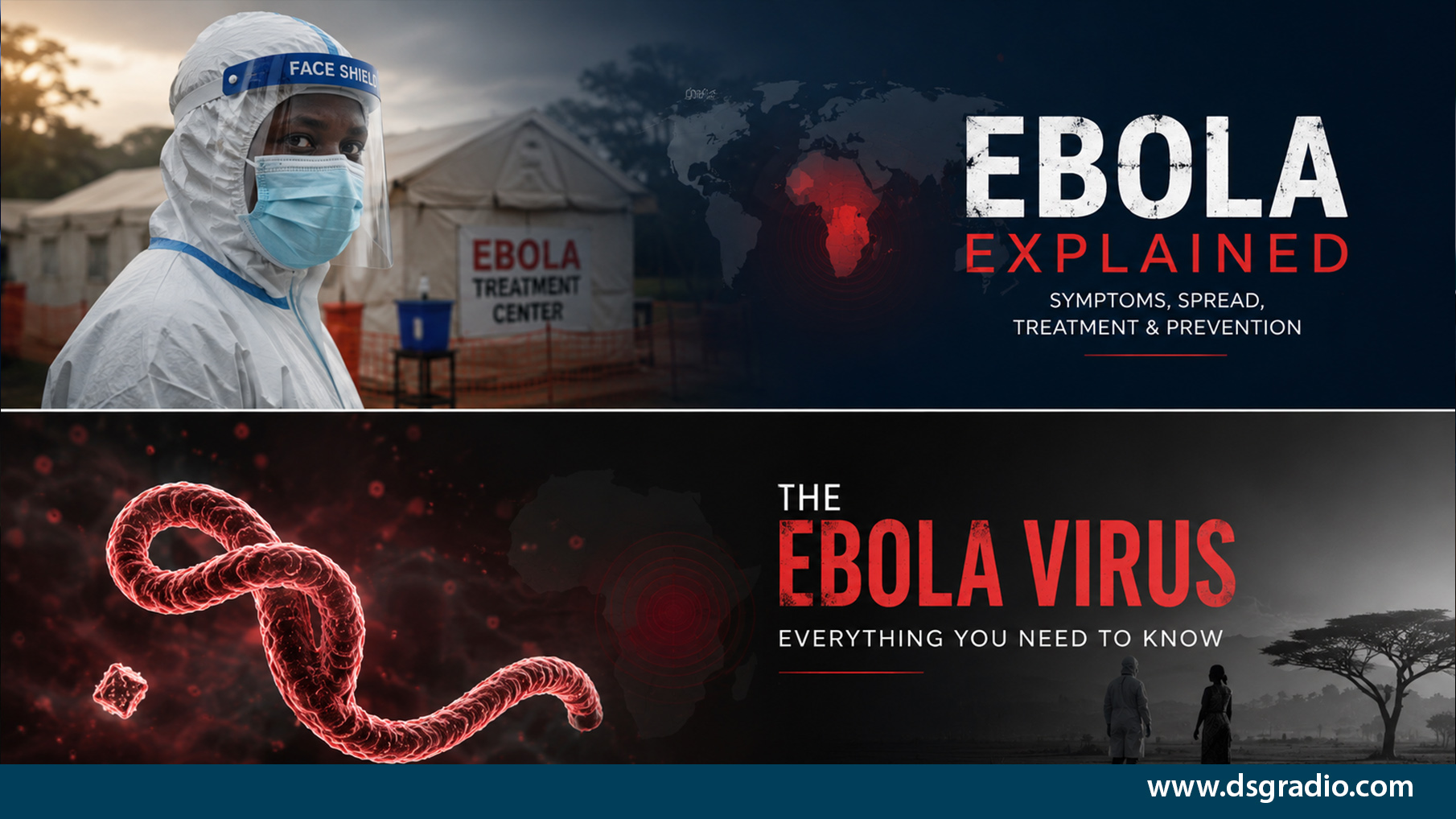
Ebola Virus Disease (EVD), commonly known as Ebola, is a severe and often fatal illness caused by viruses belonging to the Ebolavirus genus. The disease attacks multiple organs and systems in the body, leading to symptoms that can progress rapidly from fever and weakness to organ failure and internal bleeding.
According to the World Health Organization (WHO), Ebola is “a severe, often fatal illness in humans,” with average fatality rates around 50%, although past outbreaks have recorded mortality rates ranging from 25% to 90%. The WHO also notes that “early intensive supportive care with rehydration and the treatment of symptoms improves survival.”
The Centers for Disease Control and Prevention (CDC) describes Ebola as a rare but deadly disease caused by infection with one of several Ebola viruses found mostly in sub-Saharan Africa. The CDC states that symptoms can appear anywhere from 2 to 21 days after exposure and often begin with fever, fatigue, severe headache, muscle pain and sore throat before progressing into more severe complications.
Although Ebola is widely feared because of its high fatality rate and dramatic outbreaks, health experts emphasize that the virus does not spread through the air like influenza or COVID-19. Instead, transmission occurs through direct contact with infected bodily fluids such as blood, vomit, sweat, saliva or contaminated materials.
The disease first gained international attention in 1976 following simultaneous outbreaks in what is now the Democratic Republic of Congo and Sudan. The outbreak in Congo occurred near the Ebola River, which later gave the virus its name.
Scientists continue to study Ebola because of its potential to trigger deadly outbreaks, especially in regions with limited healthcare infrastructure. However, advances in vaccines, rapid testing and supportive medical care have significantly improved outbreak response and patient survival in recent years.
What Is Ebola Virus Disease?
Ebola Virus Disease (EVD), commonly called Ebola, is a severe viral hemorrhagic fever caused by infection with viruses belonging to the Ebolavirus genus. The disease attacks multiple systems in the body and can lead to organ failure, internal bleeding and death if not treated quickly.
The virus belongs to the Filoviridae family, which also includes the Marburg virus. Ebola is considered one of the deadliest viruses known to infect humans because of both its severity and its ability to spread through direct contact with bodily fluids.
Scientifically, the term “Ebola virus” refers to the virus itself, while “Ebola Virus Disease” describes the illness caused by the infection. In everyday language, however, both terms are often used interchangeably.
The disease primarily affects countries in sub-Saharan Africa, where outbreaks have occurred in both rural communities and densely populated cities. Despite fears, Ebola is not spread through the air like influenza or COVID-19.
Quick Facts About Ebola
| FACT | DETAILS |
|---|---|
| Virus Name | Ebola Virus Disease (EVD) |
| First Identified | 1976 |
| Main Region | Sub-Saharan Africa |
| Virus Family | Filoviridae |
| Fatality Rate | Approximately 25%–90% |
| Main Transmission | Bodily fluids |
| Vaccine Available | Yes |
| Direct Cure | No absolute cure |
| Natural Host | Fruit bats believed most likely |
The History of Ebola Outbreaks
The first known Ebola outbreaks occurred simultaneously in 1976 in what is now South Sudan and the Democratic Republic of Congo (DRC). The outbreak in Congo happened near the Ebola River, which later gave the virus its name.
The 1976 Outbreaks
The early outbreaks exposed major weaknesses in healthcare systems. Hospitals lacked protective equipment, reusable needles were common, and medical workers unknowingly became infected while treating patients.
In Yambuku, Congo, poor sterilisation practices accelerated transmission. Hundreds died within weeks, and fear spread rapidly throughout surrounding communities.
The West Africa Epidemic
The 2014–2016 West African outbreak became the deadliest Ebola epidemic ever recorded. Guinea, Liberia and Sierra Leone suffered catastrophic losses as the virus spread across borders and into urban areas.
More than 28,000 cases and over 11,000 deaths were reported during the crisis. The outbreak exposed serious global preparedness failures and forced international organisations to rethink emergency health responses.
Healthcare workers were among the hardest hit. Entire hospitals shut down, while fear and misinformation caused panic in affected communities.
The epidemic also caused major economic damage:
- Tourism collapsed
- Businesses shut down
- Schools closed
- Food shortages increased
- Foreign investment declined
The outbreak transformed global public health policy and accelerated vaccine development programs.
Types of Ebola Viruses
Scientists have identified several species of Ebola viruses.
Zaire ebolavirus
This is the deadliest and most common strain associated with major outbreaks, including the West Africa epidemic.
Sudan ebolavirus
Responsible for several outbreaks in Uganda and Sudan. Vaccines for this strain are still under development.
Bundibugyo ebolavirus
First identified in Uganda in 2007, and generally associated with lower fatality rates.
Tai Forest virus
Rare and less documented.
Reston virus
Found mainly in animals and has not caused a confirmed fatal disease in humans.
Bombali virus
Discovered in bats and still being studied.
Among these, Zaire ebolavirus remains the greatest global concern because of its high mortality rate and outbreak potential.
What Causes Ebola?
Ebola is believed to originate from animal reservoirs, particularly fruit bats, which scientists consider the most likely natural hosts.
Human infections usually begin through “spillover events,” where the virus moves from infected animals into humans. This can occur through:
- Hunting wild animals
- Handling bushmeat
- Contact with infected animal blood or organs
- Exposure to bat colonies
Once Ebola enters the human population, it can spread rapidly through close contact.
Myth vs Reality
One major misconception is that Ebola is a supernatural illness or a government-created disease. Scientific evidence strongly supports natural zoonotic transmission, meaning the virus originates in animals before infecting humans.
How Ebola Spreads
Understanding transmission remains critical during outbreaks.
Animal-to-Human Transmission
Humans can become infected after handling wildlife, such as bats, monkeys, or chimpanzees.
Human-to-Human Transmission
Ebola spreads through direct contact with bodily fluids, including:
- Blood
- Vomit
- Saliva
- Sweat
- Urine
- Feces
- Breast milk
- Semen
The virus enters through broken skin or mucous membranes.
Healthcare Transmission
Medical workers face high risks when protective equipment is inadequate. During early outbreaks, hospitals became centres of transmission.
Funeral and Burial Transmission
Traditional burial practices involving touching the bodies of deceased victims have contributed to outbreaks.
Sexual Transmission
The virus can remain in semen for months after recovery, meaning survivors may still transmit infection sexually.
How Ebola Does NOT Spread
Misinformation has fueled fear during outbreaks.
Ebola:
- Is not airborne
- Does not spread through casual conversation
- Does not spread by sitting near someone
- Is not transmitted by mosquitoes
- Cannot spread through properly cooked food
This distinction is extremely important because panic and stigma often worsen outbreaks.
Ebola Symptoms
Symptoms typically appear between 2 and 21 days after exposure.
Early Symptoms
- Fever
- Fatigue
- Headache
- Muscle pain
- Sore throat
These early signs resemble malaria, typhoid and flu-like illnesses common in Africa, making diagnosis difficult.
Advanced Symptoms
- Vomiting
- Severe diarrhea
- Rash
- Liver impairment
- Kidney dysfunction
Severe Stages
- Internal bleeding
- Bleeding from gums or nose
- Organ failure
- Shock
Not all patients experience visible bleeding, despite Ebola being classified as a hemorrhagic fever.
How Long Does Ebola Take to Show?
The incubation period ranges from 2 to 21 days.
A person is not contagious until symptoms appear. Once symptoms begin, infectiousness increases significantly as bodily fluids become contaminated.
Recovery timelines vary widely depending on:
- Access to treatment
- Hydration
- Immune response
- Speed of diagnosis
Some survivors recover within weeks, while others experience complications for months or years.
How Doctors Diagnose Ebola
Diagnosis involves laboratory testing and patient isolation.
Common methods include:
- PCR testing
- Blood analysis
- Antigen detection
Doctors must also rule out diseases with similar symptoms, including:
- Malaria
- Typhoid fever
- Lassa fever
- COVID-19
Rapid diagnosis is critical because early supportive care improves survival chances.
Ebola Treatment
There is no universal cure for Ebola, but survival rates improve dramatically with proper medical care.
Treatment focuses on:
- IV fluids
- Oxygen support
- Electrolyte replacement
- Blood pressure stabilisation
- Treatment of secondary infections
Modern medicine has also introduced monoclonal antibody therapies such as:
- REGN-EB3
- mAb114
These treatments have significantly improved outcomes for patients infected with Zaire ebolavirus.
Ebola Vaccines
One of the biggest breakthroughs in Ebola research has been the development of vaccines.
Ervebo Vaccine
The Ervebo vaccine received regulatory approval after showing strong effectiveness against the Zaire ebolavirus.
Ring Vaccination Strategy
Health officials often vaccinate:
- Contacts of infected persons
- Healthcare workers
- Nearby communities
This strategy helps contain outbreaks before they spread further.
However, vaccine access remains unequal across many regions of Africa.
Ebola Survival Rates
Fatality rates vary widely depending on:
- Virus strain
- Healthcare quality
- Speed of response
- Community awareness
Earlier outbreaks recorded mortality rates near 90 per cent. More recent outbreaks with better access to treatment have shown improved survival rates.
Early supportive care is one of the strongest predictors of survival.
Long-Term Effects on Survivors
Surviving Ebola does not always mean full recovery.
Many survivors experience:
- Eye problems
- Joint pain
- Chronic fatigue
- Hearing loss
- Depression
- Anxiety
- Social stigma
This condition is often referred to as “Post-Ebola Syndrome.”
Communities sometimes discriminate against survivors due to fear and misinformation, creating additional psychological trauma.
Ebola’s Impact on Africa
Beyond health effects, Ebola outbreaks have deeply affected African societies.
Economic Damage
Outbreaks disrupt trade, tourism and agriculture.
Healthcare Pressure
Hospitals become overwhelmed, while routine medical care declines.
Education Disruptions
Schools often close during outbreaks.
Fear and Stigma
Rumours and distrust can weaken public cooperation.
Countries including Liberia, Sierra Leone, Guinea and the DRC have all faced long-term social and economic consequences from Ebola epidemics.
Ebola vs Other Deadly Viruses
Ebola vs Marburg
Both belong to the same virus family and cause hemorrhagic fever.
Ebola vs Lassa Fever
Lassa fever is more common in West Africa but generally less deadly.
Ebola vs COVID-19
COVID-19 spreads far more easily through respiratory transmission, while Ebola is deadlier but harder to transmit.
Ebola vs Monkeypox
Monkeypox typically causes lower fatality rates and different symptoms.
These comparisons help public health experts prioritize responses during outbreaks.
How to Prevent Ebola
Prevention remains the strongest defense against Ebola outbreaks.
Key measures include:
- Frequent handwashing
- Avoiding bodily fluids
- Safe burial practices
- Protective equipment for healthcare workers
- Early reporting of symptoms
- Avoiding contact with infected animals
Public education campaigns are especially important during outbreaks.
What To Do During an Ebola Outbreak
For Families
Avoid direct contact with infected persons and seek medical help immediately.
For Healthcare Workers
Use personal protective equipment consistently.
For Travelers
Follow government and WHO travel advisories.
For Communities
Report suspected cases early and avoid spreading misinformation.
Community trust plays a major role in outbreak control.
Common Myths About Ebola
“Ebola is airborne”
False. Ebola spreads through bodily fluids, not through the air.
“Traditional herbs can cure Ebola”
No scientific evidence supports this claim.
“Only Africans get Ebola”
False. Ebola can infect anyone exposed to the virus.
“All Ebola patients die”
False. Survival rates improve significantly with early treatment.
Global Response to Ebola
International organizations now respond more quickly to Ebola outbreaks than in the past.
Major responders include:
- World Health Organization (WHO)
- Centers for Disease Control and Prevention (CDC)
- African CDC
- UNICEF
- Médecins Sans Frontières (MSF)
The global response has improved surveillance systems, emergency coordination and vaccine distribution networks.
Lessons the World Learned From Ebola
Ebola changed global thinking about infectious diseases.
Key lessons include:
- The importance of rapid response
- Investment in healthcare systems
- Community engagement
- Vaccine research
- International cooperation
The Ebola experience also influenced how countries later approached COVID-19 preparedness and outbreak monitoring.
Frequently Asked Questions About Ebola
What causes Ebola?
Ebola is caused by viruses belonging to the Ebolavirus genus.
Is Ebola curable?
There is no guaranteed cure, but supportive care and modern therapies improve survival rates.
Can Ebola spread through air?
No. Ebola is not airborne.
Is there an Ebola vaccine?
Yes. Vaccines such as Ervebo help protect against certain Ebola strains.
Which countries have experienced Ebola outbreaks?
Countries including the DRC, Uganda, Guinea, Liberia and Sierra Leone have reported outbreaks.
Can Ebola survivors recover fully?
Some recover fully, while others experience long-term complications.
Conclusion
Ebola remains one of the world’s most dangerous infectious diseases, but scientific progress has dramatically improved humanity’s ability to detect, contain and treat outbreaks. While fear often surrounds the virus, knowledge remains one of the most effective tools against misinformation and panic.
The future of Ebola response depends on stronger healthcare systems, continued vaccine development, rapid outbreak surveillance and community trust. For Africa and the global health community, the lessons learned from past outbreaks continue to shape preparedness for future epidemics.
As research advances and public awareness grows, the hope is that future Ebola outbreaks can be contained faster, treated more effectively and prevented from becoming global health emergencies.
RECOMMENDED COVERAGE
Anambra HIV Prevention Strategy Gains Attention
An in-depth report on how public health strategies in Nigeria are shaping disease prevention efforts and attracting broader national attention.
Hantavirus Outbreak Concerns Raise Global Health Questions
A closer look at emerging infectious disease concerns and how health authorities respond to outbreak risks.
Imo Free Healthcare Initiative Explained
An analysis of how healthcare access reforms are affecting communities and public health delivery in Nigeria.
About the Author