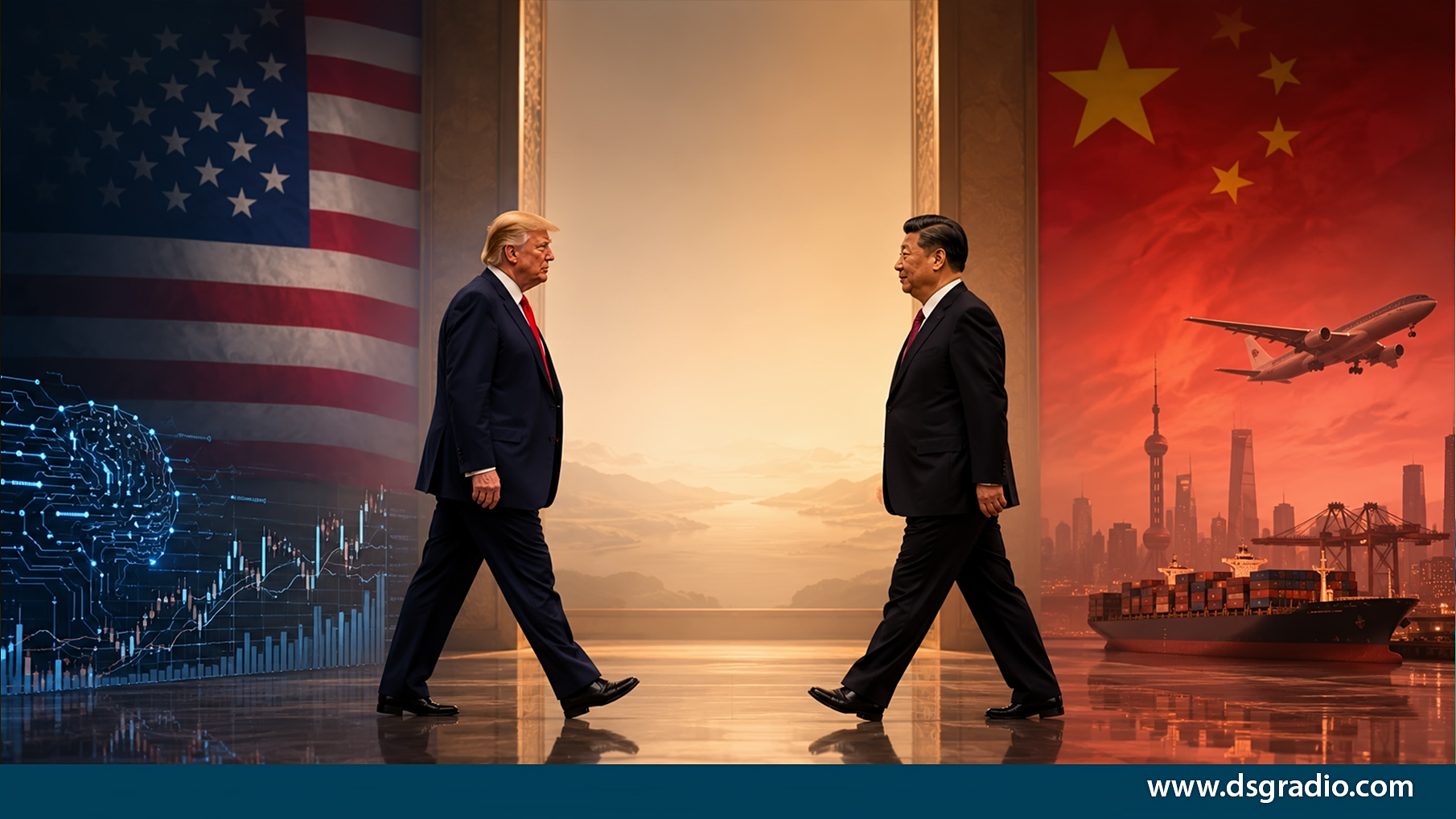
Trump Xi Talks Focus on Trade, AI and Taiwan
The upcoming Trump Xi talks in Beijing are shaping up to be one of the most consequential diplomatic meetings of 2026, with trade tensions, artificial intelligence rivalry, Taiwan security concerns and Middle East instability all expected to dominate discussions between the leaders of the world’s two largest economies.
US President Donald Trump is scheduled to visit China from May 13 to May 15 for his first official trip to Beijing since returning to office, while Chinese President Xi Jinping is expected to use the summit to stabilise relations strained by tariffs, technology disputes and geopolitical competition.
The meeting also comes at a time of heightened uncertainty in global markets, as Washington and Beijing attempt to preserve a fragile truce on rare earth minerals while navigating disputes over Taiwan, Iran, and advanced AI development.
According to Chinese foreign ministry spokesperson Guo Jiakun, Xi and Trump are expected to hold “an in-depth exchange of views on major issues concerning China-US relations and world peace and development.”
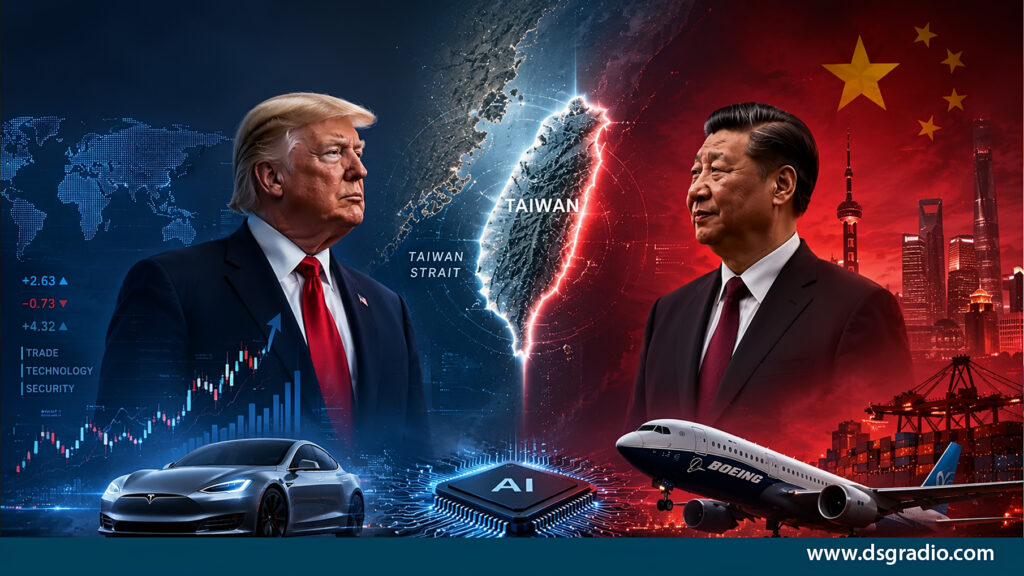
Why the Trump Xi Talks Matter Globally
The Trump Xi talks go far beyond traditional diplomacy.
The summit is expected to influence:
- Global supply chains
- Technology competition
- Aviation and manufacturing markets
- Oil prices
- Artificial intelligence regulation
- Taiwan Strait security
- US-China trade policy
The discussions are also being closely watched across Africa, including Nigeria, where businesses remain heavily dependent on Chinese imports and global commodity pricing.
A prolonged deterioration in US-China relations could affect:
- Nigerian manufacturing costs
- Import prices
- Foreign investment flows
- Global oil market stability
The talks come months after both countries paused a bruising trade war that had seen triple-digit tariffs imposed on Chinese products and threats from Beijing to restrict rare-earth exports.
The rare earth minerals issue remains especially critical because the materials are essential for:
- Electric vehicles
- Smartphones
- Semiconductor production
- AI infrastructure
- Military technology
As previously reported in DSG HERALD’s coverage of China-Africa trade alliances, Beijing has increasingly expanded its economic influence through trade diplomacy and strategic supply chains.
Business Leaders Join Trump’s China Visit
One of the most notable aspects of Trump’s China visit is the large delegation of American corporate executives accompanying him to Beijing.
According to a Reuters report, executives expected to join the trip include:
- Tesla CEO Elon Musk
- Apple CEO Tim Cook
- Boeing CEO Kelly Ortberg
- GE Aerospace CEO Larry Culp
- BlackRock CEO Larry Fink
- Qualcomm CEO Cristiano Amon
- Visa CEO Ryan McInerney
- Mastercard CEO Michael Miebach
The White House is expected to prioritise discussions involving:
- Aviation deals
- Agriculture exports
- Technology investment
- Trade cooperation forums
China is also expected to announce purchases of Boeing aircraft and American agricultural and energy products.
Industry sources cited in reports said Boeing has been negotiating a major agreement that could involve up to 500 Boeing 737 MAX aircraft, alongside widebody jets powered by GE engines.
If finalised, the agreement could become one of the largest aircraft orders in aviation history.
According to Reuters, Nvidia CEO Jensen Huang will not attend the trip, despite growing US-China tensions over advanced semiconductor technology and the export of artificial intelligence.
The exclusion highlights the sensitive nature of AI competition between Washington and Beijing.
US China Trade and Rare Earth Negotiations
A major objective of the Trump Xi talks is expected to involve extending the rare earth minerals agreement reached after earlier trade disputes.
US officials said both countries are considering mechanisms to facilitate:
- Mutual trade
- Investment cooperation
- Economic dialogue
- Supply chain coordination
Officials also suggested that new trade and investment forums could emerge from the summit.
The talks are especially important because China remains the dominant global supplier of rare earth minerals used in modern technology manufacturing.
Any disruption in supply could affect:
- Electric vehicle production
- Smartphone manufacturing
- Renewable energy systems
- Defense industries
The issue also has major implications for African economies linked to global mineral exports and manufacturing supply chains.
Nigeria, which imports large volumes of Chinese industrial products, could face higher prices if trade tensions worsen.
At the same time, analysts say African exporters may benefit if global supply chains diversify away from existing routes.
DSG HERALD previously examined how China’s expanding economic strategy is reshaping international alliances through tariff-free trade policies for African nations.
Taiwan Arms Sales Return to the Agenda
Taiwan remains one of the most politically sensitive issues between Washington and Beijing.
Trump confirmed that he plans to discuss Taiwan arms sales directly with Xi during the summit.
China considers Taiwan part of its territory, while Taiwan rejects Beijing’s sovereignty claims.
The United States follows a “One China” policy but remains Taiwan’s largest international arms supplier and is legally obligated to support the island’s defence capabilities.
In December, the Trump administration announced what officials described as the largest US weapons package ever approved for Taiwan, reportedly worth more than $11 billion.
The package significantly increased tensions between Washington and Beijing.
Trump told reporters that Xi opposes continued US arms sales to Taiwan, adding that the issue would be among several major topics discussed during the Beijing meetings.
Despite ongoing military tensions around Taiwan, Trump said he does not believe conflict will erupt during his presidency.
According to Reuters, Taiwanese officials also reaffirmed plans to strengthen defence cooperation with the United States.
Iran, Oil Sanctions and Middle East Pressure
Iran is expected to become another major point of discussion during the Trump Xi talks.
The summit comes days after Washington imposed fresh sanctions targeting companies and individuals accused of helping Iran ship oil to China.
The US Treasury Department announced sanctions against:
- Three individuals
- Nine companies
- Firms based in Hong Kong
- Companies operating in the United Arab Emirates
- An Oman-based logistics group
US officials accused the entities of helping the Iranian Revolutionary Guard Corps move oil shipments through front companies and shadowy tanker networks.
The sanctions were announced as Washington seeks Chinese cooperation to reduce tensions with Iran and secure shipping routes around the Strait of Hormuz.
Oil market analysts are watching developments closely because instability involving Iran could affect global crude prices, with possible consequences for fuel-dependent economies such as Nigeria.
According to Reuters, the Trump administration said it would continue targeting financial networks linked to Iran’s oil exports and military financing.
Artificial Intelligence Emerges as New Battleground
Artificial intelligence is rapidly becoming one of the defining areas of strategic competition between China and the United States.
US officials said both governments may explore establishing communication channels focused on AI safety and technological risks.
Washington has increasingly expressed concern about advanced Chinese AI models and their potential military and geopolitical implications.
The discussions come amid growing restrictions on semiconductor exports and advanced computing technology.
The issue also connects to broader competition over:
- Cybersecurity
- Data infrastructure
- AI chips
- Defense technology
- Economic dominance
DSG HERALD recently explored China’s expanding AI ambitions in its report on China’s national technology innovation strategy.
Meanwhile, AI development continues to reshape industries globally, including robotics and automation, as seen in DSG HERALD’s previous coverage of the humanoid robot marathon powered by AI systems.
Human Rights Issues Also Expected
Trump also confirmed that he plans to raise the case of jailed Hong Kong media tycoon Jimmy Lai during discussions with Xi.
Lai, a prominent pro-democracy figure and founder of the now-shuttered Apple Daily newspaper, was sentenced earlier this year on charges linked to alleged collusion with foreign forces and publication of seditious materials.
Trump additionally mentioned the detention of Zion Church founder Pastor Jin Mingri.
Human rights concerns remain a longstanding point of disagreement between Washington and Beijing.
Can the Summit Stabilise US-China Relations?
The Trump Xi talks represent more than another diplomatic summit.
They are unfolding during a period when:
- Global trade systems remain fragile
- AI competition is accelerating
- Taiwan tensions continue rising
- Middle East instability threatens oil markets
- Rare earth supply chains remain vulnerable
Whether the Beijing meetings produce lasting agreements remains unclear.
However, the outcome could significantly influence the direction of global trade, technology competition and geopolitical stability over the coming years.
For countries like Nigeria and many African economies closely tied to global commodity flows and Chinese trade networks, the consequences of the summit may extend far beyond Washington and Beijing.
Recommended Coverage:
- China-Djibouti Relations Reveal High-Stakes Power Battle
An analysis of how China’s strategic partnerships in Africa are reshaping military and economic influence globally. - China Boosts AI and Tech Innovation With New Government Plan
Explores Beijing’s long-term strategy to dominate artificial intelligence and advanced technology sectors. - China-Africa Trade Deal Reshapes Global Alliances
Examines how China’s trade policies are transforming economic relationships across Africa and beyond.
About the Author