NDC Southern Ticket Reshapes 2027 Opposition Politics
Nigeria’s opposition politics may be entering a defining phase ahead of the 2027 general election, following the Nigeria Democratic Congress (NDC) ‘s official zoning of its presidential ticket to Southern Nigeria, a move already reshaping conversations around regional power rotation, coalition politics, and the growing influence of emerging opposition alliances.
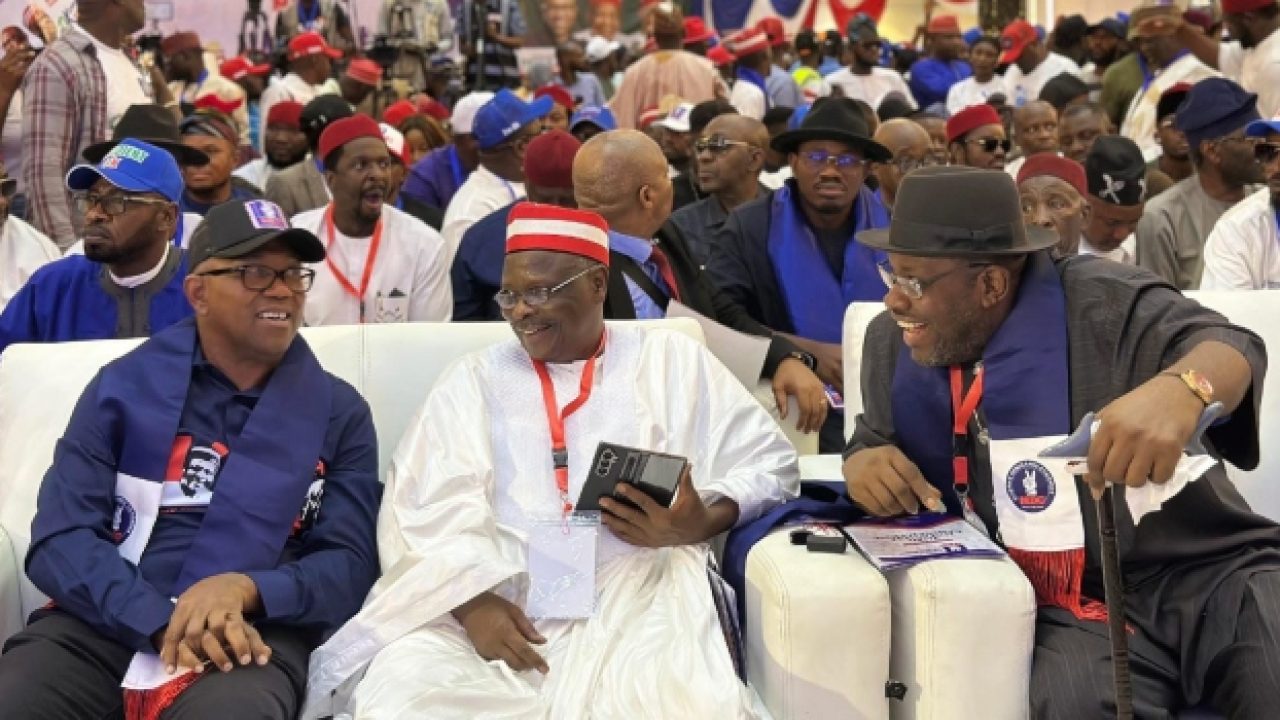
The decision was announced during the party’s national convention held in Abuja on Saturday, where party leaders also discussed constitutional amendments, internal restructuring, and the election of national executives.
According to party officials, the presidential ticket is reserved for a single four-year term in 2027, while the 2031 ticket has been allocated to Northern Nigeria. The development comes amid increasing political realignments involving major opposition figures, including former Labour Party presidential candidate Peter Obi and former New Nigeria People’s Party (NNPP) presidential candidate Rabiu Kwankwaso.
The convention also followed a wave of defections from other political parties into the NDC, including the African Democratic Congress (ADC) and the Peoples Democratic Party (PDP).
Why The NDC Southern Ticket Matters
The NDC Southern Ticket announcement is being viewed by political observers as more than a routine zoning arrangement. Analysts believe the move could redefine the balance of opposition politics ahead of the 2027 Nigerian election.
Nigeria’s political system has long operated under an informal power-sharing principle between the North and South, despite the absence of any constitutional requirement. Since the return to democracy in 1999, major parties have frequently rotated the presidency between the two regions to preserve national balance and political stability.
Former President Muhammadu Buhari, from Northern Nigeria, served two terms before President Bola Tinubu, from the South, emerged victorious in the 2023 election. Against this backdrop, the NDC’s decision appears designed to position the party within the broader national conversation around equity, regional inclusion, and political representation.
The party described the zoning arrangement as part of a broader framework intended to balance regional participation in national leadership.
Obi And Kwankwaso Change Opposition Calculations
The growing influence of Peter Obi and Rabiu Kwankwaso inside the NDC is already altering political calculations across Nigeria.
Obi formally joined the NDC after exiting the ADC, while Kwankwaso also aligned with the party amid efforts to build a stronger opposition coalition capable of challenging the ruling All Progressives Congress (APC) in 2027.
Obi, who gained significant youth support during the 2023 presidential election, reportedly cited worsening political tensions, internal crises, and increasing hostility within opposition structures as factors behind his political realignment. He also expressed concern about insecurity and what he described as the pressure facing individuals who attempt to pursue reform-oriented politics.
Kwankwaso’s entry further strengthens the coalition dynamics within the NDC, particularly in Northern Nigeria where he maintains strong grassroots influence.
Political analysts believe the combination of Obi’s urban youth appeal and Kwankwaso’s northern political structure could significantly strengthen the NDC’s national visibility ahead of the next election cycle.
The alliance has also intensified speculation about whether opposition parties may eventually consolidate into a broader anti-APC platform before 2027.
As previously reported in Nigeria Political Realignment Deepens as NDC Rises, shifting alliances among opposition figures are increasingly redefining Nigeria’s political landscape.
Defections Add Momentum To NDC Expansion
The NDC’s convention came only days after no fewer than 17 members of the House of Representatives defected from the ADC to the party during plenary proceedings.
The lawmakers include:
- Yusuf Datti
- Uchenna Okonkwo
- Adamu Wakili
- Thaddeus Attah
- George Ozodinobi
- Lilian Orogbu
- Oluwaseyi Sowunmi
- Peter Aniekwe
- Mukhtar Zakari
- George Oluwande
- Munachim Umezuruike
- Emeka Idu
- Jesse Onuakalusi
- Ifeanyi Uzokwe
- Afam Ogene
- Murphy Omoruyi
- Abdulhakeem Ado
The defections are being interpreted as an early sign that the NDC may be attempting to establish itself as a major opposition force ahead of the 2027 Nigerian election.
Several of the defecting lawmakers are regarded as influential within their constituencies, particularly in parts of the South-East and North-Central regions.
Political observers say the defections could help the party improve legislative visibility and expand its national structure.
Internal Convention Agenda And Party Restructuring
Beyond the zoning decision, the Abuja convention focused heavily on internal restructuring.
According to the agenda made available to journalists, key issues discussed included:
- Ratification of amendments to the party constitution
- Zoning arrangements
- Election of national executives
- Organizational reforms
- Coalition management strategies
The convention is also expected to ratify several decisions previously taken by the party’s National Executive Committee.
Party officials argue that internal restructuring is necessary as the NDC continues to absorb politicians from different ideological and regional backgrounds.
The rapid influx of defectors has created both opportunities and challenges for the party, especially regarding power-sharing, leadership balance, and coalition management.
Regional Politics And The North-South Debate
The NDC Southern Ticket has also revived national debate around zoning and regional equity.
Supporters of zoning argue that rotating power between regions helps reduce political marginalization and promotes national unity in a country as diverse as Nigeria.
Critics, however, believe competence and electoral popularity should outweigh regional considerations.
The debate has repeatedly surfaced within both the APC and PDP over the years, especially during presidential primaries and succession battles.
The NDC’s latest move could place pressure on rival opposition parties to clarify their own zoning arrangements ahead of the 2027 Nigerian election.
Analysts believe regional calculations may become even more important if coalition negotiations intensify among opposition blocs.
Growing Youth Interest In Opposition Politics
Another major implication of the NDC Southern Ticket strategy is its potential impact on younger voters.
The 2023 election witnessed unprecedented youth participation, especially among urban voters energised by issues such as economic hardship, unemployment, governance reforms, and insecurity.
Peter Obi’s political movement particularly resonated with younger Nigerians both online and offline.
Political strategists believe the NDC may now attempt to consolidate that demographic support while simultaneously expanding into regions where Kwankwaso maintains influence.
The success of such a strategy, however, may depend on whether the coalition can remain united despite ideological differences and competing political ambitions.
Opposition Coalition Talks Intensify
The latest developments have also fueled discussions about a broader opposition coalition ahead of 2027.
While no formal merger has been announced, the increasing movement of politicians between parties has intensified speculation about potential political alignments.
As reported by Channels Television, the NDC convention took place amid growing political realignments involving major opposition figures.
The political implications could extend beyond party politics into broader electoral strategy, voter mobilisation, and regional negotiations.
Questions also remain about how the APC and PDP may respond to the NDC’s expanding profile.
Can The NDC Become A Major Opposition Force?
Although the NDC remains relatively new within Nigeria’s evolving opposition structure, recent developments suggest the party is positioning itself as a significant player ahead of the 2027 Nigerian election.
The combination of:
- high-profile defections
- regional zoning strategy
- Obi and Kwankwaso’s involvement
- legislative expansion
- coalition discussions
has elevated the party’s national visibility.
However, analysts caution that sustaining momentum will require organisational discipline, ideological clarity, and successful management of internal rivalries.
Details regarding the party’s final presidential candidate selection process remain unclear.
It also remains uncertain whether other opposition figures may eventually join the coalition.
What appears increasingly evident, however, is that the NDC Southern Ticket decision has already altered the tone of early 2027 political conversations across Nigeria.
Recommended Coverage
- Jonathan 2027 Eligibility Battle Raises Constitutional Questions
The debate over former President Goodluck Jonathan’s eligibility continues to shape conversations around zoning and succession politics ahead of 2027. - INEC Defection Deadline Drives Fresh Political Realignments
Rising defections across major parties are accelerating coalition talks and restructuring efforts before the next election cycle. - Peter Obi’s ADC Exit Reshapes Opposition Strategy
Obi’s political realignment has intensified discussions about a united opposition coalition capable of challenging the ruling party.
About the Author