Opposition leaders jailed in Chad as political tensions escalated following a sweeping crackdown on opposition groups, fueling fresh concerns over democratic freedoms, constitutional reforms, and President Mahamat Idriss Deby’s growing grip on power.
A court in the Chadian capital, N’Djamena, sentenced eight opposition figures to eight years in prison following their arrest ahead of a planned protest march that had been banned by the government. The development came just one day after Chad’s Supreme Court ordered the dissolution of the GCAP coalition, one of the country’s most vocal opposition alliances.
The latest actions against critics of the government have intensified debate over political repression in Chad and the future of democratic governance in the Central African nation.
Why Opposition Leaders Were Arrested
The eight opposition figures were arrested at the end of April in N’Djamena, according to their lawyer, Moussa Adoum. The arrests occurred shortly before a planned “protest and indignation march” organised by opposition supporters.
Authorities accused the defendants of:
- Criminal association
- Rebellion
- Illegal possession of weapons of war
The government had earlier banned the planned protest, citing security concerns. However, opposition groups argued that the move was aimed at silencing dissent and restricting civil liberties.
Speaking after Friday’s ruling, lawyer Moussa Adoum criticised the judgment and announced plans to appeal the decision.
“We are not surprised but are disappointed by the court’s decision, which is based on non-existent offences,” Adoum said.
He added that the defence team would seek a hearing before the criminal court of appeal in N’Djamena “so that the court can rule without political pressure.”
The identities of all eight convicted opposition members were not fully specified in the original report.
Supreme Court Dissolves Coalition
The sentencing came only a day after Chad’s Supreme Court ordered the dissolution of the GCAP political movement, a coalition that united 13 political parties and civil society organisations.
The coalition had emerged as one of the strongest political voices opposing President Deby’s administration. GCAP repeatedly criticised the legitimacy of the 2024 presidential election and called for a boycott of the vote that eventually confirmed Deby as president.
In April, the coalition used social media platforms to mobilise demonstrations against what it described as:
- Injustice
- Political exclusion
- Restrictions on freedoms
- Failures in governance
The group also accused authorities of creating what it called a “climate of terror” through intimidation, threats, and repeated bans on demonstrations and public gatherings.
According to an Africanews report, the Supreme Court ruling effectively dismantled one of the few remaining organised opposition platforms in Chad.
Political analysts say the dissolution of GCAP could further narrow political space in the country ahead of future elections.
Deby’s Expanding Political Power
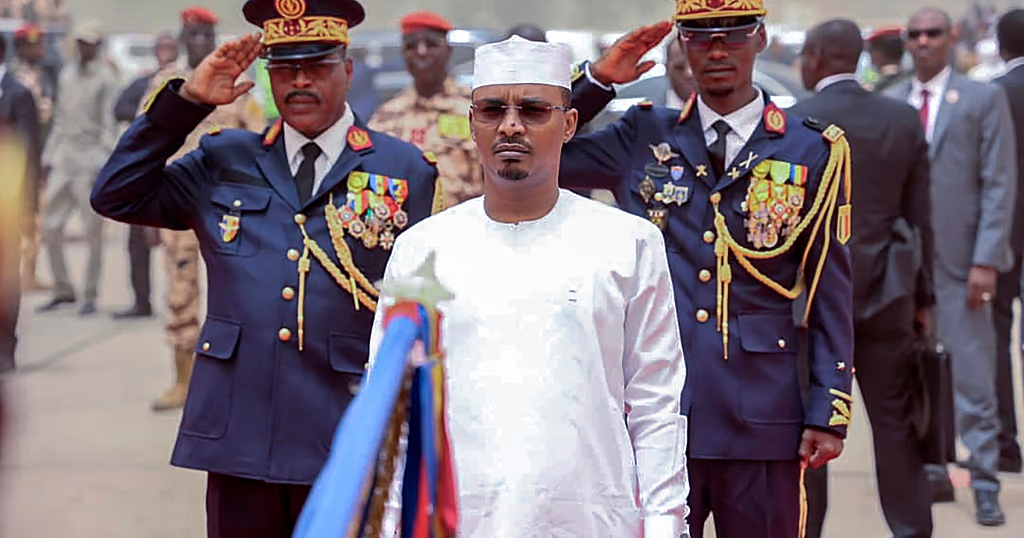
President Mahamat Idriss Deby took power in 2021 following the death of his father, Idriss Deby Itno, who ruled Chad for more than 30 years before being killed during clashes with rebels.
Mahamat Deby initially led a military transitional council before later contesting the presidency in 2024. His election victory, however, was challenged by opposition figures who accused authorities of suppressing dissent and limiting political competition.
Concerns over governance intensified further after Chad’s parliament approved constitutional revisions allowing unlimited seven-year presidential terms.
Opposition groups condemned the move as authoritarian and warned that it could pave the way for Deby to remain in office indefinitely.
Critics argue that the constitutional changes resemble political trends seen in several African countries where leaders have amended constitutions to extend their rule.
Supporters of the government, however, insist the reforms are necessary for stability and national continuity amid regional security threats.
Human Rights Concerns Grow
Human rights organisations and democracy advocates have increasingly raised concerns over political freedoms in Chad.
The latest convictions follow the high-profile case of opposition leader Succes Masra, a former prime minister and leader of the Transformers party, who was sentenced to 20 years in prison in May 2025 for “incitement to hatred.”
Human Rights Watch criticised Masra’s trial and described it as politically motivated.
The Transformers party had earlier demanded the release of the eight detained opposition figures during a rally held in early May. During that protest, security forces reportedly killed one demonstrator.
Details surrounding the protester’s death remain limited and cannot be independently verified.
Analysts say the repeated arrests of political opponents risk deepening fears about shrinking civic space in Chad.
The situation has also sparked wider discussions about:
- Freedom of assembly
- Judicial independence
- Media freedom
- Opposition participation in governance
Regional Implications Across Africa
The Chad opposition crackdown is unfolding amid broader political instability and democratic challenges across parts of Africa, especially in the Sahel region.
Countries including Mali, Burkina Faso, and Niger have experienced military takeovers, constitutional disputes, and tensions between governments and opposition groups in recent years.
Observers say Chad’s latest developments could influence regional debates about democratic transitions, civilian governance, and constitutional reform.
Security concerns remain central to Chad’s political landscape due to threats posed by armed groups operating across Central Africa and the Sahel.
The country has historically played a major role in regional military operations against extremist groups. However, critics argue that security concerns are increasingly being used to justify political restrictions.
DSG HERALD NEWS previously reported on how insecurity and militant attacks continue to affect Chad’s governance and regional stability in its report on Boko Haram attacks exposing security gaps in Chad:
Boko Haram attack exposes security gaps
Why Chad’s Opposition Crisis Matters
The latest political developments are likely to shape Chad’s democratic trajectory for years to come.
Key concerns include:
- The weakening of organised opposition movements
- Reduced political competition
- Expanded presidential authority
- Increased restrictions on protests and civic activity
Political observers warn that prolonged suppression of dissent could heighten tensions and further polarise the country’s political environment.
At the same time, government supporters argue that strong leadership remains necessary to maintain order and confront the region’s security threats.
Whether the opposition appeals succeed remains unclear.
However, the sentencing of opposition figures and dissolution of a major coalition mark one of the most significant political crackdowns in Chad since Mahamat Deby assumed power.
The developments are expected to attract increased scrutiny from regional organisations, international human rights groups, and foreign governments monitoring governance trends in Africa.
Recommended Coverage
- Nigeria Coup Trial Deepens Over Alleged Money Trail
The report examines growing legal and political tensions surrounding Nigeria’s alleged coup plot investigations and security concerns. - Court Restricts Journalists in Nigeria Coup Trial
The case highlights wider debates over transparency, judicial control, and media access during sensitive national security trials. - Nigeria Coup Trial Sparks Jurisdiction Debate
The article explores legal concerns over military court powers and their implications for democratic governance and civil rights.
About the Author