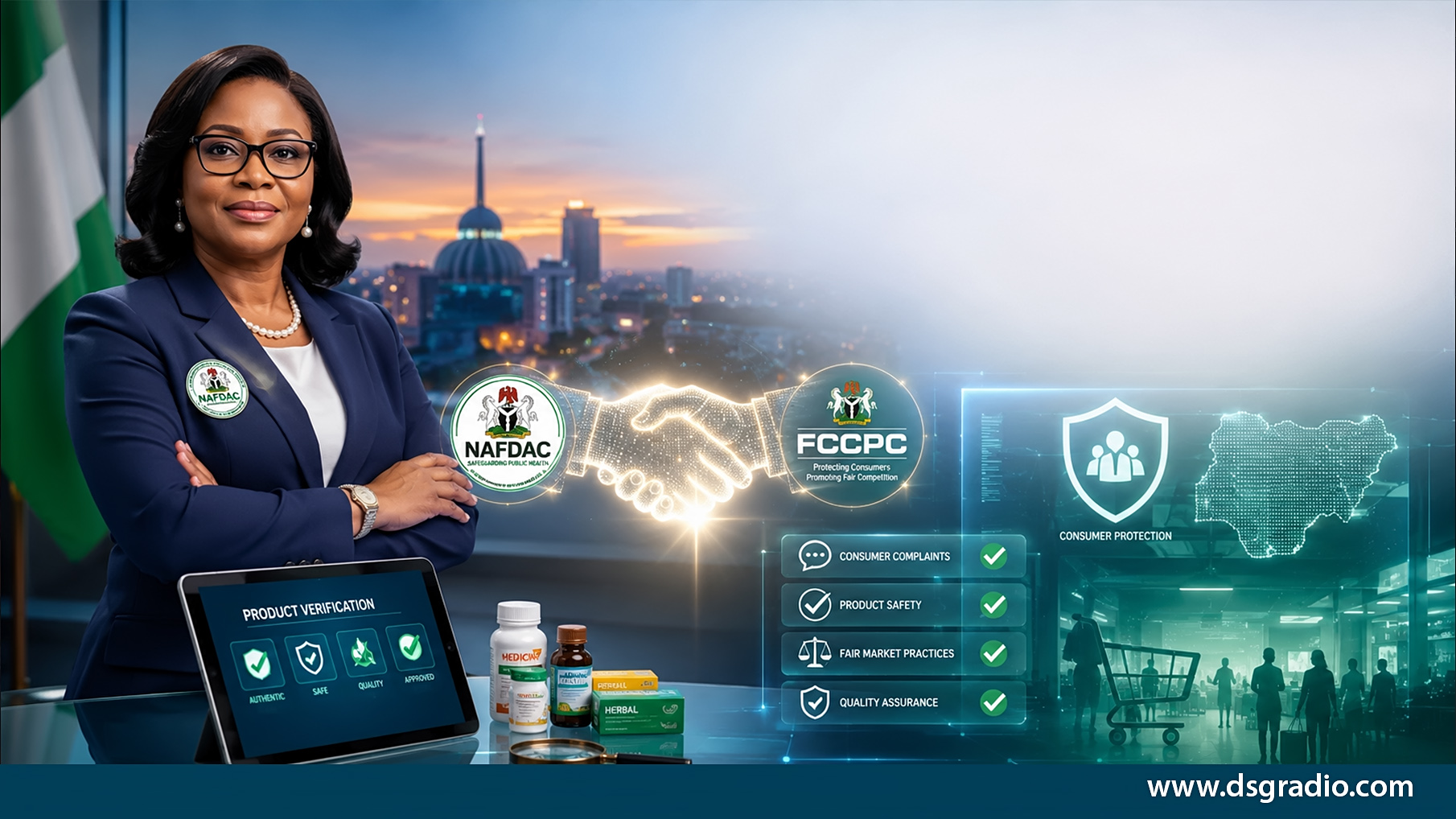
Consumer Protection Nigeria Gets Boost From NAFDAC-FCCPC Deal
Nigeria’s efforts to strengthen consumer protection and improve market regulation received renewed attention on Wednesday, following the National Agency for Food and Drug Administration and Control (NAFDAC) and the Federal Competition and Consumer Protection Commission (FCCPC) signing a renewed Memorandum of Understanding to enhance cooperation on consumer safety and regulatory enforcement.
The agreement, signed at the FCCPC headquarters in Abuja, seeks to deepen collaboration between the two agencies in areas including product safety, complaint resolution, joint investigations, information sharing, and enforcement actions against unfair market practices.
Speaking during the signing ceremony, NAFDAC Director-General Prof. Mojisola Adeyeye praised the leadership of FCCPC Executive Vice Chairman and Chief Executive Officer Tunji Bello, describing him as responsive and committed to protecting Nigerian consumers.
The renewed partnership comes at a time when Nigeria continues to battle the circulation of counterfeit drugs, substandard consumer goods, and deceptive market practices that have raised concerns among regulators, health experts, and consumers.
NAFDAC, FCCPC Renew Consumer Protection Collaboration
Prof. Adeyeye said recent interactions with the FCCPC leadership demonstrated urgency and seriousness in addressing consumer complaints and regulatory concerns.
According to her, on two separate occasions when complaints were raised directly with FCCPC leadership, prompt action followed, and the affected businesses took corrective measures. She stressed that Nigerian consumers deserve the same level of protection enjoyed in developed economies.
“It is people that use those products, and that is where the consumer comes in,” she said during the event. “Consumers have the right to complain so that NAFDAC’s work can be effective.”
The NAFDAC chief also emphasised that memoranda and institutional agreements only become meaningful when agencies actively implement them through coordinated action and enforcement.
The renewed MoU is expected to improve cooperation in:
- Consumer complaint management
- Product safety monitoring
- Joint investigations
- Regulatory intelligence sharing
- Enforcement coordination
- Technical collaboration between agencies
Why Consumer Protection Matters In Nigeria
Consumer protection has become an increasingly important issue in Nigeria due to the widespread presence of fake pharmaceuticals, unsafe food products, counterfeit cosmetics, and misleading market practices.
Regulators have repeatedly warned that counterfeit and substandard products pose serious health and economic risks to Nigerians.
NAFDAC has in recent years intensified enforcement operations targeting:
- Counterfeit medicines
- Illegal drug markets
- Unregistered cosmetics
- Hazardous packaged food products
- Unsafe chemicals and medical devices
The agency has also launched nationwide awareness campaigns encouraging consumers to verify products before purchase and report suspicious items.
Nigeria’s pharmaceutical and healthcare sectors remain under pressure from illegal imports, porous supply chains, and weak consumer awareness. This has increased the importance of inter-agency collaboration between regulators responsible for public health and consumer rights.
The renewed agreement between NAFDAC and FCCPC is part of broader efforts to strengthen market accountability and public confidence.
FCCPC Highlights Faster Complaint Resolution
FCCPC Executive Vice Chairman Tunji Bello said the agreement would improve coordination between both agencies, especially in areas where consumer rights and product safety responsibilities overlap.
According to Bello, the FCCPC remains responsible for protecting Nigerians from unfair, deceptive, and exploitative market practices, while NAFDAC regulates the safety and quality of food, drugs, cosmetics, chemicals, and medical products.
He explained that consumers are expected to benefit from:
- Faster complaint resolution
- More accessible reporting channels
- Stronger enforcement actions
- Better coordination between regulators
- Improved consumer confidence
“For consumers, the benefits are clear,” Bello said. “There will be more straightforward pathways for lodging complaints, faster resolution of issues, and stronger enforcement where standards are not met.”
He, however, warned that implementation would determine the agreement’s success.
“The real task lies in implementation,” he added. “The systems established here must be used actively, reviewed regularly and strengthened where necessary.”
Growing Focus On Product Safety Regulation
The renewed partnership also aligns with broader reforms aimed at improving Nigeria’s healthcare manufacturing and pharmaceutical supply chain.
Earlier government policies have attempted to strengthen local pharmaceutical production and reduce dependence on imports. In a related development, Nigeria recently announced plans to begin local HIV/AIDS drug production as part of efforts to improve healthcare access and drug security.
Authorities have also introduced incentives for pharmaceutical manufacturers, including waiving import duties on pharmaceutical raw materials, to support local drug production and reduce costs.
Analysts say stronger regulatory cooperation between agencies such as NAFDAC and FCCPC could help improve trust in Nigerian-made products while ensuring that manufacturers comply with safety standards.
Consumer Rights Awareness Still Low
Despite increasing regulatory activity, consumer rights awareness remains relatively low in many parts of Nigeria.
Many consumers do not formally report unsafe products or exploitative business practices due to:
- Lack of awareness
- Weak trust in institutions
- Fear of prolonged processes
- Limited access to complaint systems
Industry observers believe stronger public education campaigns may become necessary if the renewed agreement is expected to deliver a measurable impact.
Experts also note that enforcement alone may not fully address consumer protection challenges unless businesses adopt stronger compliance standards and consumers actively report violations.
Global Push For Stronger Market Regulation
Nigeria’s renewed emphasis on consumer protection mirrors global trends where governments are increasing oversight of pharmaceutical products, digital commerce, and consumer goods.
Across Africa and other developing markets, regulators are facing growing pressure to improve transparency, strengthen public safety systems, and tackle counterfeit products that threaten public health.
International agencies, including the World Health Organisation, have repeatedly warned about the dangers posed by fake medicines in low- and middle-income countries.
According to a report by the Independent Newspaper, the renewed MoU between NAFDAC and FCCPC is expected to deepen technical cooperation and strengthen enforcement mechanisms between both agencies.
Implications For Businesses And Manufacturers
The renewed regulatory partnership could also increase compliance expectations for businesses operating within Nigeria’s healthcare, pharmaceutical, cosmetics, and consumer goods sectors.
Manufacturers and distributors may now face:
- Increased monitoring
- Faster investigations
- More coordinated enforcement
- Higher compliance expectations
- Expanded consumer accountability systems
Regulatory analysts believe businesses that maintain strong product quality standards may benefit from improved consumer trust and market confidence.
However, companies found to be in violation of safety or consumer protection regulations could face stricter enforcement actions as agencies improve collaboration.
Outlook For Consumer Protection Nigeria
The renewed NAFDAC-FCCPC partnership reflects Nigeria’s broader attempt to strengthen institutional coordination in consumer safety and market regulation.
While both agencies have pledged deeper collaboration, observers say the effectiveness of the agreement will depend largely on implementation, public awareness, enforcement consistency, and institutional accountability.
For consumers, the agreement could potentially improve access to complaint systems, product safety oversight, and enforcement actions against unsafe or deceptive business practices.
Details regarding implementation timelines and operational frameworks were not specified during the signing event.
Recommended Coverage:
- China Expands AI And Technology Innovation Strategy
The report explores how government-backed innovation policies are reshaping regulation, competition, and industrial development globally. - China Grants Tariff-Free Access To 53 African Nations
The development highlights growing trade partnerships that could influence African manufacturing, imports, and consumer markets. - China-Djibouti Relations Reflect Global Strategic Competition
The article examines how international economic influence and strategic partnerships affect governance and market systems across Africa.
About the Author