UN leadership race exposes global divisions
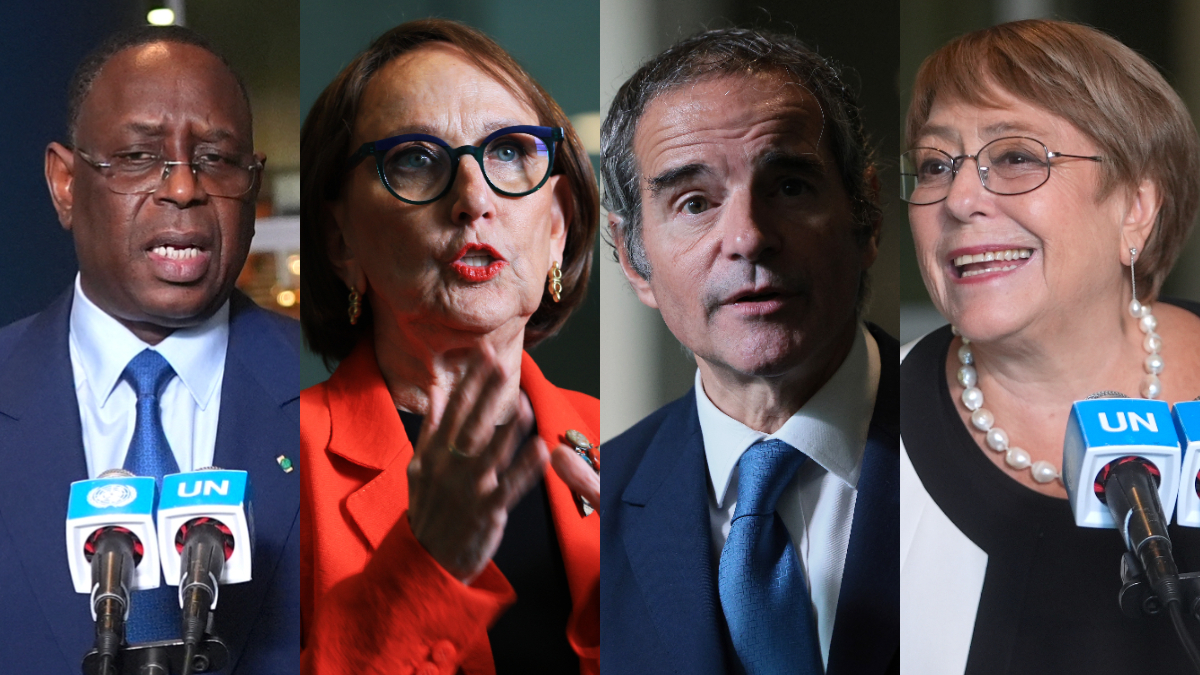
As global conflicts intensify and trust in multilateral institutions weakens, the UN leadership race is emerging as a defining test for the future of international diplomacy. Four candidates seeking to succeed António Guterres faced intense questioning in New York, outlining their visions on peace, reform, and global governance amid rising geopolitical tensions and a deepening financial crisis within the United Nations.
UN leadership race: A UN under pressure
The hearings revealed an institution grappling with multiple crises:
- A funding shortfall, with member states failing to meet financial obligations
- Growing geopolitical divisions between major powers
- Declining trust in multilateral systems
- Mounting pressure from global conflicts and climate emergencies
Candidates were subjected to extended questioning sessions lasting up to three hours, during which they often answered multiple complex questions within limited timeframes.
These exchanges underscored the scale of the challenge facing the next UN Secretary-General—leading an organisation increasingly constrained by political fragmentation.
This aligns with broader concerns outlined in DSG Herald’s analysis of the United Nations at 80: challenges in a multipolar world order, which highlights how shifting global power dynamics are reshaping international cooperation.
UN leadership race: Four visions, one crisis
Rather than presenting a unified roadmap, the candidates reflected divergent approaches to the same global crisis.
Dialogue and human rights focus
Michelle Bachelet, former Chilean president, emphasised diplomacy and dialogue as the UN’s core strength.
- She described the UN as a platform where all nations can engage equally
- Highlighted climate change as a “question of survival”
- Called for accountability mechanisms and enforcement of member contributions
She also stressed that silence in the face of atrocities is unacceptable, reinforcing a human rights-centred approach.
Pragmatism and institutional reform
Rafael Grossi, head of the International Atomic Energy Agency (IAEA), adopted a more pragmatic tone.
- Advocated restoring the UN’s role in peace and security negotiations
- Emphasised impartiality in dealing with global powers
- Proposed strengthening ties with institutions like the World Bank
Grossi framed the UN as an operational body that must deliver tangible results rather than symbolic statements.
Risk-taking diplomacy
Rebeca Grynspan, UN trade and development chief, positioned herself as a proactive leader.
- Promised early intervention in conflicts
- Supported direct engagement with all parties, including adversaries
- Criticised the UN for being overly risk-averse
She highlighted the Black Sea grain deal as a model for agile diplomacy and called for a more responsive UN structure.
Trust and multilateral reset
Macky Sall, former Senegalese president, identified trust deficit as the UN’s core problem.
- Advocated rebuilding trust between member states and leadership
- Supported quiet diplomacy, while allowing for public accountability
- Emphasised peace, security, and development priorities
He argued that restoring confidence in the UN system is essential for addressing global crises effectively.
UN leadership race: The real issue — power vs principles
Beyond policy proposals, the UN leadership race exposed a deeper structural dilemma:
Key tensions include:
- Influence of major global powers on decision-making
- Difficulty in addressing conflicts involving powerful states
- Selective enforcement of international law
- Balancing diplomacy with moral accountability
Candidates were repeatedly pressed on how they would handle politically sensitive conflicts, including Ukraine and the Middle East, often responding cautiously to avoid diplomatic fallout.
This reflects a broader crisis explored in DSG Herald’s feature on what the UN could look like in 2045, where questions about relevance and authority dominate future projections.
What this UN leadership race means for Africa and developing nations
The implications of the UN leadership race extend significantly to Africa and other developing regions.
Key issues raised:
- Climate financing gaps, particularly for vulnerable nations
- Rising debt burdens limiting development capacity
- Underrepresentation in global decision-making structures
- Need for equitable access to development funding and technology
Bachelet’s emphasis on climate justice and Grynspan’s focus on development highlight the urgency of addressing structural inequalities within the global system.
For countries like Nigeria, these debates are critical, especially in areas such as:
- Climate adaptation funding
- Youth unemployment
- Economic resilience amid global shocks
Can the next UN leader fix the system?
While candidates presented ambitious agendas, structural limitations remain significant.
Challenges include:
- Dependence on member states for funding and political support
- Influence of permanent members of the Security Council
- Institutional bureaucracy limits rapid response
- Competing national interests within a multipolar world
Even the most reform-driven candidate would face constraints inherent in the UN system.
As noted during the sessions, the next Secretary-General must balance idealism with political realism, navigating complex global dynamics while maintaining institutional credibility.
The UN leadership race is more than a contest of personalities—it reflects a fractured global order. The candidates’ visions reveal competing priorities: dialogue versus pragmatism, risk-taking versus caution, and reform versus stability.
Ultimately, the outcome will shape how the United Nations responds to some of the most pressing challenges of the 21st century—from war and climate change to inequality and governance.
Whether the next leader can bridge these divides remains uncertain, but the stakes for global diplomacy have rarely been higher.
🔗 RELATED ARTICLES
Related coverage:
- UN at 80: Challenges in a multipolar world
Explores how shifting global power dynamics are weakening multilateral institutions. - What the UN could look like in 2045
Examines future scenarios for global governance and institutional reform. - UN’s 80-year journey: successes and failures
Provides historical context on the UN’s achievements and persistent challenges.
About the Author