FreeTV Nigeria Launches With 100 Free Channels as FG Expands Digital Access
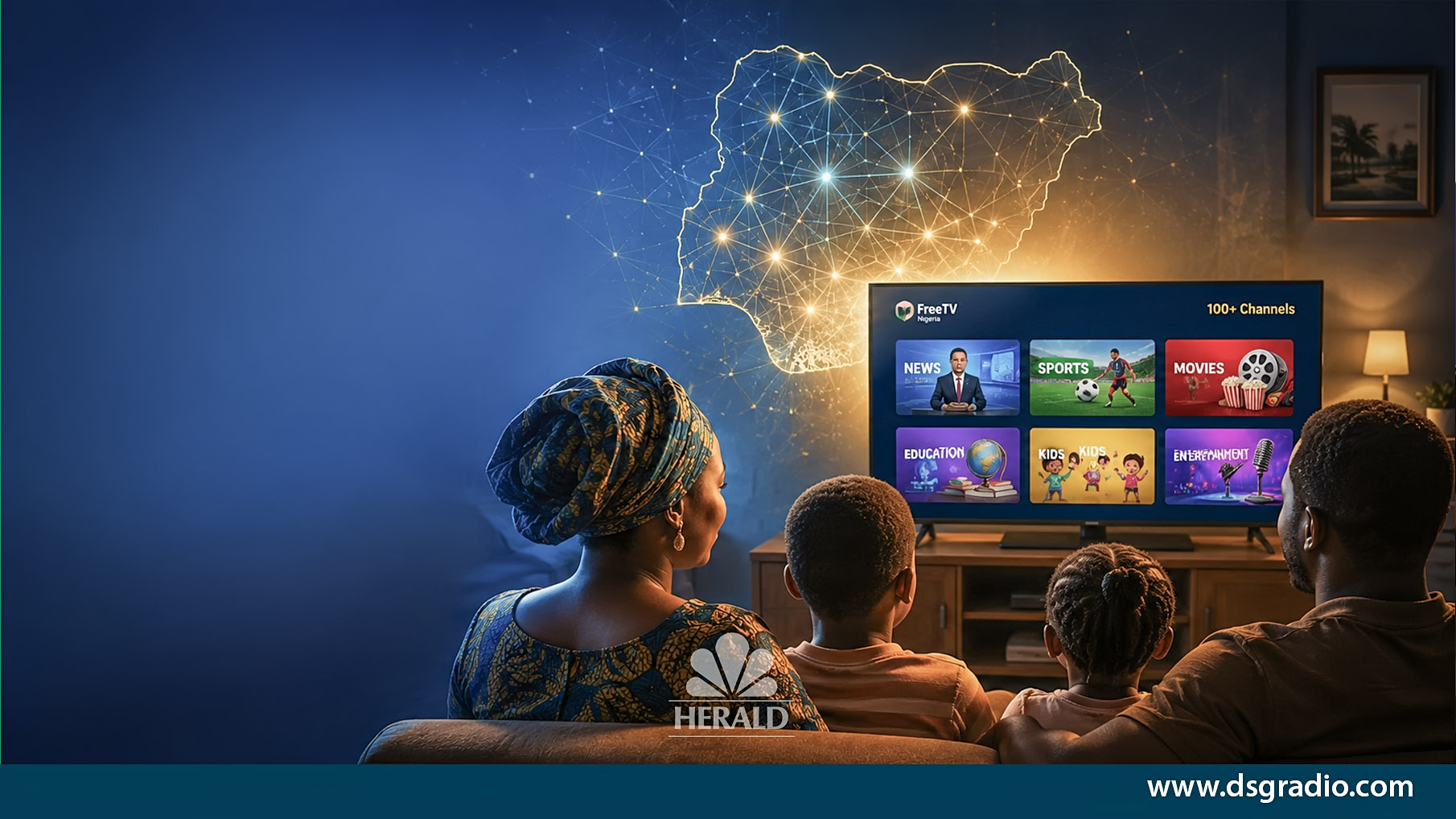
Nigeria’s push toward a fully digital broadcasting future entered a new phase on Wednesday as the Federal Government launched FreeTV Nigeria, a national digital television platform designed to provide households nationwide with free access to more than 100 television channels without monthly subscription fees.
The initiative, unveiled under Nigeria’s Digital Switch-Over (DSO) programme, is expected to widen access to information, entertainment and educational content while supporting the growth of the country’s creative economy. Government officials say the platform will reach viewers through satellite services, terrestrial transmission and a dedicated mobile application, extending digital television access to urban centres and rural communities alike.
The launch represents one of the most significant broadcasting developments in recent years as Nigeria seeks to complete its migration from analogue television to digital broadcasting before the final switch-off deadline of December 31, 2028.
What Is FreeTV Nigeria?
FreeTV Nigeria is a government-backed digital television platform developed as part of the country’s long-running digital migration programme.
According to the National Broadcasting Commission (NBC), the service will provide access to more than 100 national, regional and state television channels covering news, sports, movies, music, children’s programming, educational content and dedicated indigenous-language channels.
Officials say the platform is designed to ensure broader participation in the digital economy while making television services more accessible to citizens regardless of their location or income level.
The service differs from subscription television platforms because viewers will not be required to pay recurring monthly fees after obtaining compatible receiving equipment.
For many Nigerian households facing rising living costs, the initiative could provide a new source of entertainment and information without adding another monthly expense.
Why the FreeTV Nigeria Launch Matters
The significance of the launch extends beyond television viewing.
For years, policymakers have argued that digital broadcasting can serve as a tool for inclusion by expanding access to information, educational programming and public-interest content.
NBC Director-General Charles Ebuebu described the project as another step toward implementing President Bola Tinubu’s Renewed Hope Agenda.
According to Ebuebu, the programme prioritises access to opportunities, job creation, local enterprise development and the use of technology to improve everyday life for Nigerians.
He stated that FreeTV forms part of Nigeria’s Digital Switch-Over programme and is intended to ensure that no Nigerian is excluded as the country transitions fully from analogue broadcasting.
The initiative arrives at a time when governments worldwide are increasingly investing in digital infrastructure as a foundation for economic growth and social development.
Nigerians Do Not Need New Television Sets
One of the most notable aspects of the announcement is the assurance that citizens do not necessarily need to purchase new television sets.
According to the NBC, existing televisions can continue to function provided they are connected to compatible DVB-T2 or DVB-S2 decoders.
Households already using compatible free-to-air decoders may not need to purchase additional equipment.
This is expected to reduce barriers to adoption, particularly in communities where purchasing new electronic devices may be financially challenging.
Government officials have encouraged viewers to check their decoder compatibility ahead of the nationwide rollout.
How FreeTV Nigeria Supports the Digital Switch-Over
Nigeria’s Digital Switch-Over programme has been underway for years as part of a broader international movement toward digital broadcasting.
Countries across Europe, Asia, Africa and the Americas have gradually phased out analogue television services because digital systems offer several advantages:
- Better picture quality
- Improved sound quality
- Greater channel capacity
- More efficient spectrum management
- Enhanced broadcasting flexibility
The transition also allows governments to reallocate valuable radio spectrum resources for telecommunications, internet services and emerging technologies.
In Nigeria’s case, completing the switch-over is considered an important step toward modernising national communications infrastructure.
The government has reaffirmed that the final analogue switch-off remains scheduled for December 31, 2028.
FreeTV Nigeria and the Creative Economy
Beyond television access, officials believe the platform could create significant opportunities for Nigeria’s media and entertainment industries.
The NBC says the initiative will support the country’s creative economy through regional production centres located in:
- Lagos
- Abuja
- Port Harcourt
- Enugu
- Kano
- Benin City
According to officials, these centres are expected to create employment opportunities for content creators, producers, editors, camera operators, sound engineers and technical professionals.
Nigeria’s creative sector has become one of the country’s most dynamic non-oil industries, generating revenue through film, music, digital content and broadcasting.
Expanding distribution channels could provide local creators with greater visibility and additional opportunities to reach audiences nationwide.
The move also aligns with broader efforts to diversify Nigeria’s economy by strengthening sectors capable of generating employment and export earnings.
Indigenous Language Programming Gains New Platform
One feature highlighted by government officials is the inclusion of dedicated Yoruba, Hausa and Igbo language channels.
Media experts have frequently argued that indigenous-language broadcasting plays a crucial role in cultural preservation, public education and community engagement.
Dedicated regional-language content could help improve access to information for viewers who prefer consuming news and educational programming in their native languages.
The initiative may also create opportunities for content producers focused on local culture, history and storytelling.
As Nigeria continues to embrace digital media, indigenous-language programming remains an important component of national cultural identity.
Consumer Impact and Industry Competition
The introduction of a large-scale free-to-air platform may also influence competition within Nigeria’s television market.
Subscription television providers continue to dominate premium sports and exclusive entertainment programming, but FreeTV offers an alternative option for viewers primarily interested in general entertainment, news and educational content.
The platform’s long-term success will likely depend on several factors, including:
- Signal reliability
- Content quality
- Public awareness
- Decoder accessibility
- Mobile app performance
- Nationwide coverage
If successfully implemented, the initiative could increase consumer choice while encouraging innovation across the broader broadcasting sector.
The development comes amid ongoing discussions about affordability and access within Nigeria’s media landscape.
Readers interested in developments affecting television consumers can also explore FCCPC intervention in pay-TV pricing policies at [INSERT DSG HERALD INTERNAL LINK].
Digital Inclusion Beyond Urban Centres
A major challenge facing many technology initiatives in developing economies is ensuring that benefits reach rural and underserved communities.
Government officials say FreeTV will specifically target areas previously left out of earlier DSO pilot phases.
The inclusion of satellite transmission alongside terrestrial broadcasting is intended to improve coverage and ensure broader accessibility nationwide.
For millions of Nigerians, television remains one of the most accessible sources of news, public information and educational content.
Expanding free digital access could therefore contribute to narrowing information gaps between urban and rural populations.
Regional Significance Across Africa
Nigeria is not alone in pursuing digital migration.
Several African countries have implemented digital switch-over programmes aimed at improving broadcasting quality and expanding access to media services.
As Africa’s most populous nation, Nigeria’s progress is closely watched by policymakers, regulators and industry stakeholders across the continent.
Successful implementation of FreeTV could serve as an important reference point for other countries working to complete their own broadcasting transitions.
The project also highlights the growing role of digital infrastructure in supporting education, economic development and creative industries throughout Africa.
What Happens Next?
Following the launch, attention will shift toward implementation, adoption rates and service performance.
The government is encouraging Nigerians to verify decoder compatibility and download the FreeTV mobile application as preparations continue for wider deployment.
In the months ahead, industry observers will monitor how quickly households adopt the platform, whether channel offerings continue to expand and how effectively the initiative supports local content creators.
For now, the launch of FreeTV Nigeria marks a major milestone in the country’s digital transformation journey.
If the platform achieves its stated goals, it could help broaden access to information, strengthen the creative economy and accelerate Nigeria’s transition to a fully digital broadcasting environment before the 2028 analogue switch-off deadline.
As Nigeria advances its Digital Switch-Over programme,FreeTV Nigeria is emerging as one of the most ambitious attempts yet to combine technology, inclusion and economic opportunity within the country’s media sector.
Recommended Coverage
Fake NIN Portal Scam Sparks Fresh NIMC Alert
NIMC has issued fresh warnings over fraudulent identity-registration platforms as cybercrime concerns continue to grow.
6G Technology Launch Signals Next Connectivity Revolution
The report examines how next-generation wireless technology could reshape communications, streaming and digital services.
FCCPC Moves Against DStv and GOtv Price Increase
The story explores regulatory action in Nigeria’s pay-TV market and its implications for consumers.
About the Author