ISIS West Africa Threat Puts Nigeria in US Focus
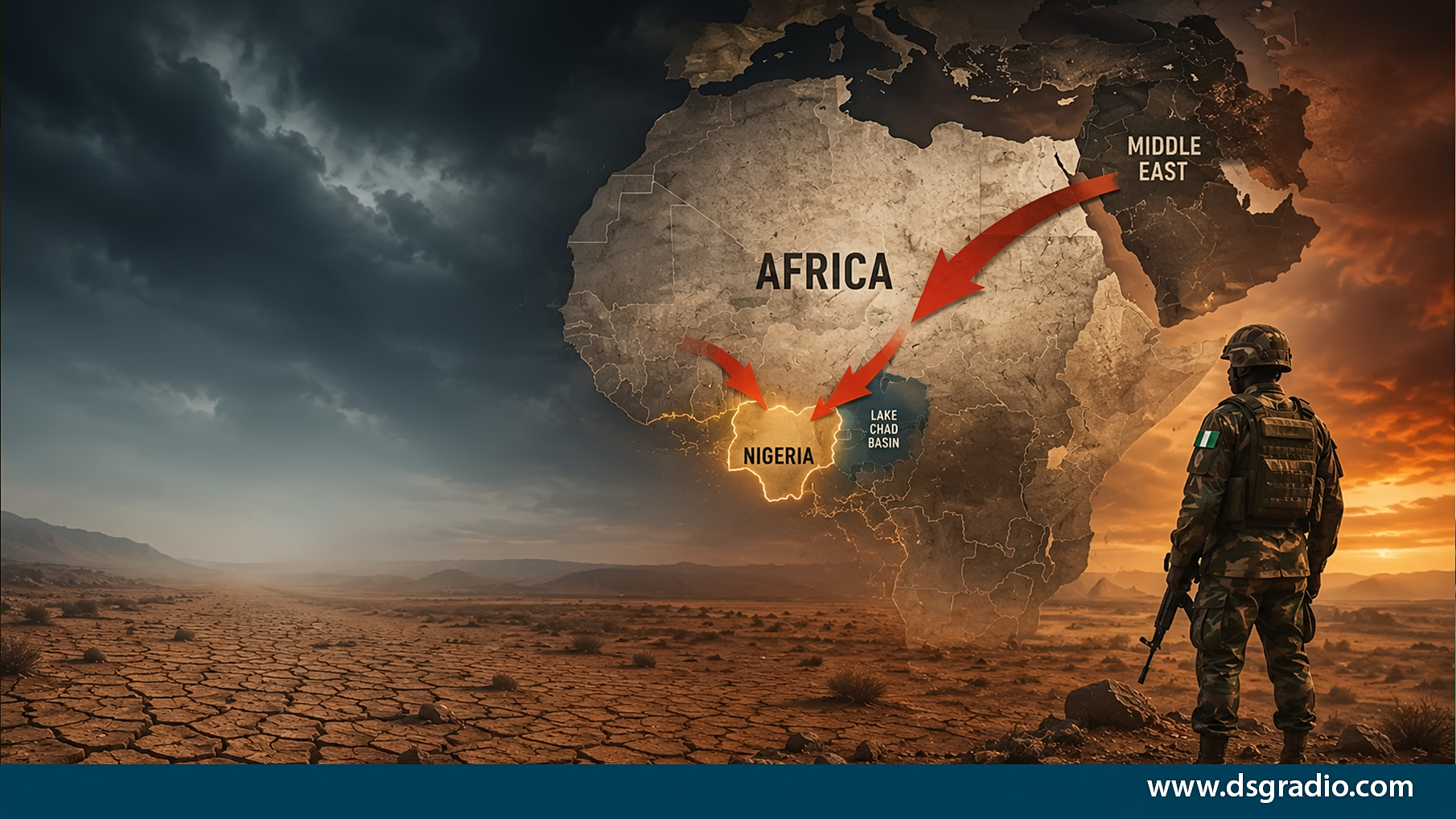
The United States has identified Nigeria and the Lake Chad Basin as major fronts in its evolving global counterterrorism strategy, warning that extremist groups linked to ISIS are increasingly shifting operations into Africa following the collapse of their territorial strongholds in Iraq and Syria.
Washington’s latest security assessment suggests Africa is becoming one of the world’s most significant battlegrounds against jihadist insurgencies, with the Sahel, West Africa, Mozambique, Sudan, Somalia, and the Lake Chad region now viewed as vulnerable zones for terror regrouping.
According to the 2026 US counterterrorism strategy, surviving ISIS elements and affiliated extremist networks have exploited weak governance structures, porous borders, and ungoverned territories across parts of Africa and Central Asia.
The strategy specifically identified Nigeria as a critical regional security partner amid growing concerns over the activities of extremist groups operating around the Lake Chad Basin.
Why Africa Has Become a New ISIS Frontier
For years, Iraq and Syria represented the operational heart of ISIS. However, the destruction of the group’s territorial “caliphate” forced surviving militants to disperse into fragile regions where state control remains limited.
The US strategy document argued that parts of Africa now provide the kind of operational space extremist organisations previously enjoyed in the Middle East.
“Subsequently, the surviving remnants of the world’s most dangerous terrorist group of the modern age were forced to relocate to Africa and Central Asia, in turn exploiting the ungoverned spaces there,” the document stated.
Security analysts have long warned that instability across the Sahel region — stretching from Mali to Chad — has created fertile ground for militant expansion.
Weak border enforcement, political instability, military coups, economic hardship, and communal conflicts have all contributed to the growing influence of armed extremist factions across the region.
The latest US assessment suggests that the threat is no longer confined to isolated insurgencies but has evolved into a broader regional security challenge capable of destabilising multiple countries simultaneously.
This concern mirrors recent developments highlighted in DSG HERALD NEWS’ earlier report on the Mali militant alliance attack shaking Sahel security, where coordinated extremist operations exposed the fragility of regional security structures.
Nigeria and the Lake Chad Basin Under Pressure
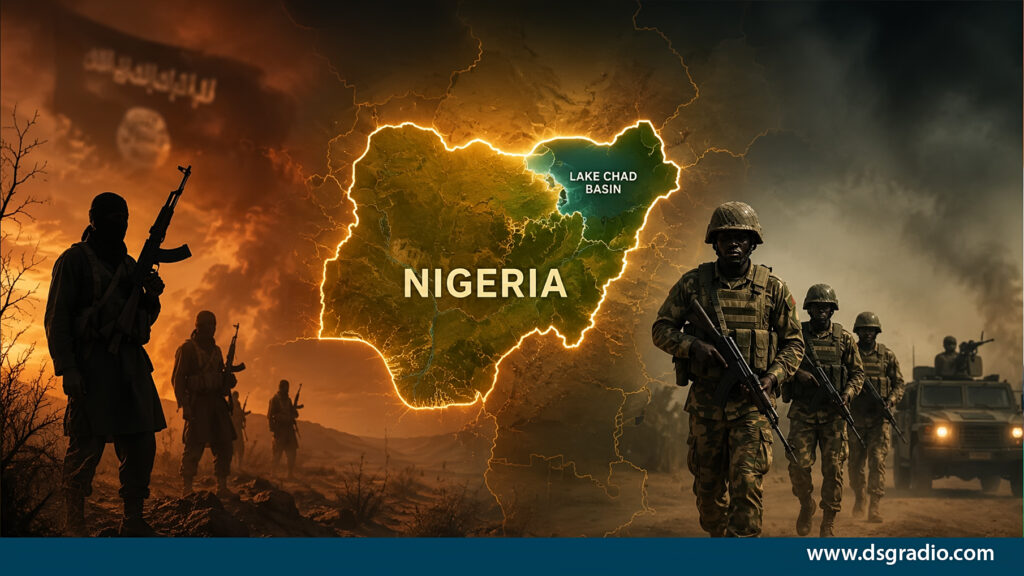
Nigeria remains central to regional counterterrorism efforts due to its prolonged battle against Boko Haram and the Islamic State West Africa Province, commonly known as ISWAP.
The Lake Chad Basin — shared by Nigeria, Niger, Chad, and Cameroon — has become one of Africa’s most volatile security corridors.
For over a decade, insurgent groups have carried out attacks targeting civilians, military formations, religious communities, and infrastructure across northeastern Nigeria and neighbouring countries.
The US strategy document emphasised that extremist organisations continue to exploit remote territories and weak governance systems within the region.
Washington said its objective would be to prevent extremist groups from developing operational bases capable of threatening American interests and regional stability.
The strategy further stated that the US would continue assisting African governments through intelligence sharing and counterterrorism cooperation while reducing direct military deployments on the continent.
“We will continue to work together with governments threatened by groups like ISIS and al Qaeda affiliates who threaten us as well,” the document stated.
Regional military cooperation has become increasingly important as extremist groups expand their operational reach beyond national borders.
Recent attacks in Chad, Niger, and Mali have demonstrated the transnational nature of the security threat facing West and Central Africa.
DSG HERALD NEWS previously examined similar concerns in its report on the Boko Haram attack in Chad, exposing security gaps, which highlighted growing vulnerabilities within regional counterterrorism coordination.
Trump Administration’s Counterterrorism Shift
The strategy document closely reflected the foreign policy posture of President Donald Trump’s administration, emphasising reduced direct military intervention while prioritising intelligence cooperation and partner force development.
According to the document, the United States intends to maintain what it described as a “light military footprint” across Africa.
Instead of expanding troop deployments, Washington plans to rely more heavily on local governments and regional alliances to manage security operations.
The strategy also criticised policies under former President Joe Biden, arguing that previous approaches weakened counterterrorism pressure and allowed extremist organisations to regroup.
The document praised actions reportedly taken by Trump concerning attacks on Christians in Nigeria.
“With the decisive action President Trump recently took in Nigeria, he made it clear that the slaughter of Christians will not go unchecked,” the strategy stated.
It also quoted Trump as saying on Christmas Day in 2025:
“I have previously warned these terrorists that if they did not stop the slaughtering of Christians, there would be hell to pay, and tonight, there was.”
The claims contained in the strategy document could not be independently verified.
ISIS West Africa: Rising Instability Across the Sahel
The renewed US focus on Africa comes amid worsening instability across the Sahel region.
Countries including Mali, Burkina Faso, and Niger have experienced repeated military coups in recent years while simultaneously facing escalating jihadist violence.
The weakening of international security partnerships in some countries has further complicated regional counterterrorism operations.
France significantly reduced its military presence in parts of the Sahel after tensions with local governments, while Russia’s growing influence through security partnerships has reshaped geopolitical competition across the region.
Security experts warn that extremist organisations often exploit political transitions, weak institutions, and reduced international cooperation to strengthen recruitment and territorial influence.
The United Nations and several international security organisations have repeatedly described the Sahel as one of the fastest-growing terrorism hotspots globally.
According to a report by Punch, the US strategy identified West Africa, the Sahel, Mozambique, Sudan, Somalia, and the Lake Chad Basin among regions where extremist organisations are re-establishing operational networks.
ISIS West Africa: Africa’s Expanding Role in Global Security
The latest US assessment reflects a broader geopolitical reality: Africa is increasingly becoming central to international security discussions.
Beyond terrorism concerns, the continent has emerged as a strategic arena involving competition among global powers, including the United States, China, and Russia.
The intersection of insecurity, political instability, migration pressures, and economic vulnerability has elevated Africa’s importance in global foreign policy calculations.
The US strategy acknowledged that African countries possess “almost limitless potential” if governments can establish effective territorial control and deny extremist organisations safe havens.
However, analysts caution that military responses alone may not permanently resolve the underlying drivers of extremism.
Issues such as unemployment, weak governance, corruption, displacement, and poverty continue to create conditions that militant groups exploit for recruitment and expansion.
Security Implications for West Africa
The growing presence of ISIS-linked networks in Africa raises significant concerns for regional governments and international security agencies.
Among the key concerns are:
- Increased cross-border terrorist operations
- Expansion of extremist recruitment networks
- Pressure on already stretched military resources
- Rising humanitarian crises from displacement
- Threats to economic stability and foreign investment
For Nigeria, the challenge is particularly sensitive given the country’s large population, economic importance, and geographic position in West Africa.
Any major deterioration in regional security could have broader implications for trade, migration, energy infrastructure, and political stability across the continent.
While the US strategy emphasises partnership-based counterterrorism, the long-term success of such efforts may depend on how effectively African governments address governance challenges and strengthen regional cooperation mechanisms.
Details regarding future operational strategies remain unclear.
Recommended Coverage:
- Israel-Lebanon Conflict Escalates as Hezbollah Strikes Intensify — Rising instability in the Middle East continues to shape global counterterrorism and regional security calculations.
- Opposition Leaders Jailed as Chad Tightens Political Control — Political instability in Chad remains closely linked to broader Lake Chad Basin security concerns.
- Mali Security Crisis Tests Russia Alliance Strength — The evolving security landscape in Mali highlights the geopolitical competition shaping counterterrorism efforts across the Sahel.
About the Author