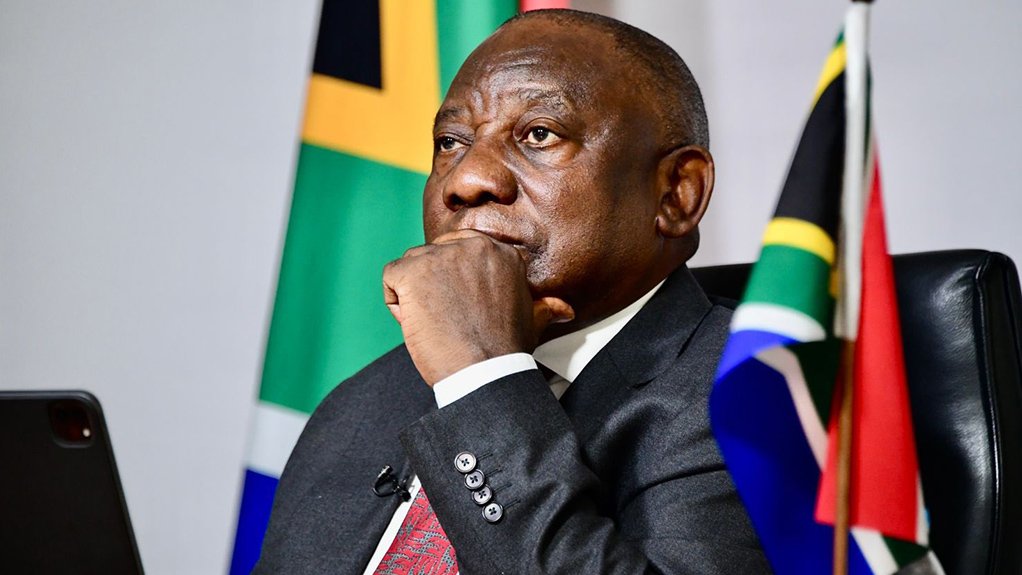
South Africa’s Constitutional Court has revived the long-running Ramaphosa impeachment inquiry, reopening political scrutiny over the controversial Farmgate scandal and placing renewed pressure on President Cyril Ramaphosa at a sensitive moment for the governing African National Congress (ANC).
The court ruled that parliament’s 2022 decision to block an impeachment process against Ramaphosa was unconstitutional, clearing the way for lawmakers to reconsider allegations linked to the theft of foreign currency from the president’s private farm.
The judgment, delivered by Chief Justice Mandisa Maya, is among the most politically significant legal decisions in South Africa since the ANC lost its parliamentary majority in the 2024 elections. The ruling also strengthens opposition parties that have accused the president of avoiding full accountability over the scandal.
The case was brought before the Constitutional Court by the Economic Freedom Fighters (EFF) and the African Transformation Movement (ATM), both of which challenged parliament’s earlier vote that protected Ramaphosa from impeachment proceedings.
Constitutional Court Reopens Political Debate
The Constitutional Court ruled that the National Assembly’s vote in December 2022 was “inconsistent with the Constitution” and therefore invalid.
The court subsequently ordered that the independent panel’s findings be referred back to an impeachment committee for reconsideration.
The judgment effectively revives a political controversy that has shadowed Ramaphosa’s presidency for nearly four years.
The Farmgate scandal emerged publicly in June 2022 after former State Security Agency chief Arthur Fraser accused Ramaphosa of concealing details surrounding a theft at his Phala Phala farm. Fraser alleged that approximately $4 million in foreign currency had been stolen from the property, though Ramaphosa has consistently disputed the figure, stating that about $580,000 was involved.
According to the president, the funds originated from the sale of buffalo at the farm. He has repeatedly denied wrongdoing and rejected claims that he attempted to cover up the incident.
Political analysts say the court’s intervention could reshape debates around governance, accountability, and executive power in South Africa.
The ruling also arrives at a time when the ANC faces growing public frustration over corruption allegations, unemployment, energy shortages, and violent crime.
Why the Ramaphosa Impeachment Inquiry Matters
The revived Ramaphosa impeachment inquiry carries implications beyond the president himself.
Observers believe the case could influence:
- ANC internal power struggles
- Opposition party momentum
- Public confidence in democratic institutions
- Future coalition politics in South Africa
The ANC, once dominant in South African politics, lost its parliamentary majority in the 2024 national elections, leaving it in a more politically vulnerable position.
Although the ANC still retains more than one-third of seats in parliament — enough to potentially block a final impeachment vote — the court ruling weakens the perception that the governing party can easily shield its leaders from accountability.
The EFF has already renewed calls for Ramaphosa to resign, arguing that the Constitutional Court judgment validates concerns about the handling of the scandal.
Analysts say the case may now become a central issue in opposition campaigns ahead of future local and national political contests.
Farmgate Scandal Timeline
The Farmgate controversy has evolved into one of the most politically damaging scandals of Ramaphosa’s presidency.
Key developments include:
- 2020: Theft reportedly occurs at Ramaphosa’s Phala Phala farm.
- June 2022: Arthur Fraser publicly accuses the president of concealing the theft.
- 2022: An independent parliamentary panel recommends that Ramaphosa may have questions to answer.
- December 2022: Parliament votes against launching impeachment proceedings after ANC lawmakers reject the recommendation.
- 2026: The Constitutional Court overturns parliament’s earlier decision and revives the impeachment pathway.
The scandal has generated intense debate within South Africa over:
- The storage of large amounts of foreign currency at private properties
- Transparency standards for public officials
- The role of parliament in executive oversight
Critics argue that the case damaged Ramaphosa’s anti-corruption image, which had been a cornerstone of his political identity since taking office in 2018.
Supporters, however, maintain that no criminal wrongdoing has been proven against the president.
ANC Political Crisis Intensifies
The revived Ramaphosa impeachment inquiry could deepen divisions within the ANC itself.
The party has struggled to maintain unity amid declining electoral support and criticism over governance challenges. Political factions inside the ANC have increasingly disagreed over leadership direction, economic reforms, and anti-corruption measures.
Some analysts believe the Constitutional Court ruling may embolden rivals within the party who view Ramaphosa as politically weakened.
Others argue that the president still maintains enough institutional and political support to survive the controversy.
Even if the impeachment committee eventually recommends formal proceedings, Ramaphosa would still likely need to face a parliamentary vote requiring a two-thirds majority for removal from office.
At present, opposition parties do not appear to hold enough seats to achieve that threshold without significant ANC defections.
Still, the case’s political symbolism remains powerful.
The ruling reinforces the idea that South Africa’s judiciary can challenge parliamentary decisions involving powerful political figures.
That point has become particularly important for civil society groups concerned about democratic accountability.
Judiciary’s Role in African Democracies
The Constitutional Court judgment has also renewed wider debate about judicial independence across Africa.
Legal experts say the ruling demonstrates how courts can act as institutional checks on executive and legislative power, particularly in politically sensitive cases.
South Africa’s judiciary has often been viewed as one of the continent’s strongest democratic institutions, especially since the end of apartheid.
The latest ruling may therefore resonate beyond South Africa, particularly in countries where opposition groups and civil society organisations continue pushing for stronger government accountability mechanisms.
For many observers, the case underscores the importance of constitutional safeguards even during periods of political polarisation.
The development comes as several African countries face heightened political tensions linked to corruption investigations, constitutional disputes, and governance reforms.
DSG HERALD NEWS previously examined similar accountability debates in its report on South Africa Freedom Day 2026: Progress and Gaps:
South Africa Freedom Day 2026: Progress and Gaps
Ramaphosa Responds to Court Judgment
Following the ruling, Ramaphosa’s office stated that the president respected the Constitutional Court’s judgment and reaffirmed that nobody is above the law.
The presidency has continued to deny allegations of misconduct connected to the Farmgate scandal.
Details regarding the impeachment committee’s next timetable were not fully specified in the original report.
Political observers expect the renewed process to dominate South African political discourse in the coming months, particularly as opposition parties intensify pressure on the ANC leadership.
As reported by Al Jazeera’s coverage of the Constitutional Court ruling, the court’s decision has now formally reopened a process many believed had already been politically buried.
Whether the inquiry ultimately threatens Ramaphosa’s presidency remains uncertain.
However, the judgment has already reshaped the political narrative around accountability, constitutional oversight, and the future direction of South African democracy.
Recommended Coverage
- Justice Crack Arraignment Fuels Free Speech Debate — The report explores how high-profile court cases are influencing public debates about legal accountability and democratic rights.
- Diezani London Trial Tests Global Anti-Corruption Enforcement — This story examines international anti-corruption efforts and political accountability involving former Nigerian officials.
- Uche Nnaji Court Case Settlement Talks Stall Proceedings — The article analyzes how unresolved legal disputes can shape political and public perceptions.
- UNILAG Lecturer Rape Case: Student Testifies in Court — The report highlights the role of judicial proceedings in public accountability and institutional trust.
About the Author