Introduction: A Strait Caught Between Two Powers
The Strait of Hormuz, the world’s most critical oil chokepoint, is now operating under a dangerous contradiction. Iran says the waterway is “completely open.” The United States says its blockade remains fully active. And within hours, a reported tanker incident has once again exposed how fragile that “openness” truly is.
This latest development follows a series of escalating actions in the Gulf, including earlier reports of rising tensions that have already disrupted global shipping routes.
What emerges is not stability—but a high-risk standoff playing out in real time.
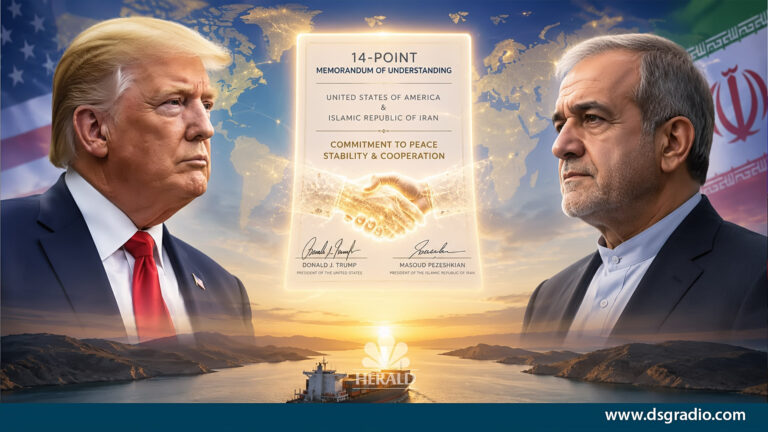
Trump’s Fresh Warning: “Blockade Will Remain in Full Force”
In a statement delivered just hours ago, U.S. President Donald Trump reinforced Washington’s position with unmistakable clarity:
“Our blockade on Iran will remain in full force until we have a real peace deal—not partial steps, not gestures.”
The message signals that the United States is not interpreting Iran’s declaration as a sign of de-escalation. Instead, Washington views the situation as unresolved and continues to apply maximum pressure.
Key takeaways from Trump’s latest remarks:
- The U.S. will not lift naval restrictions prematurely
- Any easing depends on a formal, enforceable agreement
- Military presence in the Gulf will remain active and ready
This stance effectively neutralises Iran’s “open Strait” narrative, reinforcing a parallel reality where control is still contested.
Breaking Development: Tanker Incident Raises Alarm
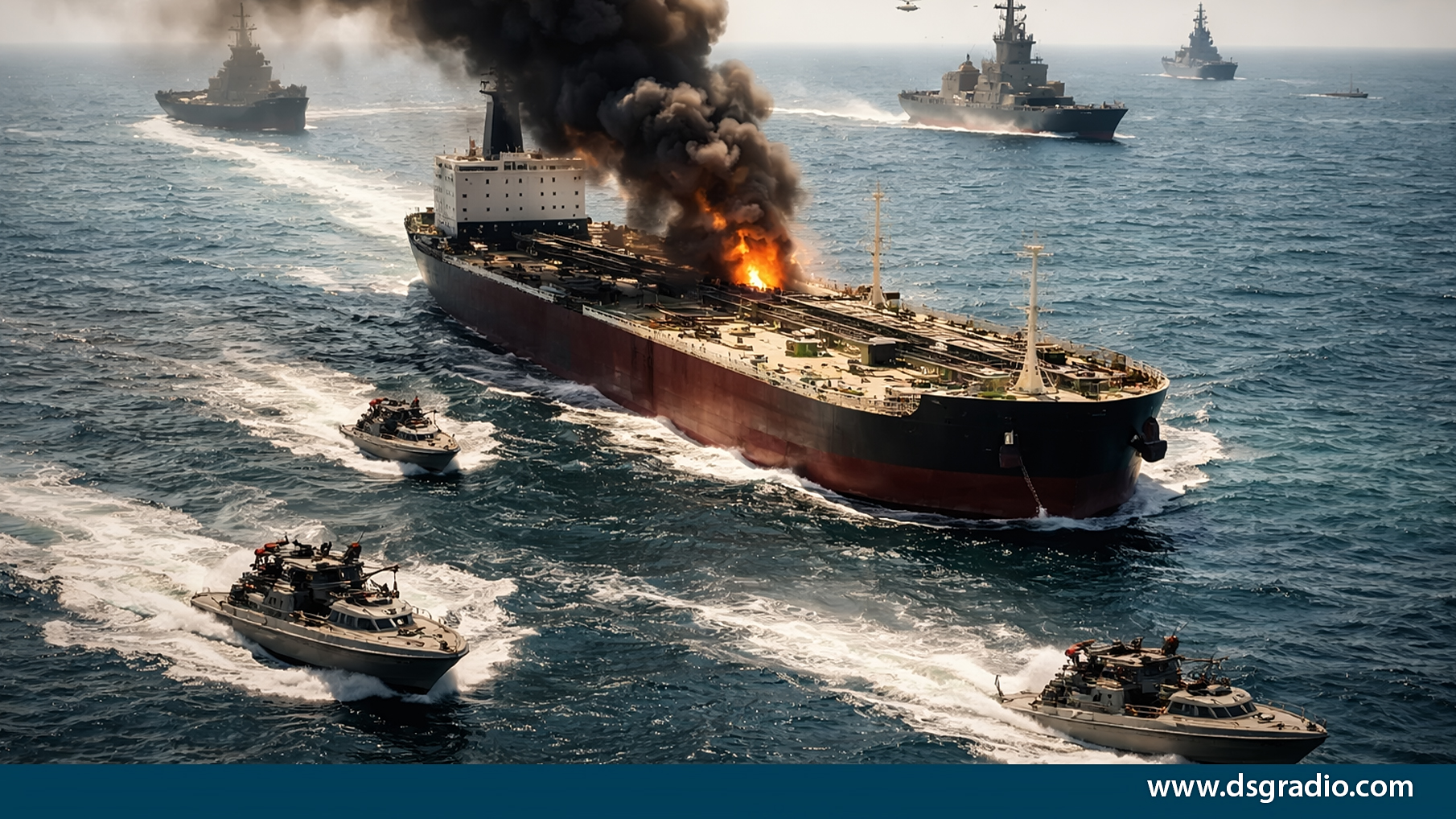
Within the same timeframe, maritime reports indicate a serious security incident involving an oil tanker in the Strait of Hormuz.
According to early intelligence and regional monitoring:
- A tanker was reportedly fired upon in the Strait
- The vessel sustained visible damage, with signs of fire or onboard impact
- The incident triggered immediate alerts across shipping networks
While details remain fluid and independently verified information is still emerging, initial indications suggest Iran-linked forces may have been involved, particularly given the operational presence of IRGC naval units in the area.
Even without full confirmation, the implications are immediate:
- Shipping risk perception spikes instantly
- Insurance premiums surge
- Vessel operators reconsider transit decisions
In high-risk maritime zones like Hormuz, perception alone can disrupt global trade.
The policy builds on earlier enforcement moves, including mine-clearing operations in the Strait aimed at securing navigation routes during ceasefire discussions, as previously reported in .
Iran’s Position: “Open” — But Under Strategic Control
Iran’s declaration that the Strait of Hormuz is “completely open” appears increasingly at odds with unfolding events.
While Tehran aims to project calm and control, the operational environment suggests:
- Navigation remains heavily monitored
- Military assets are actively positioned in the waterway
- The capacity to escalate or restrict movement remains intact
If the tanker incident is confirmed as deliberate, it would underscore a critical reality:
👉 The Strait may be open—but it is not neutral territory.
Instead, it functions as a controlled and contested corridor, where Iran retains leverage even while signalling openness.
A Strait in Conflict: Optics vs Reality
The situation has now evolved into a clear three-layer contradiction:
1. Iran’s Optics
- Declares Strait open
- Signals de-escalation
- Projects stability
2. U.S. Pressure
- Maintains blockade
- Enforces economic restrictions
- Signals continued confrontation
3. Ground Reality
- Tanker incidents occur
- Ships hesitate to pass
- Risk levels remain elevated
This creates a dangerous paradox:
A waterway that is politically “open,” militarily contested, and operationally uncertain.
Shipping Reality: Fear Overrides Policy
Despite official declarations, shipping companies are reacting not to words, but to risk.
Following the latest developments:
- Some vessels have delayed entry into the Strait
- Others are rerouting where possible, despite higher costs
- Insurance underwriters are reassessing exposure levels
The reported tanker attack has intensified a key concern:
👉 If even one vessel is targeted, no ship is truly safe.
This reality undermines Iran’s claim of openness and reinforces the U.S. narrative of ongoing instability.
Oil Markets React: Volatility Returns
The immediate impact of the latest developments is being felt in global oil markets.
After brief optimism following Iran’s “open Strait” declaration:
- Prices are reacting upward again
- Traders are factoring in renewed supply risk
- Market sentiment has shifted back to uncertainty mode
The Strait of Hormuz carries roughly one-fifth of global oil supply, meaning even minor disruptions can have outsized effects.
With:
- A blockade in place
- A tanker incident reported
- Conflicting signals from both sides
Markets are now pricing in instability rather than recovery.
The Shadow Blockade: War Without Closure
The current crisis reflects a modern form of conflict—what analysts describe as a “shadow blockade.”
This is not a total shutdown of the Strait. Instead, it is a system where:
- Trade is allowed—but under pressure
- Movement continues—but under threat
- Access exists—but without guarantees
The U.S. strategy focuses on:
- Restricting Iran’s economic gains
- Maintaining strategic dominance
- Avoiding full-scale closure
Iran’s counter-strategy involves:
- Demonstrating control
- Preserving leverage
- Signaling capability to escalate
The result is a high-stakes equilibrium, where neither side fully backs down—but neither fully escalates.
Analysts say the current situation reflects an evolution of the crisis already outlined in earlier coverage of the crisis, where military pressure and economic strategy began merging into a single coordinated approach.
Global Implications: A Crisis Beyond the Gulf
The ripple effects of the Hormuz situation extend worldwide:
Energy Security
Countries dependent on oil imports face renewed uncertainty and potential price shocks.
Global Trade
Shipping disruptions increase costs, delay deliveries, and strain supply chains.
Emerging Economies
Nations like Nigeria may see indirect impacts through fluctuating oil revenues and global market instability.
Geopolitical Order
The crisis highlights how strategic chokepoints are increasingly used as tools of power and negotiation.
The situation has also drawn international reactions, including diplomatic pushback such as , highlighting growing global concern over escalation.
What Happens Next? Key Risk Scenarios
The coming days are critical. Possible developments include:
- Further tanker incidents, escalating fear across shipping lanes
- Stronger U.S. enforcement actions, including interceptions
- Iranian countermeasures, signaling deterrence
- Diplomatic breakthroughs—or breakdowns
Each scenario carries significant implications for global stability.
This incident adds to a rapidly evolving crisis previously marked by threats of escalation, including warnings of severe consequences detailed in , underscoring how fragile the situation remains.
A Strait on Edge
The Strait of Hormuz is not closed—but it is far from free.
Iran’s declaration of openness is now overshadowed by real-world developments, including rising tensions and a reported tanker incident. Meanwhile, the United States remains firm in its blockade strategy, reinforcing pressure rather than easing it.
What emerges is a volatile, uncertain environment where:
- Policy says one thing
- Power says another
- Reality tells a different story entirely
In today’s Hormuz, ships may still pass—but they do so under the shadow of conflict.
About the Author