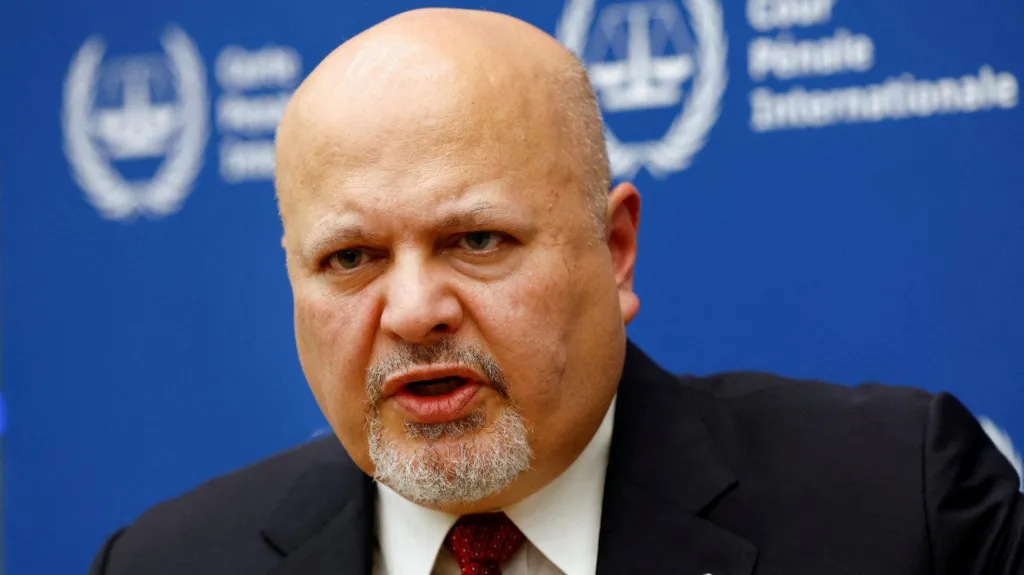
ICC Prosecutor Karim Khan Misconduct Allegations Deepen Global Legal Crisis
The ICC prosecutor Karim Khan’s misconduct allegations have triggered formal disciplinary proceedings against the Chief Prosecutor of the International Criminal Court (ICC), intensifying scrutiny on the Hague-based institution at a politically sensitive time. Khan, who is based in The Hague, Netherlands, is accused of engaging in a non-consensual sexual interaction with a female lawyer within his office, according to reports. The exact date of the alleged incident was not specified in the original report .
Khan has firmly denied any wrongdoing and has stepped aside temporarily pending the outcome of the investigation. The case comes amid heightened global attention on the ICC following its controversial arrest warrant issued against Israeli Prime Minister Benjamin Netanyahu in 2025.
Karim Khan serves as the Chief Prosecutor of the International Criminal Court, a role that places him at the centre of prosecuting cases involving:
- Genocide
- War crimes
- Crimes against humanity
The ICC, headquartered in The Hague, relies on cooperation from member states to enforce international law. However, the institution has faced mounting political pressure, especially following its actions related to the Gaza conflict.
In 2025, Khan led the prosecution that resulted in arrest warrants for:
- Benjamin Netanyahu, Israeli Prime Minister
- Yoav Gallant, former Israeli Defence Minister
These actions triggered backlash from Israel and its allies, including the United States, which imposed sanctions on ICC officials.
The ICC prosecutor, Karim Khan, is facing allegations of misconduct stemming from claims made by a female lawyer working in his office. According to the report:
- Khan is accused of a non-consensual sexual interaction.
- A United Nations investigative report found a “factual basis” for the allegations.
- Witness testimonies reportedly “lend support to her claims”
However, the situation remains complex due to conflicting findings:
- A separate judicial panel of three judges concluded that the evidence did not meet the threshold of “beyond a reasonable doubt”
- Khan’s legal team insists that findings do not establish misconduct or breach of duty.
This divergence in conclusions has fueled internal divisions within the ICC.
A key development in the ICC prosecutor Karim Khan’s misconduct allegations is the decision by ICC member states to proceed with disciplinary measures.
According to sources:
- 15 countries voted in favour of disciplinary proceedings
- 2 countries abstained
- 4 countries opposed the move
This vote highlights deep divisions within the ICC:
African Bloc Position
- Several African nations reportedly pushed for the case to be dropped.
- They argued that judicial findings had effectively cleared Khan.
Western Nations Position
- Western countries, many of which are major ICC funders, supported continuing the process.
- They emphasised accountability and institutional integrity.
Karim Khan (Chief Prosecutor)
- Denies all allegations
- Maintains that he has committed no misconduct
ICC Officials
- The ICC has declined official comment, citing ongoing proceedings.
Internal Staff Concerns
- Officials within the prosecutor’s office reportedly oppose Khan remaining in his role.
- A formal letter expressing concern was read during deliberations.
Israel’s Position
- Israel has rejected ICC jurisdiction.
- Netanyahu described ICC actions as:
- “Politically motivated”
- “Anti-Semitic”
- Israeli authorities insist military operations comply with international law.
The ICC prosecutor Karim Khan’s misconduct allegations case presents a rare legal conflict between:
UN Investigative Findings
- Found credible supporting evidence
- Relied on witness testimonies
Judicial Panel Findings
- Determined evidence did not meet criminal proof standards.
- No conclusion of guilt beyond a reasonable doubt
This dual-track outcome raises critical questions:
- Should disciplinary action rely on lower evidentiary thresholds?
- How should international institutions balance due process vs accountability?
The implications of the ICC prosecutor Karim Khan’s misconduct allegations extend beyond the individual case:
1. Institutional Credibility
- The ICC’s legitimacy is under scrutiny.
- Internal divisions risk weakening global confidence.
2. Geopolitical Tensions
- The case intersects with ongoing tensions involving:
- Israel
- United States
- ICC member states
3. Justice System Integrity
- Raises broader concerns about:
- Leadership accountability
- Internal governance
- Transparency in global institutions
4. Africa vs Western Divide
- The voting split reflects long-standing tensions:
- African nations vs Western powers
- Debates over fairness and bias in international justice
The ICC prosecutor Karim Khan’s misconduct allegations case will proceed through formal disciplinary channels.
Possible Outcomes:
- Exoneration if insufficient evidence is confirmed
- Sanctions or removal if misconduct is established
- Continued internal reforms or leadership restructuring
Key Unknowns:
- The timeline for the final decision was not specified in the original report.
- The identity of the complainant remains undisclosed.
- Exact details of the incident remain unclear.
While the primary report outlines the core allegations, independent verification remains limited.
- Some reports emphasise the UN’s findings in support of the claims.
- Others highlight the judicial panel’s conclusion that the evidence was insufficient.
- The ICC’s silence adds to uncertainty.
→ This could not be independently verified across all sources at the time of reporting.
About the Author