US Navy Blockade Strait of Hormuz Ordered by Trump After Iran Talks Collapse
WASHINGTON / STRAIT OF HORMUZ / ISLAMABAD — April 12, 2026:
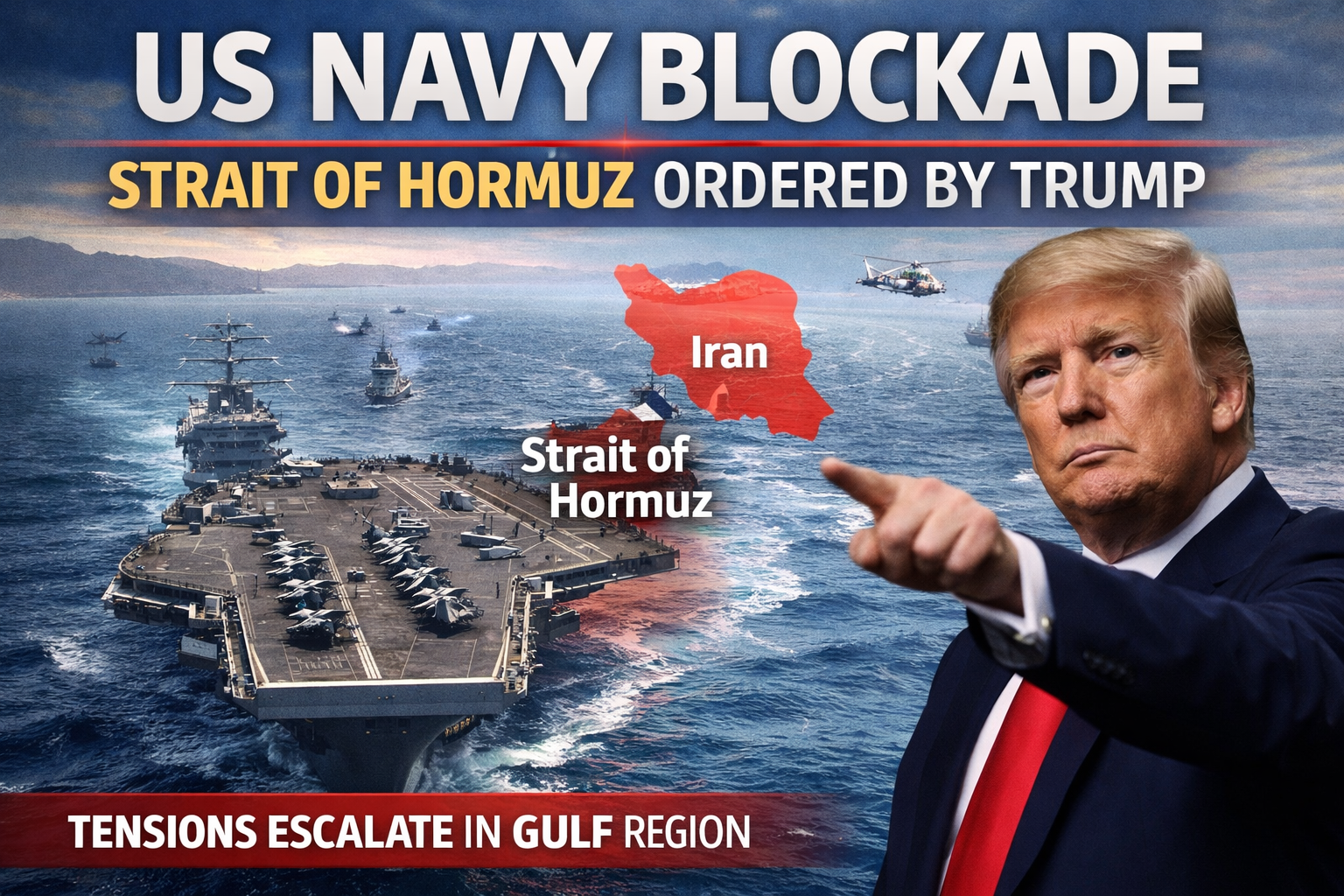
The US Navy blockade Strait of Hormuz has been ordered by United States President Donald Trump following a breakdown in high-level nuclear negotiations with Iran held in Islamabad, Pakistan, involving U.S. Vice President JD Vance and Iranian officials led by parliamentary speaker Mohammad Bagher Ghalibaf and Foreign Minister Abbas Araghchi.
The decision, announced on Sunday, April 12, 2026, marks a significant escalation in tensions between Washington and Tehran, with immediate implications for global oil supply and regional security.
Trump Announces Immediate Naval Action
President Trump confirmed the move in a strongly worded statement on his Truth Social platform, declaring:
“Effective immediately, the United States Navy… will begin the process of blockading any and all ships trying to enter or leave the Strait of Hormuz.”
He accused Iran of refusing to abandon its nuclear ambitions despite progress in negotiations, describing the situation as “world extortion.”
Trump further warned:
“Any Iranian who fires at us, or at peaceful vessels, will be blown to hell.”
According to the report, Trump also alleged that Iran had created uncertainty in the waterway by suggesting the deployment of naval mines, discouraging commercial shipping.
Failed Nuclear Talks in Islamabad
The diplomatic breakdown followed marathon negotiations in Islamabad, where U.S. Vice President JD Vance led the American delegation.
Key details from the talks:
- Negotiations reportedly went “well” on multiple issues
- The main disagreement remained Iran’s nuclear programme
- Iran refused to make concessions on nuclear development
Vance stated before leaving Pakistan:
“We leave here with a very simple proposal… our final and best offer.”
Despite this, no agreement was reached — marking the highest-level engagement between the U.S. and Iran since the 1979 Islamic Revolution.
Strategic Importance of the Strait of Hormuz
The Strait of Hormuz is one of the world’s most critical maritime chokepoints.
- Handles approximately 20% of global crude oil shipments
- Connects the Persian Gulf to global markets
- Essential for energy exports from countries including Saudi Arabia, UAE, Iraq, and Kuwait
Any disruption in the strait:
- Impacts global oil prices immediately
- Threatens international shipping routes
- Raises economic and geopolitical instability
Trump emphasised that the U.S. would not allow Iran to benefit from what he described as “illegal tolls” imposed on vessels.
Military Developments and Mine Clearance Operations
The situation has already seen military escalation.
According to U.S. officials:
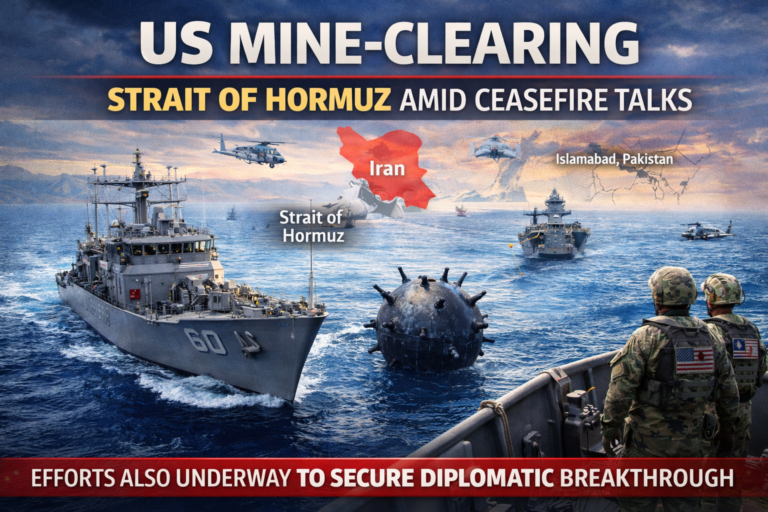
- Two U.S. warships have transited the strait
- A mine clearance operation is underway
- U.S. forces have been instructed to interdict vessels suspected of paying Iran for passage
Trump stated:
“No one who pays an illegal toll will have safe passage on the high seas.”
He also suggested that Iran’s naval capabilities had been significantly weakened, claiming many of its mine-laying assets had been destroyed.
Iran’s Position and Lack of Official Response
As of the time of filing this report:
- Iranian authorities have not issued an official response
- Claims of my deployment remain unverified independently
- Iran had previously indicated control over the waterway
The report indicates that Iran had effectively restricted access to the strait for weeks amid ongoing conflict involving U.S. and Israeli military actions.
Details remain unclear regarding:
- The extent of Iranian mining operations
- The current operational status of Iranian naval forces
Global Reactions and Economic Concerns
The US Navy blockade Strait of Hormuz is expected to trigger immediate global reactions.
Potential Impacts:
- Surge in global oil prices
- Disruption of international trade routes
- Increased insurance costs for shipping companies
- Heightened military alert levels in the Middle East
Trump also hinted that allied nations may participate in enforcing the blockade, though no countries were named.
Global powers are now closely monitoring the situation due to fears of:
- A broader regional war
- Escalation involving Israel and other actors
- Long-term instability in energy markets
Broader Geopolitical Context
This development comes amid:
- Ongoing U.S.–Iran tensions over nuclear capabilities
- Recent military engagements involving the U.S., Israel, and Iran
- Fragile ceasefire arrangements that have failed to hold
The Strait of Hormuz has historically been a flashpoint in global conflicts, with past threats of closure causing significant market volatility.
Conclusion
The US Navy blockade Strait of Hormuz represents one of the most serious escalations in U.S.–Iran relations in recent years.
With diplomacy failing and military operations underway, the situation now enters a critical phase where:
- Global energy security is at risk
- Military confrontation remains a real possibility
- International stakeholders face urgent decisions
The coming days will be crucial in determining whether tensions de-escalate or spiral into a broader conflict.
About the Author