US Israel Iran War Escalates Across Middle East
US Israel Iran War: Fresh Strikes and Retaliation Raise Regional Tensions
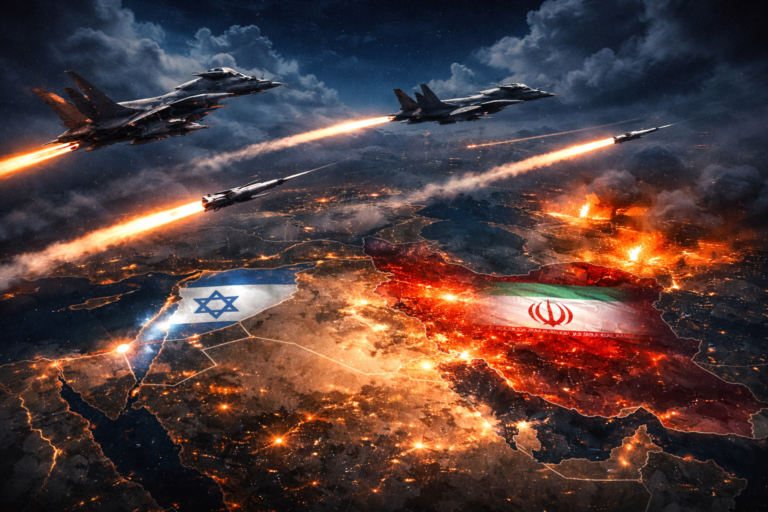
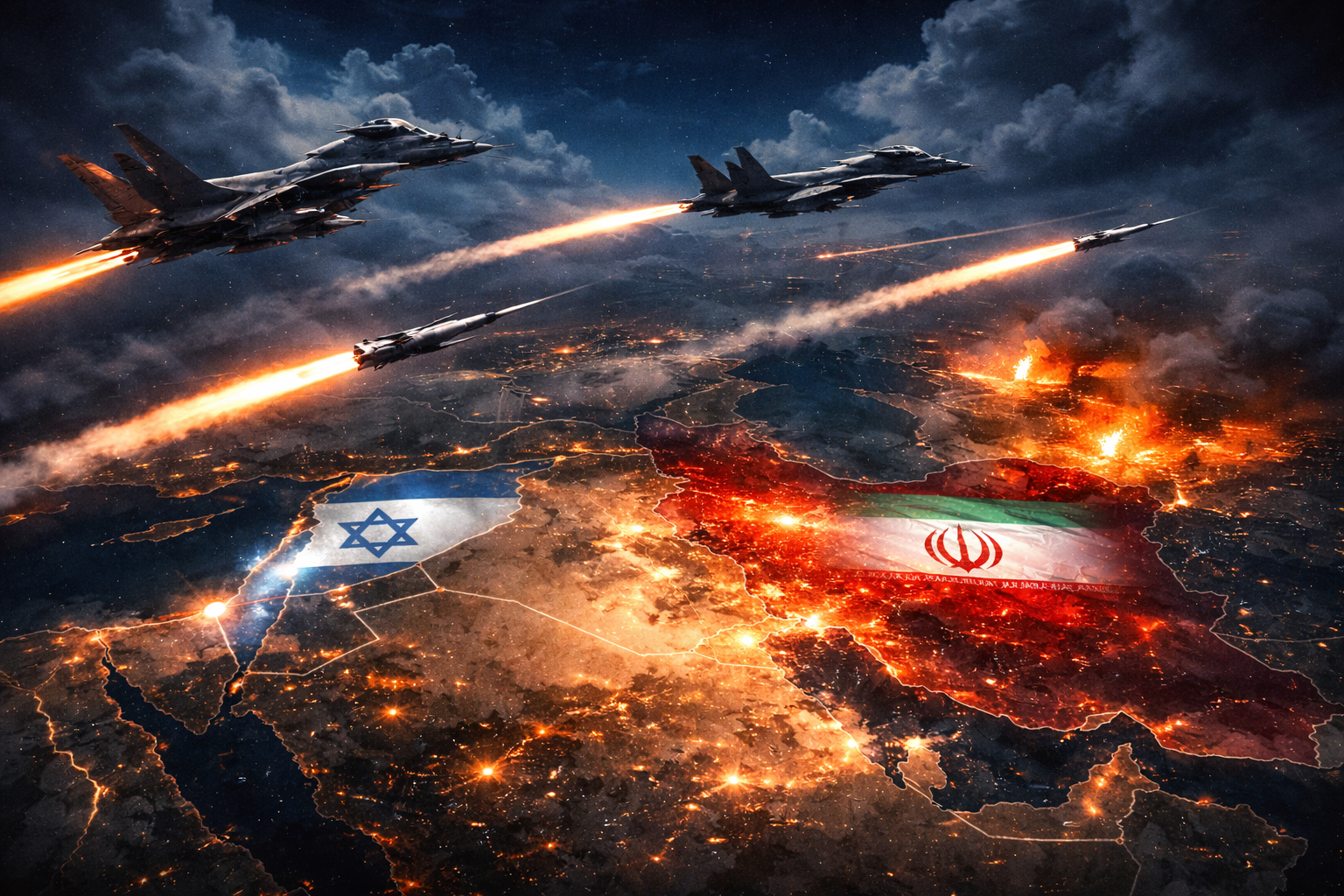
The US Israel Iran War intensified significantly in the last 24 hours as the United States and Israeli forces launched major airstrikes across Tehran, while Iran responded with missile and drone attacks targeting Israel and several Gulf states. The escalating US Israel Iran War is raising fears of a wider Middle East conflict escalation that could involve Hezbollah in Lebanon and other regional militias.
Officials say the latest developments in the US Israel Iran War occurred overnight between March 5 and March 6, 2026, with multiple explosions reported in Tehran and other Iranian cities. The strikes are part of an ongoing military campaign aimed at weakening Iran’s missile and military infrastructure amid rising tensions across the region.
US Israel Iran War: Major Airstrikes Target Tehran
The most significant development in the US Israel Iran War is the scale of the new airstrikes carried out by US and Israeli forces against Iranian targets.
Military sources say hundreds of locations were targeted during the latest phase of the US Israel Iran War, including security installations, weapons facilities, and military command centres in Tehran and nearby areas.
Residents in several districts of the Iranian capital reported loud explosions and visible fires as the US Israel Iran War entered a more intense phase.
According to preliminary reports, the airstrikes in the US Israel Iran War also affected areas close to universities and infrastructure sites. Iranian authorities say emergency services were deployed to multiple locations following the attacks.
However, exact casualty figures linked to the US Israel Iran War remain unclear, and independent verification is still ongoing.
US Israel Iran War: Iran Responds With Missile and Drone Attacks
Iran responded quickly to the latest escalation in the US Israel Iran War by launching missiles and drones toward Israel and several Gulf countries.
Military officials say Iranian forces carried out retaliatory attacks as part of the ongoing US Israel Iran War, targeting strategic locations and military installations in the region.
Several Gulf countries — including Saudi Arabia, Bahrain, Qatar, and Kuwait — reported air defence systems intercepting projectiles linked to the US Israel Iran War.
Some of the missiles were reportedly aimed at US military facilities in the Gulf region as part of Iran’s response in the US Israel Iran War.
Iranian officials say their actions are defensive responses to what they describe as aggression in the US Israel Iran War.
US Israel Iran War: Conflict Shows Signs of Regional Expansion
Security analysts warn that the US Israel Iran War may be expanding beyond the immediate Iran–Israel battlefield.
Israeli airstrikes reportedly targeted Hezbollah positions in Lebanon, raising concerns that the US Israel Iran War could draw Hezbollah fully into the conflict.
Clashes along Israel’s northern border have increased as the US Israel Iran War continues to evolve.
Another development connected to the US Israel Iran War involves reports from Azerbaijan, where authorities claim Iranian drones struck an airport in the Nakhchivan region.
Iran has denied responsibility for the drone incident, and the link between the attack and the US Israel Iran War has not yet been independently confirmed.
US Israel Iran War: Political Leaders Issue Strong Statements
Political rhetoric surrounding the US Israel Iran War has intensified alongside military developments.
US officials say military operations related to the US Israel Iran War could increase in scale if Iranian missile attacks continue.
Israeli leaders also signalled that operations in the US Israel Iran War will continue until Iranian military capabilities are significantly weakened.
Meanwhile, Iranian government officials say their country will continue retaliatory strikes as long as the US Israel Iran War persists.
Iran’s foreign minister also suggested Tehran currently sees little possibility for negotiations with Washington amid the ongoing US Israel Iran War.
US Israel Iran War: Global Leaders Urge De-escalation
International concern about the US Israel Iran War continues to grow as governments warn of the risk of a wider regional crisis.
Several world leaders have urged restraint as the US Israel Iran War threatens to destabilise the Middle East.
Diplomats say emergency discussions related to the US Israel Iran War may take place at the United Nations if the situation worsens.
Global powers, including European countries, Russia, and China, are monitoring the US Israel Iran War closely while calling for diplomatic solutions.
Some governments are also preparing evacuation plans for citizens living in areas affected by the US Israel Iran War.
US Israel Iran War: Oil Prices and Global Markets React
The economic consequences of the US Israel Iran War are already being felt in global markets.
Oil prices have risen sharply since the US Israel Iran War intensified, with energy markets reacting to fears of disruptions in Middle East shipping routes.
Analysts say the US Israel Iran War could threaten traffic through the Strait of Hormuz, one of the world’s most critical oil transport routes.
The US Israel Iran War is also affecting global aviation, with airlines diverting flights and avoiding airspace near conflict zones.
For many African countries that depend heavily on fuel imports, the economic ripple effects of the US Israel Iran War could translate into higher fuel prices and inflation.
US Israel Iran War: Civilians Face Growing Uncertainty
Civilians across the region are experiencing the human impact of the US Israel Iran War as military operations intensify.
Residents in Tehran report disruptions to daily life as the US Israel Iran War continues to produce explosions, infrastructure damage, and security restrictions.
In Israel, thousands of citizens who were abroad when the US Israel Iran War began are gradually returning home under strict security conditions.
Air raid alerts and civil defense warnings remain common in areas affected by the US Israel Iran War.
Humanitarian groups warn that prolonged fighting in the US Israel Iran War could increase civilian hardship if the conflict continues to escalate.
US Israel Iran War: Strategic Risks for the Region
Experts say the US Israel Iran War could become a defining geopolitical crisis if it expands further.
Several strategic risks linked to the US Israel Iran War are now being closely monitored:
• Hezbollah fully entering the conflict from Lebanon
• Iranian-aligned militias attacking US bases in Iraq or Syria
• Disruptions to oil infrastructure and shipping routes
• Escalating missile exchanges between Iran and Israel
These developments could turn the US Israel Iran War into a broader regional confrontation.
US Israel Iran War: What Happens Next?
The next phase of the US Israel Iran War may depend on several key developments in the coming days.
Analysts say the direction of the US Israel Iran War will likely be shaped by:
• The scale of future US and Israeli airstrikes
• Iran’s next wave of missile or drone retaliation
• Whether Hezbollah becomes directly involved
• Diplomatic pressure from global powers
For now, the US Israel Iran War remains a fast-moving crisis with major implications for the Middle East and the global economy.
About the Author

DURU SUNNY-GEORGE
Administrator
Duru Sunny George is a Media Practitioner | Journalist | Cinematographer | Photographer | Lecturer - popularly known as DSG, is a versatile media entrepreneur and educator. He is the Founder & CEO of DSG STUDIOS, DSG HERALD NEWS, and DSG RADIO, leading platforms in journalism, photography, cinematography, and digital broadcasting.