UK Strait of Hormuz Blockade Stance: Starmer Rejects US Move
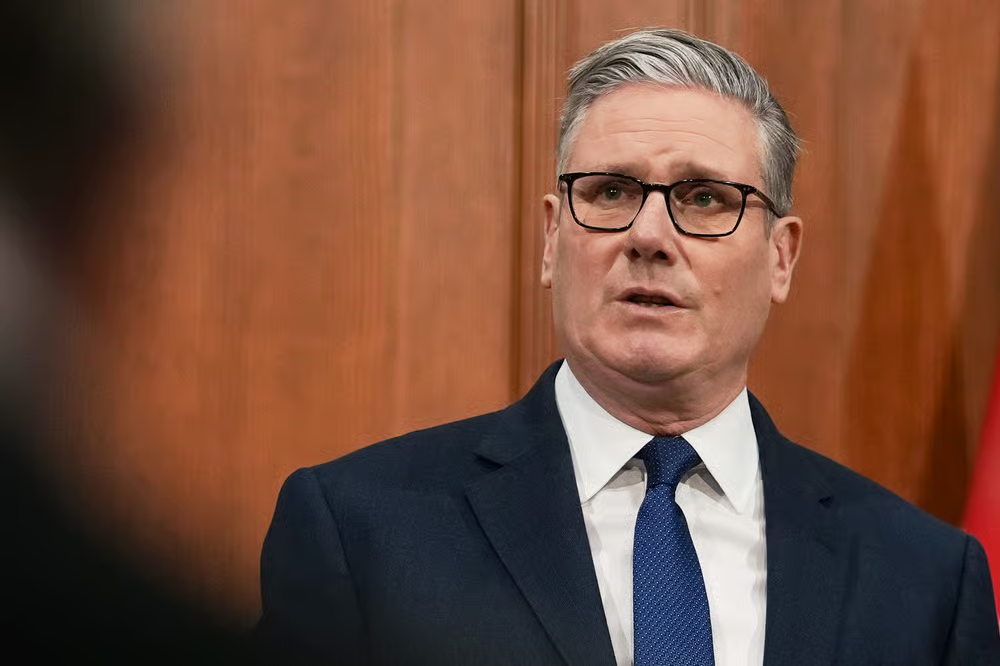
LONDON, United Kingdom — April 13, 2026: British Prime Minister Keir Starmer has declared that the United Kingdom will not support the United States’ planned blockade of Iranian ports, distancing Britain from escalating military tensions in the Middle East. Speaking during an interview on BBC Radio 5 Live, Starmer said the UK’s priority remains reopening the Strait of Hormuz, a critical global shipping route, rather than enforcing restrictions on maritime traffic. The statement comes as the United States military, under President Donald Trump, announced a sweeping blockade targeting Iranian maritime activity.
UK Strait of Hormuz Blockade Stance Explained
Prime Minister Keir Starmer made it clear that Britain’s position is centred on de-escalation and maritime stability, not confrontation.
“We’re not supporting the blockade,” Starmer stated.
He emphasised that:
- The UK will not be dragged into the Iran war
- The focus is on ensuring the Strait of Hormuz remains open
- British military assets are deployed strictly for navigation safety
Starmer added:
“It is, in my view, vital that we get the Strait open and fully open.”
This firm stance signals a policy divergence between the UK and the United States, particularly on military strategy in the Gulf region.
US Announces Full Maritime Blockade
The situation escalated after the United States Central Command (CENTCOM) confirmed it would begin enforcing a blockade on Monday, April 13, 2026, at 10:00 a.m. ET (1400 GMT).
According to the US military:
- The blockade applies to all vessels entering or leaving Iranian ports
- It will cover Iranian ports in the Arabian Gulf and the Gulf of Oman
- Enforcement will be “impartial” across all nations
However, the US clarified that:
- Ships travelling to non-Iranian ports via the Strait of Hormuz will not be stopped
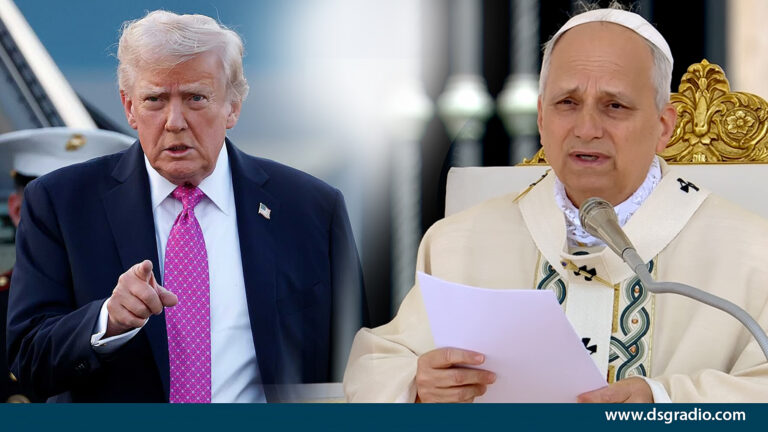
In a strong statement, US President Donald Trump warned:
“No one who pays an illegal toll will have safe passage on the high seas.”
He further added:
“Any Iranian who fires at us, or at peaceful vessels, will be BLOWN TO HELL!”
These remarks underscore Washington’s aggressive posture following failed diplomatic efforts.
Failed Talks Trigger Escalation
The blockade follows unsuccessful weekend negotiations aimed at ending hostilities between the United States and Iran.
While details of the talks were not specified in the original report, the breakdown appears to have:
- Triggered immediate military escalation
- Prompted the US to adopt economic and naval pressure tactics
- Increased fears of a broader regional conflict
This development has raised concerns among global stakeholders about the risk to international trade and energy supply chains.
Britain’s Military Role in the Region
Despite rejecting the blockade, Starmer confirmed that Britain maintains a military presence in the region.
Key points include:
- Deployment of minesweepers
- Focus on keeping shipping lanes safe
- No direct involvement in offensive operations
Starmer noted that while he could not disclose operational specifics, the UK’s capability is:
“Focused from our point of view on getting the Strait fully open.”
This reflects a defensive maritime security strategy, rather than alignment with US enforcement measures.
Strategic Importance of the Strait of Hormuz
The Strait of Hormuz remains one of the world’s most critical chokepoints for global energy supply.
Why it matters:
- Roughly 20% of the global oil supply passes through the Strait
- It connects the Persian Gulf to the Gulf of Oman and Arabian Sea
- Any disruption impacts global oil prices and shipping routes
A blockade or conflict in this region could:
- Trigger oil price spikes
- Disrupt international trade flows
- Increase global economic uncertainty
Strait of Hormuz Blockade: What This Means for Global Politics
The UK’s stance on the Strait of Hormuz blockade highlights a growing divide among Western allies.
Key geopolitical implications:
- UK–US policy divergence on Iran strategy
- Potential weakening of joint military coordination
- Increased pressure on NATO unity and Western alliances
Britain’s refusal to participate may also:
- Position it as a moderating force
- Open diplomatic channels with neutral or non-aligned states
- Reduce its exposure to direct military retaliation
Market and Security Concerns
Global markets are already reacting cautiously to the developments.
Immediate concerns include:
- Shipping insurance costs are rising
- Increased risk premiums on oil transport
- Potential naval confrontations in international waters
Security analysts warn that:
- Miscalculations could lead to direct clashes
- Civilian vessels may face heightened risks
Source Attribution
According to a Reuters report, Starmer reiterated that Britain’s efforts are focused entirely on reopening the Strait rather than participating in enforcement actions.
This position aligns with broader European concerns about avoiding further escalation in an already volatile region.
What Remains Unclear
Several critical details were not specified in the original report, including:
- The exact nature of the failed negotiations
- Iran’s official response to the blockade
- The long-term US strategy beyond initial enforcement
As the situation evolves, these gaps may become clearer as further diplomatic or military developments unfold.
Conclusion
The UK’s stance on the Strait of Hormuz blockade marks a significant moment in global geopolitics, as Britain distances itself from a major US military action while advocating for open maritime routes. With tensions rising between Washington and Tehran, the coming days will be critical in determining whether the situation escalates into broader conflict or stabilises through diplomatic intervention.
About the Author