Kwibuka32 Rwanda Genocide Commemoration Held at African Union Headquarters
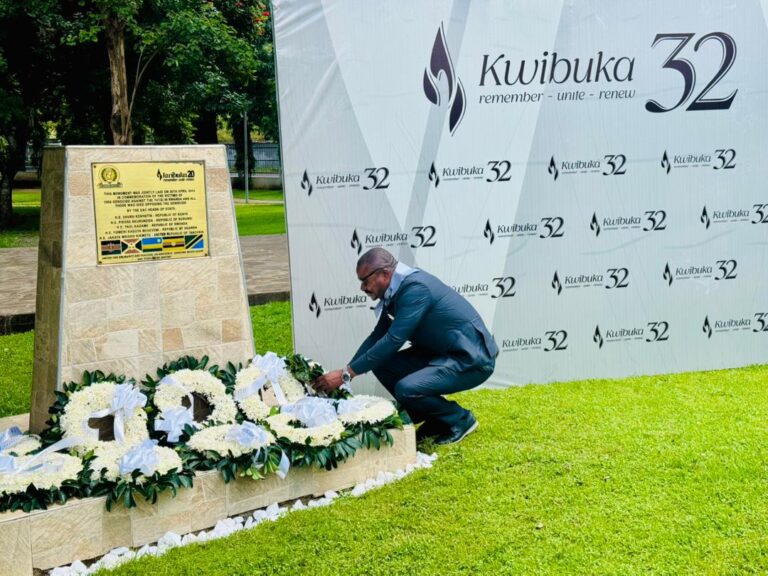
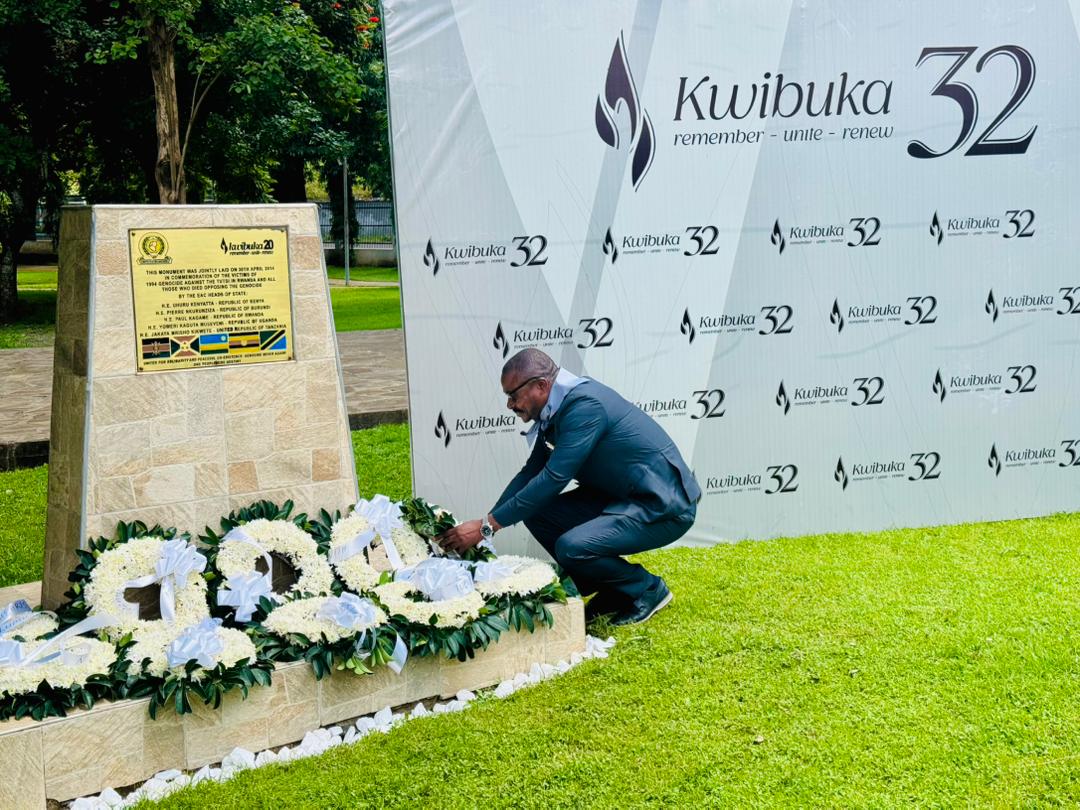
The Kwibuka32 Rwanda Genocide Commemoration was held on Monday, April 7, 2026, at the African Union (AU) Headquarters, Nelson Mandela Hall, Addis Ababa, Ethiopia, marking the 32nd anniversary of the 1994 Genocide against the Tutsi in Rwanda. The event, organised by the African Union Commission (AUC) through its Department of Political Affairs, Peace and Security (PAPS) in collaboration with the Embassy of Rwanda in Ethiopia, honoured the memory of over one million victims while reinforcing Africa’s commitment to preventing genocide and promoting unity.
According to the official AU report, the commemoration brought together AU leadership, diplomats, religious leaders, civil society groups, and members of the Rwandan community in Ethiopia.
Key Events of the Kwibuka32 Rwanda Genocide Commemoration
The ceremony featured several symbolic and reflective activities, including:
- A Walk to Remember
- Lighting of the Flame of Remembrance
- Launch of the AU Human Rights Virtual Memorial
- Reflections and speeches from AU officials and invited guests
These activities were designed to preserve memory, promote awareness, and reinforce collective responsibility in preventing future atrocities.
Statements from AU Leadership
The Chairperson of the African Union Commission, H.E. Mahmoud Ali Youssouf, delivered a strong message emphasising remembrance and responsibility.
“We remember over one million lives lost to hatred, indifference, and inaction. Kwibuka is not only a moment of mourning, but also a call to truth, responsibility, and vigilance.”
He further warned about emerging risks:
“Africa affirms: never again will organised hatred be allowed to become a political project. We must confront rising threats—hate speech, division, and polarisation—with unity, courage, and action.”
Youssouf also highlighted Rwanda’s recovery:
“Rwanda’s remarkable journey of resilience and renewal reminds us that history is not fate; it is shaped by the will of people.”
He concluded by reaffirming Africa’s commitment:
“Remembrance obliges us to act, to prevent, and to defend human dignity everywhere. Africa stands firm for peace, justice, and the protection of all.”
Who Attended the Event
The Kwibuka32 Rwanda Genocide Commemoration drew a wide range of participants, including:
- Leadership and staff of the African Union Commission
- Representatives of AU Member States
- Members of the Diplomatic Corps accredited to the AU
- Representatives of Regional Economic Communities
- Religious leaders
- International organizations and UN agencies
- Civil society, academia, and media stakeholders
- Members of the Rwandan community in Ethiopia
Historical Context: The 1994 Genocide Against the Tutsi
The 1994 Genocide against the Tutsi in Rwanda remains one of the darkest chapters in modern African history. Over one million Tutsi were killed within approximately 100 days, largely due to orchestrated ethnic violence fueled by political extremism.
International organisations, including the United Nations and human rights groups, have widely documented the genocide and its aftermath. However, details beyond the AU report in this context could not be independently verified within this report.
Africa’s Commitment to “Never Again”
The Kwibuka32 Rwanda Genocide Commemoration underscores Africa’s broader efforts to prevent future genocides through:
- Strengthening early warning systems
- Promoting human rights protections
- Addressing hate speech and political polarisation
- Encouraging regional cooperation
The AU continues to prioritise genocide prevention within its peace and security framework.
Symbolism and the Role of Memory
The launch of the AU Human Rights Virtual Memorial marks a significant step in digitising remembrance efforts. It aims to:
- Preserve testimonies and historical records
- Educate younger generations
- Provide a platform for global reflection
The Flame of Remembrance and Walk to Remember further reinforced the importance of collective memory in shaping future policies.
Implications for Africa and the Global Community
The Kwibuka32 Rwanda Genocide Commemoration sends a clear message:
- Genocide prevention requires continuous vigilance
- Political leadership must actively resist divisive narratives
- Societies must invest in education, unity, and accountability
The AU’s stance reflects a growing recognition that preventing atrocities is not only a national responsibility but a continental and global obligation.
Conclusion
The Kwibuka32 Rwanda Genocide Commemoration at the African Union Headquarters served as both a solemn remembrance and a renewed call to action. With strong statements from AU leadership and participation from diverse stakeholders, the event reinforced Africa’s commitment to ensuring that the horrors of 1994 are never repeated.
About the Author