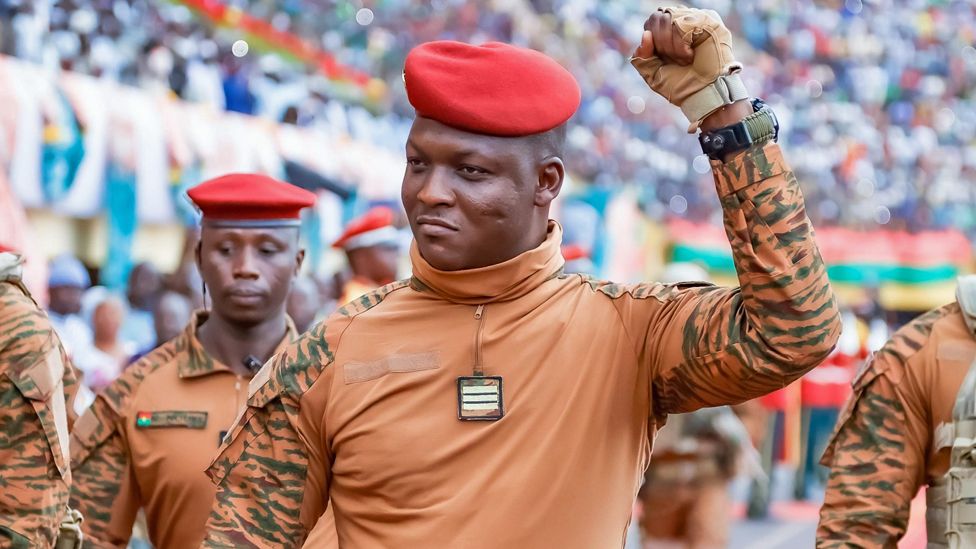
Burkina Faso Democracy Rejection: Traoré Extends Military Rule
Lead Paragraph
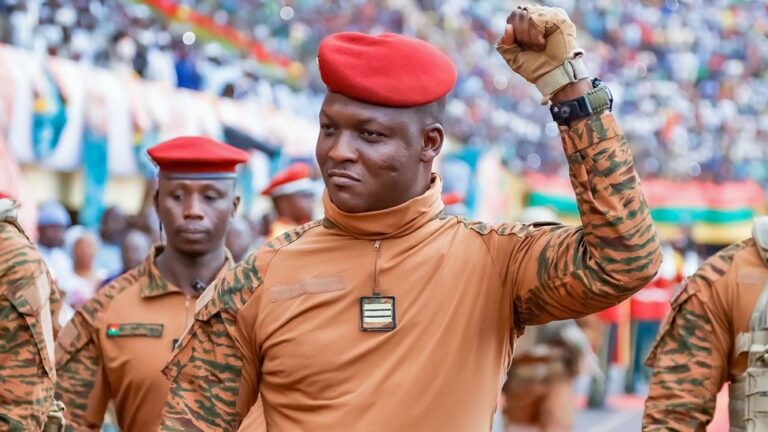
Burkina Faso’s rejection of democracy has intensified after military leader Captain Ibrahim Traoré declared that democratic governance is unsuitable for the West African nation, extended military rule by 5 years, and banned all political parties. Speaking in a televised interview in Ouagadougou, Burkina Faso, on April 3, 2026, Traoré defended his government’s actions, citing ongoing jihadist violence and national security concerns as justification for abandoning democratic processes.
Traoré Rejects Democracy as Governance Model
The Burkina Faso democracy rejection became explicit when Traoré told journalists:
- “People need to forget about the issue of democracy.”
- “Democracy isn’t for us.”
- “Democracy kills.”
According to reports from Al Jazeera, AfricaNews, and Arise News, Traoré argued that democracy has failed African nations and often leads to instability and bloodshed. He referenced Libya as an example where, he claimed, externally imposed democracy resulted in prolonged conflict.
Traoré did not outline a detailed alternative governance framework but stated that Burkina Faso is pursuing a sovereignty-driven model focused on:
- Patriotism
- Grassroots mobilisation
- Traditional leadership structures
Burkina Faso Democracy Rejection and Political Crackdown
The Burkina Faso democracy rejection has been accompanied by sweeping institutional changes:
- Dissolution of the Independent National Electoral Commission (July 2025)
- Suspension and eventual ban of all political parties (January 2026)
- Seizure of political party assets
- Continued suspension of parliament and political activity
Authorities described the ban as part of efforts to “rebuild the state,” but critics argue it signals a consolidation of authoritarian control.
Analysts and civil society groups have raised concerns about:
- Targeting of journalists and opposition figures
- Reports of forced conscription of critics into military operations
- Restrictions on civic freedoms
Some of these claims could not be independently verified.
Delayed Elections and Extended Military Rule
Traoré initially promised to return to civilian rule by July 2024 after seizing power in a September 2022 coup, following an earlier coup that ousted President Roch Marc Kabore.
However:
- Elections have now been postponed indefinitely.
- The transition to civilian rule has been extended by 5 years.
Traoré justified the delay by stating that elections cannot be conducted until security is fully restored across all territories.
Security Crisis Driving Burkina Faso Democracy Rejection
Burkina Faso remains at the centre of a decade-long jihadist insurgency, involving groups linked to:
- Al-Qaeda
- ISIL (ISIS)
Key figures:
- 17,775 deaths recorded in the three years since Traoré took power
- Compared to 6,630 deaths in the three years prior (Africa Centre for Strategic Studies)
- Thousands killed and millions displaced.
Additionally, a Human Rights Watch report cited:
- Over 1,800 civilian deaths since 2023
- Approximately two-thirds were attributed to military forces and allied militias
The government maintains that strong centralised authority is necessary to combat insurgency and restore national stability.
Regional Shift: Alliance of Sahel States (AES)
Burkina Faso’s political direction aligns with broader regional developments.
The country, alongside:
- Mali
- Niger
has:
- Withdrawn from ECOWAS
- Formed the Alliance of Sahel States (AES)
- Strengthened military cooperation
- Reduced ties with Western allies, particularly France
France had previously deployed approximately 5,000 troops to support counterterrorism efforts in the region.
These countries have increasingly turned to Russian paramilitary support, marking a geopolitical shift in West Africa.
International Reaction to Burkina Faso Democracy Rejection
The United Nations has expressed concern over Burkina Faso’s rejection of democracy, urging authorities to:
- Lift the ban on political parties.
- Restore civic freedoms
- Reopen democratic space
UN officials warned that shrinking political participation could:
- Increase instability
- Fuel grievances
- Undermine long-term peace efforts.
Public Perception and Pan-African Support
Despite criticism, Traoré has gained support among sections of:
- The African diaspora
- Pan-African movements
Supporters view his stance as:
- Resistance to Western influence
- A push for African sovereignty
- A rejection of imposed political systems
However, analysts caution that:
- Popular rhetoric does not replace institutional stability.
- Long-term governance without democratic accountability may deepen crises.
Conclusion
The Burkina Faso democracy rejection marks a significant turning point in the country’s political trajectory. Under Captain Ibrahim Traoré, the nation has shifted away from democratic governance toward a centralised military-led system justified by security challenges and sovereignty claims.
While the government argues that these measures are necessary to defeat insurgency and rebuild the state, critics warn that suppressing democratic institutions could deepen instability rather than resolve it.
As violence continues and elections remain postponed, Burkina Faso’s future governance model—and its impact on regional stability—remains uncertain.
About the Author