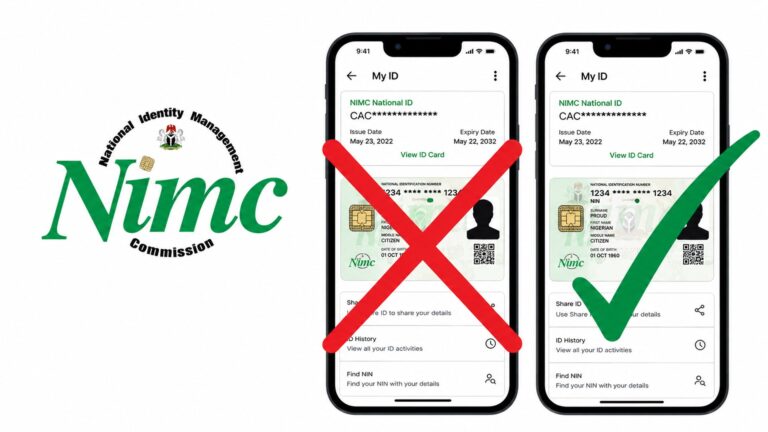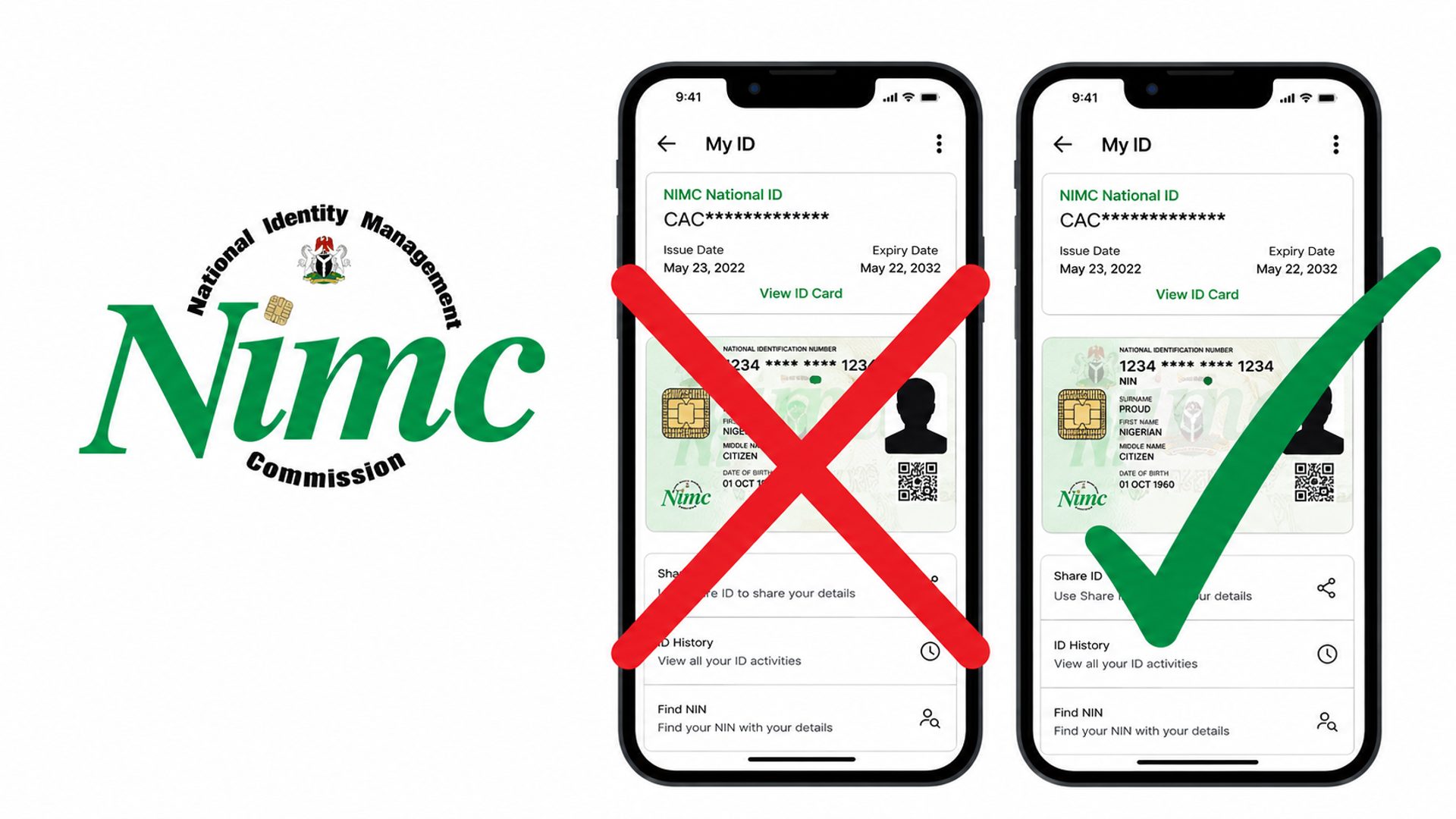
The National Identity Management Commission (NIMC) has issued an urgent warning to Nigerians about a Fake NIN portal circulating online, operated by fraudsters claiming to offer free correction services for National Identification Number records. The commission said the fraudulent links are part of a phishing operation designed to steal sensitive personal information from unsuspecting citizens, even as it reassured the public that Nigeria’s National Identity Database remains secure and protected from unauthorised access.
The warning, issued through NIMC’s official communication channels on Tuesday, comes amid growing concerns over cyber-enabled identity fraud, online impersonation schemes, and the increasing use of fake websites and social media accounts to target Nigerians seeking government services.
The development highlights the broader challenge of protecting citizens’ personal data in an increasingly digital environment where identity credentials such as NINs have become critical for banking, telecommunications, government services, education, taxation, and social welfare programs.
NIMC Sounds Alarm Over Fake NIN Portal
According to the commission, fraudsters are circulating social media messages claiming that a free correction platform has been opened for Nigerians to modify personal details linked to their National Identification Numbers.
NIMC described the claim as false and warned citizens against interacting with any links associated with the message.
In its advisory, the commission stated:
“NIMC warns the public against a fraudulent social media post claiming a free ‘Correction Portal’ is open via malicious links. This is a phishing scam.”
The agency emphasised that the links are unrelated to the commission and urged Nigerians to avoid clicking, sharing, or submitting personal information via unauthorised platforms.
The warning reflects increasing efforts by government agencies to combat cybercriminals who exploit public demand for digital services by creating convincing imitations of official portals.
NIMC Assures Public National Identity Database Is Secure
A key element of the latest advisory was NIMC’s assurance that Nigeria’s National Identity Database has not been compromised.
The commission stressed that the database remains protected and that unauthorised actors have not gained access to citizens’ records through the fraudulent campaign.
“We assure citizens that the National Identity Database is secure and fully protected,” the commission said.
This clarification is particularly significant because identity databases form a critical component of national security infrastructure.
The NIN system serves as the foundation for identity verification across multiple sectors, including:
• Banking services
• SIM card registration
• Passport applications
• Government interventions
• Tax administration
• Pension systems
• Healthcare enrollment
By publicly reaffirming database security, NIMC sought to separate the phishing campaign from the integrity of the national identity infrastructure itself.
How The Fake NIN Portal Scam Works
Cybersecurity experts frequently describe phishing scams as social engineering attacks that rely on deception rather than technical hacking.
The latest Fake NIN Portal operation appears to follow a familiar pattern.
Fraudsters typically create messages that mimic official government announcements and distribute them through social media channels, messaging apps, and cloned websites.
Victims are encouraged to click links that resemble legitimate government portals.
Once on these websites, users may be asked to provide:
• NIN details
• Phone numbers
• BVN information
• Email addresses
• Passwords
• Personal identification records
In some cases, victims may also be instructed to make payments for services that are officially free.
The information collected can then be exploited for various criminal purposes.
Fake Websites, WhatsApp Links and Social Media Traps
The current scam reflects a broader trend in online fraud, in which cybercriminals create convincing digital replicas of trusted institutions.
Fake websites are often designed to closely resemble official government pages, complete with copied logos, colors, and branding elements.
Fraudsters also use:
• Fake WhatsApp broadcasts
• Impersonation of Facebook pages
• Fraudulent X accounts
• Telegram channels
• Phishing emails
• SMS messages
These channels help create an illusion of legitimacy and urgency.
Many victims are targeted through messages claiming:
• Their NIN requires immediate correction
• Their records will be deactivated
• Their identity profile is incomplete
• They must verify information urgently
Such tactics pressure users into acting without verifying the request’s authenticity.
Previous NIMC Fraud Alerts Show Pattern Of Deception
The latest Fake NIN Portal warning is not the first time NIMC has alerted Nigerians about fraudulent activities targeting identity management services.
Information published on NIMC’s official fraud alert platform shows a consistent pattern of scams involving identity credentials and public trust.
Fake Recruitment Schemes
NIMC has repeatedly warned Nigerians against fake recruitment advertisements claiming the commission is hiring new staff.
The agency stated that it is currently not conducting recruitment exercises and advised citizens to verify employment information through official channels.
Recruitment scams often seek application fees or personal information from job seekers.
Fake NIN Registration Agents
The commission has also warned against individuals posing as NIMC staff or agents.
These fraudsters frequently promise faster enrollment, expedited processing, or guaranteed approvals in exchange for money.
NIMC maintains that citizens should only use authorised enrollment centres for official services.
Fake e-ID Card Payments
Another recurring scam involves requests for payment to obtain National e-ID cards.
NIMC has repeatedly emphasised that both the National Identification Number and the National e-ID Card are free.
The agency warns that individuals demanding payments outside approved channels may be attempting to steal personal information or defraud applicants.
Fake BVN and NIN Collection Apps
The commission has also expressed concern about unauthorised applications requesting users to submit BVN and NIN details.
According to NIMC, citizens should only use official platforms and clearly identifiable authorised partners.
The agency specifically warns against uploading sensitive identity information to unverified applications.
Why Identity Theft Is A Growing Concern In Nigeria
The Fake NIN Portal scam highlights broader concerns surrounding identity theft in Nigeria.
As more services become digitized, personal identity information has become increasingly valuable to criminal networks.
Identity theft can occur when fraudsters obtain enough information to impersonate another person for financial or criminal purposes.
Potential consequences include:
• Unauthorised bank transactions
• Fraudulent loan applications
• SIM registration manipulation
• Account takeovers
• Online fraud schemes
• False identity creation
Victims may not immediately realise their information has been compromised.
In some cases, stolen identity data can circulate within criminal networks for extended periods before being used.
Risks To Banking And Financial Security
One of the most significant dangers associated with identity fraud involves financial systems.
Banks increasingly rely on identity verification mechanisms linked to NIN and BVN records.
If criminals obtain sufficient personal information, they may attempt to bypass security procedures or commit fraud.
While financial institutions maintain multiple layers of verification, cybersecurity experts consistently advise citizens to limit unnecessary exposure of sensitive data.
Protecting identity credentials has become as important as safeguarding bank account information.
SIM Registration Abuse And Telecommunications Risks
Nigeria’s telecommunications sector also relies heavily on identity verification through the NIN framework.
Unauthorised access to identity information could be exploited to manipulate SIM registration records.
Because phone numbers are often linked to banking services, digital wallets, and authentication systems, protecting NIN information remains essential for broader digital security.
This explains why government agencies continue to emphasise caution when sharing identity credentials online.
Safe Ways To Correct NIN Details
NIMC says Nigerians who genuinely need to update or correct information associated with their NIN should use only approved channels.
The commission identified two primary options.
Official Self-Service Portal
Users can access NIMC’s authorised self-service platform through official channels provided by the commission.
The platform is designed specifically for legitimate modifications and updates.
Citizens are advised to verify website addresses carefully before entering any information.
Authorised Enrollment Centres
Individuals can also visit approved enrollment centres located across the country.
These centres operate under NIMC’s official framework and provide verified services for identity-related requests.
The commission recommends using only recognised locations rather than relying on third-party agents.
For broader identity management developments, readers can also explore [INSERT DSG HERALD INTERNAL LINK].
Digital Safety Tips For Nigerians
Cybersecurity awareness remains one of the most effective defences against phishing attacks.
Experts generally recommend several precautions:
• Verify website addresses carefully
• Avoid clicking suspicious links
• Confirm announcements through official channels
• Never share passwords unnecessarily
• Avoid uploading sensitive information to unknown websites
• Report suspicious messages immediately
• Use trusted sources for government-related services
These practices can significantly reduce exposure to identity fraud schemes.
Public Significance Of The Latest NIMC Warning
The latest NIMC Scam Alert extends beyond a single phishing campaign.
It reflects the growing importance of digital identity protection in Nigeria’s evolving technology ecosystem.
As government services become increasingly integrated with digital identity systems, public awareness and cybersecurity literacy are becoming national priorities.
The warning also serves as a reminder that fraudsters continue to adapt their methods to exploit public demand for online services.
For citizens, the message is clear: convenience should never replace verification.
Additional security and public safety developments can be found through [INSERT DSG HERALD INTERNAL LINK].
Outlook: Vigilance Remains The Strongest Defense
NIMC’s latest warning underscores a critical reality of the digital age: identity information has become one of the most valuable targets for cybercriminals.
While the commission insists that the National Identity Database remains secure, the Fake NIN Portal campaign demonstrates that fraudsters are increasingly focusing on deceiving individuals rather than attacking systems directly.
For Nigerians, the safest approach remains straightforward—use official NIMC platforms, verify every identity-related request, avoid unauthorised links, and report suspicious messages whenever they appear.
As online services continue to expand across banking, telecommunications, education, and government administration, protecting personal identity information will remain a crucial responsibility for both institutions and citizens.
Recommended Coverage
Security Concerns Rise After Kwara Monarch Abduction
Relevance: Examines growing security concerns and public safety challenges affecting communities across Nigeria.
Brigadier General Killed In Borno Attack Raises Military Concerns
Relevance: Provides insight into ongoing security threats and their implications for national stability.
Benue And Kaduna Attacks Renew Security Debate
Relevance: Highlights wider public safety concerns and government responses to security challenges.
Boko Haram Rehabilitation Spending Sparks National Discussion
Relevance: Explores policy debates surrounding security, rehabilitation, and public accountability.
US Concern Over Plateau Killings Draws International Attention
Relevance: Examines how Nigerian security developments continue to attract global attention.
About the Author