Hungary Election 2026: Orbán Faces Magyar in Historic Vote
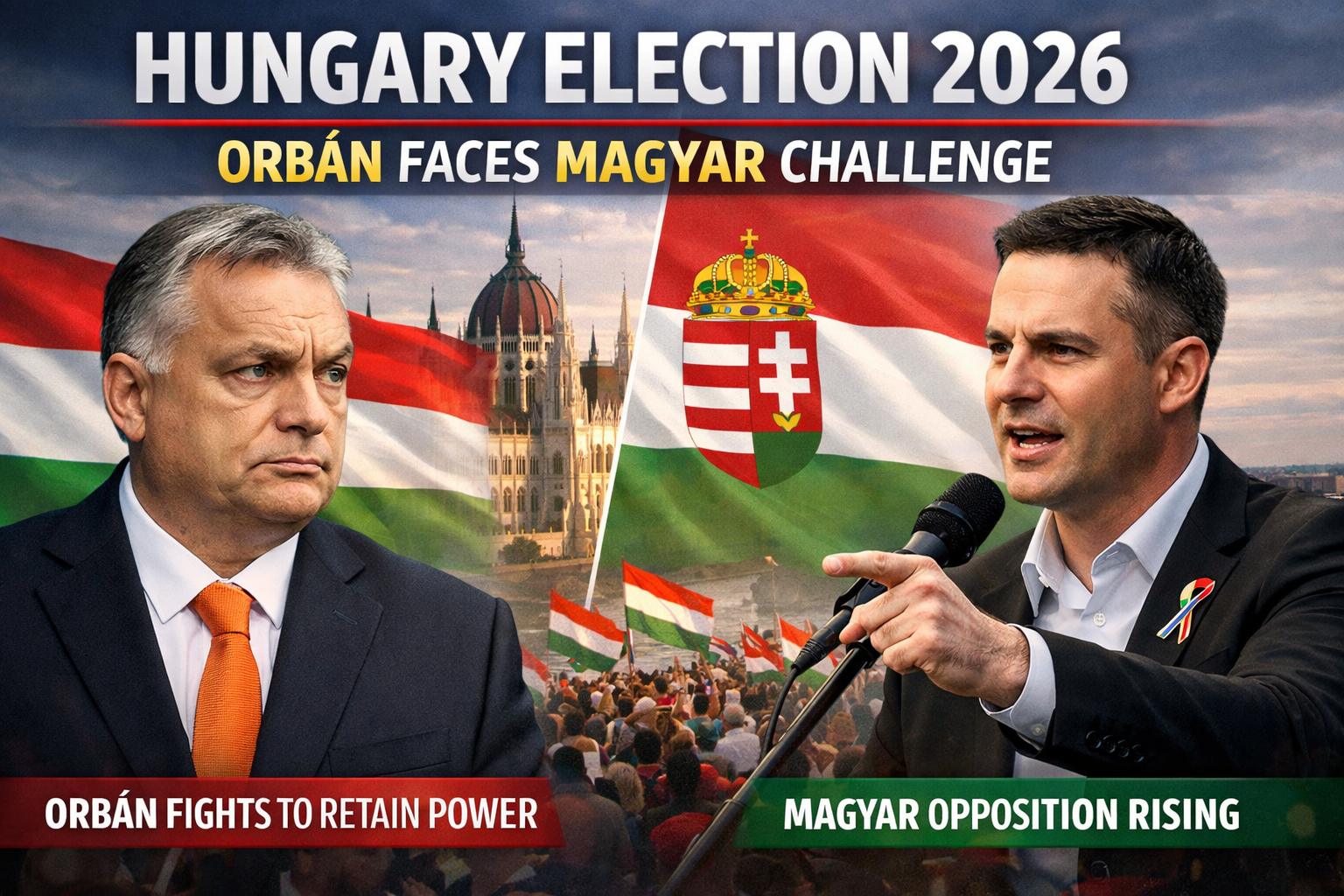
Hungary election 2026 began on Sunday, April 12, 2026, with polling stations opening at 06:00 across Hungary, including the capital Budapest, as Prime Minister Viktor Orbán faces opposition leader Péter Magyar in what analysts describe as the most consequential election in decades. The vote is widely seen as a referendum on Orbán’s 16-year rule and could reshape Hungary’s domestic and foreign policy direction.

High Stakes Vote Draws Global Attention
The Hungary election 2026 has attracted intense scrutiny from across Europe, the United States, and Russia due to its potential geopolitical impact.
- Viktor Orbán, Hungary’s Prime Minister since 2010, is seeking a fifth consecutive term.
- Péter Magyar, a former ally turned critic, leads the opposition Tisza Party.
- Early turnout reached 16.89% within three hours, significantly higher than previous elections.
Orbán vs Magyar: A Clash of Political Visions
Viktor Orbán
- Full Name: Viktor Mihály Orbán
- Position: Prime Minister of Hungary
- Party: Fidesz
- Years in Power: Since 2010
Orbán has reshaped Hungary’s constitution, judiciary, and media landscape. He is known for:
- Strong anti-migration policies
- Opposition to EU directives
- Close ties with Russia
He stated after voting: “I am here to win.”
Péter Magyar
- Full Name: Péter Magyar
- Position: Leader of Tisza Party
- Former Role: Government insider
Magyar entered politics in 2024 after breaking with Orbán’s government following a controversial pardon scandal involving a child abuse case.
His campaign focuses on:
- Fighting corruption
- Strengthening EU and NATO ties
- Economic reform
He told voters he aims to “reset Hungary’s direction.”
Hungary Election 2026: Polls and Predictions
Recent polling data suggests a dramatic shift in Hungarian politics:
- Pollster Medián projected a potential two-thirds majority for the opposition
- Analysts say Magyar leads significantly
- However, Fidesz insiders claim their voter base is underrepresented
Election analyst Róbert László stated:
- Tisza may win an absolute majority
- A two-thirds majority remains uncertain
Electoral System Explained
Hungary operates a single-round electoral system:
- Total Seats: 199
- 106 constituency seats
- 93 party-list seats
- Minimum threshold: 5% of national vote
- Hungarian citizens abroad can vote
Votes are redistributed through a complex system that has historically benefited Fidesz.
Campaign Marked by Tension and Controversy
The Hungary election 2026 campaign has been one of the most contentious in recent history:
Key Issues:
- Cost of living crisis
- Corruption allegations
- Public services
Major Controversies:
- Allegations of foreign interference
- Leaked recordings involving Hungary’s Foreign Minister Péter Szijjártó and Russian officials
- Claims of a “honey trap” targeting Péter Magyar (not independently verified)
Details about the alleged video evidence were not specified in the original report.
International Influence and Political Divide
Hungary has become a symbolic battleground between competing political ideologies:
Orbán’s Support Base:
- Backed by US President Donald Trump
- Supported by figures like:
- JD Vance (US Vice President)
- Marine Le Pen (France)
- Matteo Salvini (Italy)
Magyar’s Allies:
- European People’s Party (EPP)
- Support from:
- Donald Tusk (Poland Prime Minister)
- Friedrich Merz (Germany Chancellor)
Orbán has framed the election as a choice between:
- “War and peace”
- Opposition influence vs national sovereignty
Magyar, however, frames it as:
- “Change vs continuation of power”
Economic Pressure and Public Sentiment
Hungary’s economic challenges have played a key role:
- Rising cost of living
- Public dissatisfaction
- Corruption rankings remain low (Transparency International)
Young voters and urban populations appear to favor change.
A voter, Gergely Németh (20-year-old student), said:
“More important is that someone changes these politicians.”
Strategic Battlegrounds and Key Cities
Certain locations could determine the outcome:
- Györ (north-west Hungary): critical swing city
- Debrecen: strong opposition turnout
- Budapest: mixed support
Political analyst Ágoston Mráz identified 22 battleground constituencies that could decide the election.
Risk of Post-Election Tension
Concerns have been raised about potential unrest:
- Fear of protests if results are disputed
- Political leaders urging calm
- Large anti-government gatherings already recorded
Magyar warned supporters:
“Do not fall for provocation.”
What Happens Next?
- Polls close: 19:00 (local time)
- Preliminary results: same evening
- Final results: around midnight (may take longer in close races)
If confirmed, results could:
- End Orbán’s 16-year rule
- Shift Hungary closer to EU alignment
- Reduce Russian influence
Global Implications of Hungary Election 2026
The outcome will affect:
- EU unity
- NATO strategy
- Russia-Europe relations
Analysts say an Orbán defeat would represent a symbolic setback for nationalist movements globally.
About the Author