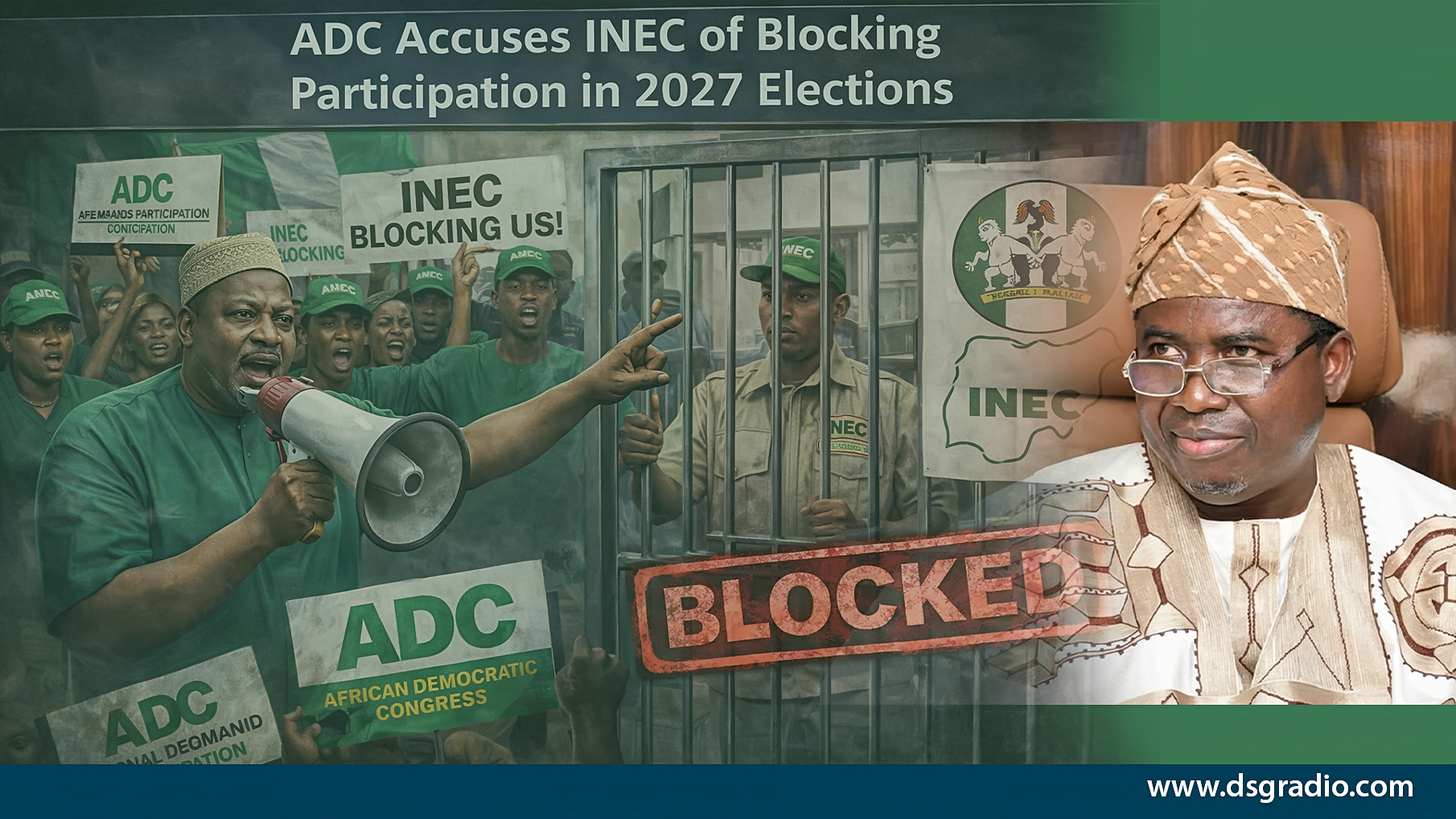
ADC INEC 2027 Election Dispute Deepens as Party Warns of Possible Exclusion
The African Democratic Congress (ADC) has raised an alarm that actions by Nigeria’s electoral body, the Independent National Electoral Commission (INEC), may prevent it from participating in the 2027 general elections. The party said INEC’s refusal to accept its official correspondence—particularly ahead of the May 10 deadline—could make it legally impossible to field candidates. The development, confirmed in a statement by Bolaji Abdullahi, National Publicity Secretary of ADC, reflects a growing dispute rooted in leadership recognition and ongoing court proceedings in Nigeria.
ADC INEC 2027 Election Dispute: What Triggered the Crisis
According to the ADC, INEC has declined to receive its communications, despite previously recognising its leadership structure.
The party highlighted the following concerns:
- INEC allegedly refused to acknowledge official correspondence
- This affects compliance with legal notice periods and documentation.
- The May 10 filing deadline, set by INEC, is approaching.
- Failure to meet requirements could legally disqualify the party.
The ADC argued that this situation creates what it described as “artificial non-compliance.”
In its statement, the party insisted that:
- It had formally notified INEC of its National Executive Committee (NEC) meeting held on July 29, 2025
- INEC representatives reportedly attended the meeting in an official capacity
- The Commission later updated its records to reflect new leadership.
That leadership included:
- Senator David Mark – National Chairman
- Ogbeni Rauf Aregbesola – National Secretary
These developments, the party said, are documented in INEC’s own records.
Conflicting Positions: ADC vs INEC
Despite earlier recognition, INEC has now withdrawn acknowledgement of the David Mark-led National Working Committee (NWC).
The Commission explained that its decision is based on:
- A subsisting court judgment
- Its constitutional responsibility to remain neutral
- Ongoing litigation involving conflicting leadership claims within ADC
INEC stated it has reverted to a status quo ante bellum position—meaning it recognises the previous structure pending a final court ruling.
This effectively leaves the party without officially recognised leadership.
Legal Implications Ahead of May 10 Deadline
The Electoral Act imposes strict timelines on political parties, including:
- A 21-day notice requirement before major activities
- Submission of candidate-related documentation before deadlines
The ADC argued that INEC’s refusal to accept its documents makes compliance impossible.
The party warned:
- If the court ruling is not delivered before May 10,
- It may be unable to field candidates for the 2027 elections.
This raises broader concerns about procedural fairness.
ADC Accuses INEC of Bias and Interference
The ADC strongly rejected INEC’s position, accusing the Commission of:
- Bias in handling internal party disputes
- Undue interference in party affairs
- Undermining internal democracy
The party maintained that:
It possesses documentary evidence, including certified INEC records, attendance logs, monitoring reports, and extracts from sworn affidavits.
According to the ADC, these establish a consistent record of engagement with INEC.
Call for Reconsideration and Public Awareness
The ADC has called on INEC to:
- Resume accepting its correspondence.
- Ensure fairness across all political parties.
- Uphold its constitutional mandate.
It also urged Nigerians to remain vigilant against what it described as attempts to undermine democracy.
As reported by , the situation continues to raise concerns about electoral inclusivity and procedural transparency.
Background Context: Leadership Crisis Within ADC
The dispute is rooted in an internal leadership crisis within the party.
Key developments include:
- Emergence of multiple leadership claims
- Legal battles over party structure
- INEC’s withdrawal of recognition from one faction
This aligns with earlier electoral controversies, including cases where INEC adjusted party records following court rulings, as seen in a related report on
What This Means for Nigeria’s 2027 Elections
The ADC INEC 2027 election dispute highlights deeper structural challenges in Nigeria’s political system:
Key Risks:
- Exclusion of political parties due to procedural issues
- Legal uncertainties affecting electoral participation
- Questions about INEC’s neutrality and consistency
Broader Implications:
- Potential impact on democratic competition
- Increased litigation ahead of elections
- Heightened political tension within parties
About the Author